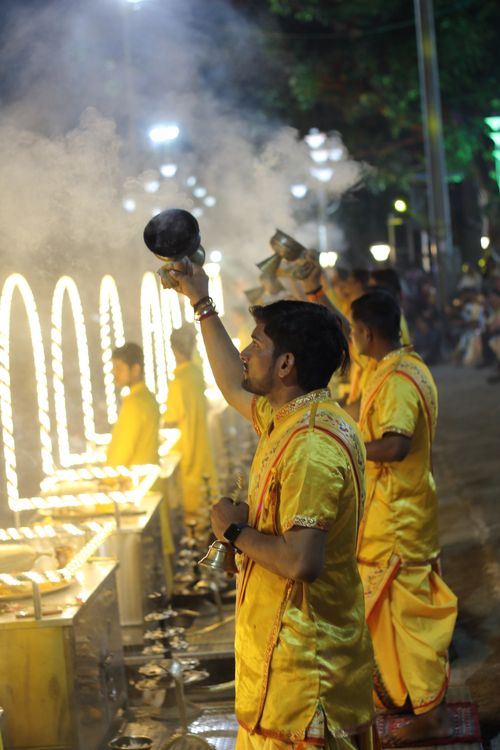
Char Dham is a fixed journey with a registration attached to it; a Rajaji safari is a day permit with a date, a zone and a shift on it. Put both in one trip and the only real question is which one moves — and the answer is that the yatra should not. This page fits the safari around the yatra as an add-on at either end, from the official pages of both, and it is deliberately not a Char Dham itinerary.
Sources checked on 10 November 2026: Uttarakhand Tourism's Char Dham page and its Haridwar page, the government's own registration portal, and the reserve's own day-visit booking page, Chilla page and guest-login page; plus this site's own published pages, linked at the foot of this article.
What the official Char Dham record says
Uttarakhand Tourism defines the yatra in a single line: a tour of four holy sites — Yamunotri, Gangotri, Kedarnath and Badrinath — high in the Himalayas. Two sentences after that matter more for planning than any itinerary. The high-altitude shrines remain shut for around six months every year, opening in summers (April or May) and closing with the onset of winter (October or November): month ranges, not dates, so this page prints no opening or closing date for any year. And the customary order is presented as belief rather than rule — it is believed that one should complete the yatra in a clockwise direction, hence Yamunotri, then Gangotri, onto Kedarnath and finally Badrinath. No minimum duration for the journey is published officially, and none is invented here.
Registration is separate from all of that, and it is not optional. The government's portal states that as per the Government of Uttarakhand travel policy it is necessary to register yourself and your vehicles before you start your journey to Char Dham and Hemkund Sahib, and to verify yourself at the destinations when you reach each shrine. It calls the exercise free and shows the generation of a Yatra Registration Letter with a QR code, and its register-and-verification section lists points including Rahi Hotel (Haridwar) and Transit Camp (Rishikesh). This page links that government address and no other.
Where Rajaji fits
On the Haridwar side, at the start or the end. Uttarakhand Tourism's own Haridwar page carries the city's official description — Gateway to the holy Char Dham — and states that Haridwar serves as the gateway to the Char Dham. That wording is not extended here to Rishikesh, whose appearance on the registration page is as a transit camp rather than a gateway. Rajaji's Chilla side sits near Haridwar, and the park's own page describes the approach: the Chilla tourism gate, reception and forest rest house sit in the main tourism zone on the road side, reached from Haridwar on the National Highway 58 just after the long bridge on the Ganga from Chandi Gate or Ghat, then the right turn onto the Chilla power channel road. The safari and the yatra's first morning can share a city without sharing a ticket.
Before the yatra, or after it
Two positions, two different risks. Before: the yatra start is fixed — registration done, vehicles registered, weather window open — so a safari day in front of it costs an earlier arrival and cannot move the start date. After: the descent from the high shrines arrives with fatigue, and any delay on the mountain eats the buffer you left for the safari. If you choose after, treat the day as a recovery buffer with slack in it, not as the last fixed item standing between you and a flight.
The practical advice is therefore asymmetric: put the safari where a delay is cheap. For most pilgrims that means the front of the trip, on the Haridwar or Rishikesh side, where the safari is one shift inside one day and the rest of the day belongs to nobody's schedule.
The season overlap
This is where the two calendars meet, and the meeting point is narrower than a first glance suggests. The shrines open in April or May and close in October or November. The reserve runs 15 November to 15 June on most of its official pages, while the booking page's own Chilla line says 15 October to 15 June — the conflict this site flags everywhere it appears, with the live calendar as the authority. Read together, the genuine overlap is late April to 15 June, the spring window, plus a short autumn tail in November that mostly misses the reserve's own 15 November opening. That is reported as it stands rather than smoothed into a year-round overlap the pages do not promise.
A two-night, three-day pattern
- Night one: arrive at Haridwar or Rishikesh and confirm both documents are already in hand — the yatra registration letter with its QR code, and a printed Rajaji permit.
- Day two: the safari day, on whichever shift the live calendar offered, with the gate rule attached to it.
- Day three: depart for the yatra, or for home if the yatra is behind you.
Three days is the shape of the pattern, not an official minimum. No minimum duration is published for either journey, so the sequence exists to be shortened or lengthened by your dates rather than quoted as a rule.
Booking order and documents
Order matters because one booking fixes the other. Register for the yatra first, since it fixes the journey, the vehicles and the dates. Then buy the Rajaji permit on its own portal for whichever day sits inside the live calendar, then fix accommodation around the gate the permit names. The two documents travel separately: a yatra registration letter is not a safari permit, and a printed permit is not a registration. Two published conditions attach to the safari side — passport mandatory for non-Indians and the static-IP desktop caveat on the guest-login page — and one attaches to the morning itself: reach the gates 20 minutes before the last entry timing, because late arrivals after the last entry time may not be entertained and deposited fees are not refunded.
What to confirm
- That both documents exist before you travel: the registration letter with its QR code, and a printed Rajaji permit.
- That your safari date sits inside both live calendars rather than inside a season sentence on a page.
- That the names and identity documents match each booking separately, passport included where it is required.
- That the safari sits on the side of the trip where a delay is cheap, and that the gate on the permit is the gate you drive to.
What this page will not claim
Six abstentions. No fixed Char Dham date — no opening and no closing date for any year, only the month ranges the official page prints. No combined ticket, because none exists: registration and the Rajaji permit are separate systems. No minimum duration for either journey. No package price and no agent claim. No visa or restricted-area claim for any nationality. And no sighting guarantee behind the permit — the yatra stays the fixed journey, and the safari stays the day of forest you add to it.
Where to read next
For the shape of a longer northern trip that holds both, the north India itinerary. For the short versions, the two-day Haridwar and Rishikesh itinerary and the three-day itinerary. For the access picture across the three cities, the Haridwar, Rishikesh and Dehradun route guide. For the permit itself, the official portal and process guide. And for placing a safari beside another fixed northern journey, the Golden Triangle extension page. The two companion pages are the Rajaji versus Dudhwa comparison and the invoice and GST page. Sources checked 10 November 2026.
Rajaji safari and the Char Dham Yatra: questions answered
Can I do a Rajaji safari before starting Char Dham?
Yes, and this page treats it as the cleaner of the two positions. The yatra is a fixed journey with a registration attached to it, while a Rajaji day visit is a permit with a date, a zone and a shift on it: https://rajajitigerreserve.uk.gov.in/jungle-safari-booking.aspx. Book the safari for a day you are already in Haridwar or Rishikesh before the yatra begins, so a safari delay cannot push a fixed start. Haridwar is the point Uttarakhand Tourism calls the gateway: https://uttarakhandtourism.gov.in/destination/haridwar.
Can I do it after returning from Char Dham?
You can, and the trade-off is fatigue rather than paperwork. Pilgrims come down from high-altitude shrines that are shut for around six months a year, opening in summers (April or May) and closing with the onset of winter (October or November): https://uttarakhandtourism.gov.in/experiences/char-dham. If you add a safari day, add it as a recovery buffer rather than as a fixed commitment, keep it on the Haridwar side near the Chilla gate, and check the live Rajaji calendar for your date rather than assuming a day exists.
Does the Rajaji safari season overlap the Char Dham season?
Partly, and the overlap is smaller than it looks. The shrines open in April or May and close in October or November, month ranges that the official portal confirms for the current year rather than dates anyone should print in advance. Rajaji runs 15 November to 15 June on most official pages, while the booking page's own Chilla line says 15 October to 15 June. So the real spring overlap runs from late April to 15 June, and the autumn tail mostly misses Rajaji's 15 November opening.
Do I need separate registrations and bookings?
Yes, and no document substitutes for another. Registration is free and necessary for pilgrims and vehicles before the journey starts, with verification at each shrine, and the portal issues a Yatra Registration Letter with a QR code: https://registrationandtouristcare.uk.gov.in/. The Rajaji permit is bought on the reserve's own portal through date, zone, shift, visitor details, payment and print permit. There is no combined Char Dham and Rajaji ticket, and non-Indian visitors still carry the passport the guest-login page asks for: https://rajajitigerreserve.uk.gov.in/VisitorAuth/GuestLogin.aspx.
How many days should I add?
No official minimum duration is published for either journey, so this page publishes none. The working pattern it does suggest is two nights and three days on the Haridwar or Rishikesh side: arrive, take one safari day inside the live calendar, then leave for the yatra or for home. That fits the spring overlap window, leaves room for the 20-minute gate rule, and keeps the yatra as the fixed journey with the safari as the add-on. Sources checked 10 November 2026.