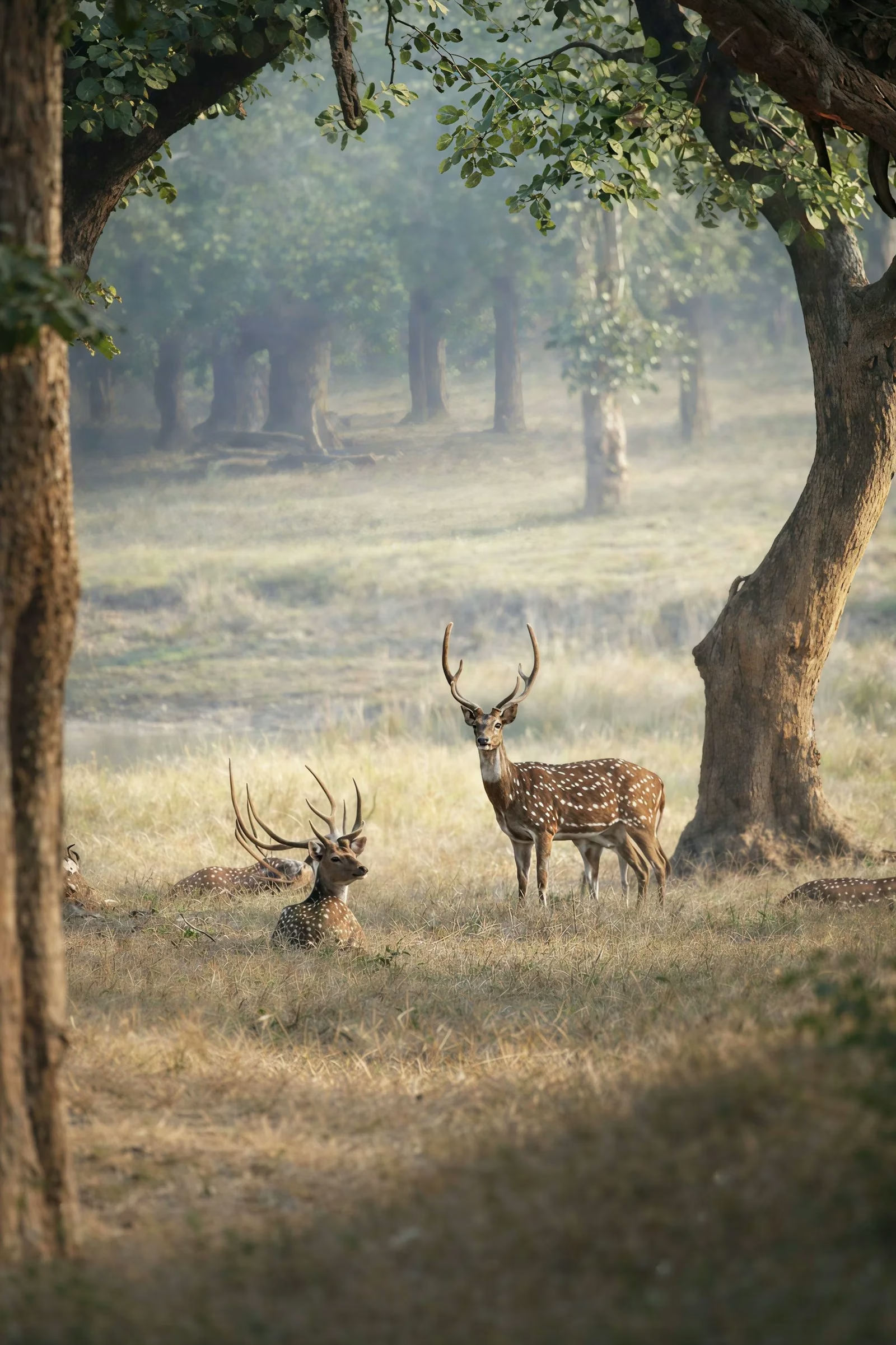
Winter mornings in the Shivalik foothills can be misty, and a misty morning changes nothing on paper: the published entry bands, the 20-minute gate rule and the late-arrival sentence all stay as written. This page is the operational side of that fact — what the official pages publish, what they do not, and what to do when the road is grey on the way to a gate.
Sources checked on 12 November 2026: the reserve's Chilla zone page and day-visit booking page for the entry bands and the gate notice, its guest-login page for the booking conditions, and this site's own published pages, linked at the foot of this article.
Why winter fog matters to a booking
Because a safari is a timed appointment rather than a general invitation. The permit names a date, a zone and a shift; the shift has a published entry window; and that window closes behind you. Fog sits across the road to the gate and across the light you drive in once inside — two different problems, two different fixes. Nothing about that interaction is published as a rule, which is why it needs planning rather than assuming.
The framing for a winter booking is simple: the published bands do not shift for fog. What runs a misty morning is a question for the live calendar and your operator, not for this page, because no number is published.
What the official pages do and do not say
What they do say is limited. The season is 15 November to 15 June on most pages, with the booking page's Chilla line saying 15 October to 15 June — the conflict this site flags, with the live calendar as the authority. The entry windows are published, and the gate notice advises reaching the gates 20 minutes before the last entry timing and warns that late arrivals may not be entertained, with no refund of fees deposited.
What they do not say matters as much: no published fog policy, no fog-delay rule, no visibility distances, no fog-frequency statistics and no highway fog data. So this page claims none of them, and does not present any zone as having a different practice — if a morning runs differently, the live calendar and your operator confirm that for your date, not a written page in advance.
The winter band and the 20-minute rule
The band covering 15 November to 15 February is the one to plan against: for 15 November to 15 February, the Chilla and day-visit page publishes morning entry 6:30 AM to 8:00 AM and evening entry 1:30 PM to 3:00 PM, with last exit at 10:30 AM and 5:30 PM. The full three-band table lives on the 2027 best-time page, which carries the live table rather than a copy that can drift.
Layer the gate notice on top: twenty minutes before the last entry timing is the published margin, and missing it costs the deposited fees. A shift whose entry window runs 6:30 AM to 8:00 AM therefore has a reporting expectation tied to 8:00 AM, not to 6:30 AM — the operational heart of this page.
Road fog and park fog are two problems
Road fog sits on the way to the gate — the approach, the turn onto the reserve road, the last stretch to the reporting point. It is a driving problem solved with time rather than tickets: leave earlier, use the transport you have confirmed, and treat the 20-minute margin as the minimum rather than the target. Park fog sits inside the forest, where tracks run under canopy and along the river belt — it changes what the morning looks like, and nothing about the permission you hold.
Only the first can make you late: the permit, the shift and the gate notice are unaffected by either, so the response to a foggy morning is more buffer rather than a different expectation.
The same-morning arrival risk
A visitor who lands, drives and safaris on the same morning is stacking three unmeasured steps against a fixed window: arrival, a road leg of the published distance to a named gate, and the 20-minute margin. Fog makes each of those less predictable while the window stays exactly where it is. The published pages give no hours for the road leg, so this page gives none either — the conclusion it does support is structural: a same-morning attempt has no published buffer, and an overnight near the gate does not need one. The Jolly Grant airport page works through that choice for fly-in visitors.
Train and road as the winter options
Both remain open choices, and neither comes with an official time attached. The reserve names Haridwar, Rishikesh and Dehradun as its nearest railheads, and a rail arrival gives you a station-to-gate road leg you can plan in your own time; the station guide covers those approaches. By road, the same rule applies as in any season: build your own margin, confirm the transport, and remember that the published figures are kilometres rather than minutes. Which of the two suits a given winter morning is a question for your own timing, not for a weather claim this page does not make.
If fog delays you
- Contact your operator before the window closes, not after it, because the published rule does not pause for weather.
- Check the live calendar rather than assuming the shift moved: the bands on paper are the bands on paper.
- Keep the permit and the identity document ready, so that any delay that can still be absorbed is absorbed at the gate rather than at the desk.
- Remember the no-refund sentence: late arrivals after the last entry time may not be entertained and deposited fees are not refunded, whatever the visibility was doing.
Booking and confirmation in winter
The booking side is unchanged by the season: date, zone, shift, visitor details with the group leader, payment, then print the permit, with a passport mandatory for non-Indians and the static-IP desktop caveat on the guest-login page. What winter adds is the habit of confirmation — holding the printed permit, knowing which gate the permit names, and re-reading the band that covers your date before you travel rather than the evening before. The portal and process guide walks the transaction, and which gate explains how to read the reporting point on your confirmation.
What this page will not claim
Six abstentions. No visibility distance and no fog-frequency statistic, because none is published here or on the pages used. No weather claim of any kind — not about which month is foggier, not about which zone sees more of it. No fog-delay policy attributed to the reserve, and no claim that any zone delays starts differently. No shift change implied by a grey morning: the published bands are printed as published. No fixed season date where the reserve's own pages conflict. And no sighting guarantee behind the permit, whatever the light is doing.
Where to read next
For the full entry-band table across the season, the 2027 best-time page, and for the season question in general, the best time to visit guide. For month-by-month conditions and wildlife movement, the wildlife calendar. For choosing between the two windows this page quotes, morning versus evening. For the transaction itself, the official portal and process guide, and for the reporting point, the which-gate guide. The two companion pages in this release are the Bandhavgarh comparison and the Jolly Grant airport page. Sources checked 12 November 2026.
Rajaji winter fog and safari timing: questions answered
Does fog delay Rajaji safaris?
The reserve publishes no fog policy, no fog-delay rule and no visibility figures, so this page claims none. What the official pages do publish are the entry bands and the gate notice, and those do not shift for fog on paper. If a morning looks foggy, the live calendar and your operator are the places to confirm what is actually running that day — do not assume the published band has moved because the road looks grey.
What are the winter safari timings?
For the winter band, 15 November to 15 February, the Chilla and day-visit page publishes morning entry from 6:30 AM to 8:00 AM and evening entry from 1:30 PM to 3:00 PM, with last exit at 10:30 AM and 5:30 PM: https://rajajitigerreserve.uk.gov.in/chilla-zone.aspx. The other two bands of the same table belong to the rest of the season and are carried in full on this site's best-time page rather than reprinted here. The page also advises reaching the gates 20 minutes before the last entry timing.
What happens if I arrive late because of fog?
The published rule does not change with the weather: tourists arriving late after the last entry time may not be entertained and there will be no refund of fees deposited. Treat that sentence as the operating constraint. If fog on the road puts your arrival at risk, contact your operator before the window closes rather than at the end of it, keep the permit and the identity document ready, and do not plan on the assumption that a foggy morning will shift everyone's entry.
Is the morning or evening safari better in winter fog?
This page makes no recommendation based on weather statistics, because none are published here. What can be said from the official pages is structural: the winter band offers a morning window of 6:30 AM to 8:00 AM and an evening window of 1:30 PM to 3:00 PM, and the shift you choose is the shift on your permit. Whether a particular morning is misty is something the live calendar and your operator can confirm for your date, not something this page predicts.
Should I take the train or drive in winter fog?
Both are your choice, and neither comes with an official time published for it. The reserve names Haridwar, Rishikesh and Dehradun as its nearest railheads, and a rail arrival puts you on a station-to-gate road leg you can plan in your own time, rather than an airport connection. Whatever you choose, build the buffer yourself: the 20-minute gate rule and the no-refund sentence stay exactly as published whatever the visibility does. Sources checked 12 November 2026.