Book a guided Jeep Safari in Rajaji National Park & Rajaji Tiger Reserve • Direct booking with local operator • Morning & Evening Safari slots available • Trained drivers & guides • Chilla, Motichur, Ranipur, Jhilmil & more zones • WhatsApp +91 92591 21352
Your Guide to the Park

About Rajaji National Park

A complete overview of Rajaji National Park and Rajaji Tiger Reserve — its history, geography, wildlife, safari zones and what makes it one of northern India's most extraordinary protected landscapes.

Overview

Where the Himalayas Meet the Wild

Rajaji National Park is an 820-square-kilometre protected area in the Sivalik Hills of Uttarakhand, spread across the Haridwar, Dehradun and Pauri Garhwal districts. It sits at the meeting point of two major ecological zones — the Indo-Gangetic plains and the Himalayan foothills — making it one of the most biodiverse protected areas in northern India.

The holy Ganga River flows through the park, dividing it into east and west sections and creating rich riverine habitats that support elephants, tigers, leopards, deer, and over 300 species of birds. In 2015, Rajaji was declared a tiger reserve under Project Tiger, making it Uttarakhand's second after Corbett. It also forms a critical part of the Northwest Elephant Corridor, one of the most important migratory routes for Asian elephants in India.

Whether you are a wildlife enthusiast, a birdwatcher, a photographer, or a first-time safari visitor, Rajaji offers a raw and immersive forest experience — one that feels distinct from the more commercialised parks, yet remains easily accessible from Haridwar, Rishikesh and Dehradun.
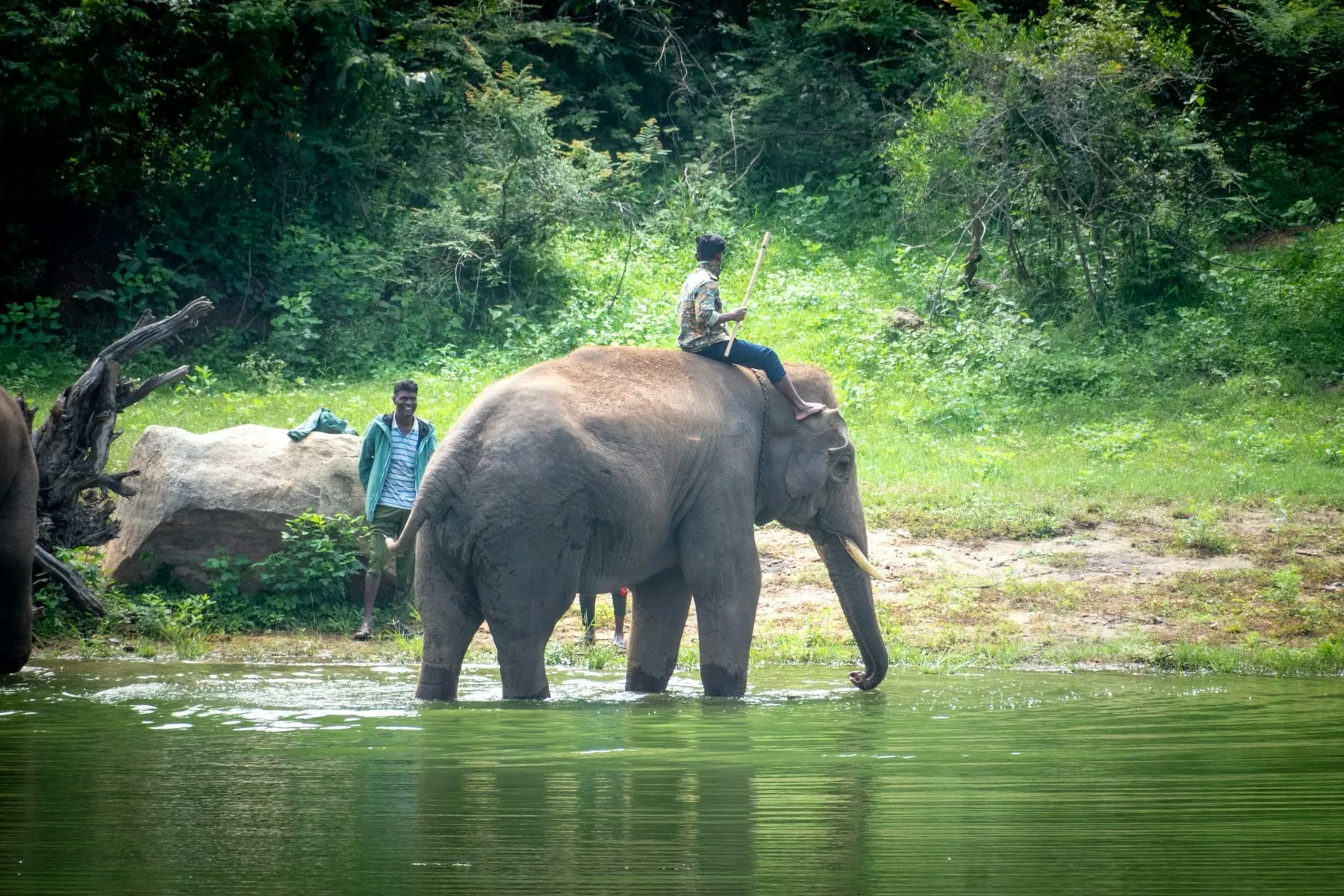
Asian elephants near water in Rajaji National Park
Bengal tiger habitat in Rajaji Tiger Reserve
History

From Sanctuary to Tiger Reserve

The story of Rajaji National Park began in 1948, when the area was first notified as Rajaji Sanctuary to protect the Shivalik ecosystem and its wildlife. It was named after C. Rajagopalachari — popularly known as Rajaji — India's last Governor-General and a respected freedom fighter.

In 1983, three existing wildlife sanctuaries — Rajaji Sanctuary (1948), Motichur Sanctuary (1964) and Chilla Sanctuary (1977) — were merged to form a single, unified national park spanning 820 square kilometres. This consolidation was a landmark moment in Uttarakhand's conservation history, creating a vast contiguous protected landscape.

In 2015, recognising its growing tiger population and ecological significance, the Government of India declared Rajaji a tiger reserve under Project Tiger. It is now one of India's 54 tiger reserves and serves as a critical expansion zone for tigers dispersing from the Corbett landscape.

Geography

A Landscape Shaped by Rivers and Ridges

Rajaji National Park lies in the Shivalik Hills — the outermost range of the Himalayas — with elevations ranging from 300 to 1,400 metres. The terrain is a striking mix of dense sal forests, open grasslands, rugged hill slopes, and wide river valleys.

The Ganga River cuts through the heart of the park, dividing it into the western section (Rajaji and Motichur) and the eastern section (Chilla). Several tributaries — including the Song, Suswa and Birah rivers — feed into the Ganga within the park, creating a network of wetlands, streams and riverine forests that sustain an extraordinary variety of life.

This unique geography — where the Himalayan foothills meet the northern plains — makes Rajaji an ecological crossroads. Species from both the mountains and the lowlands coexist here, giving the park a richness that few other protected areas in India can match.

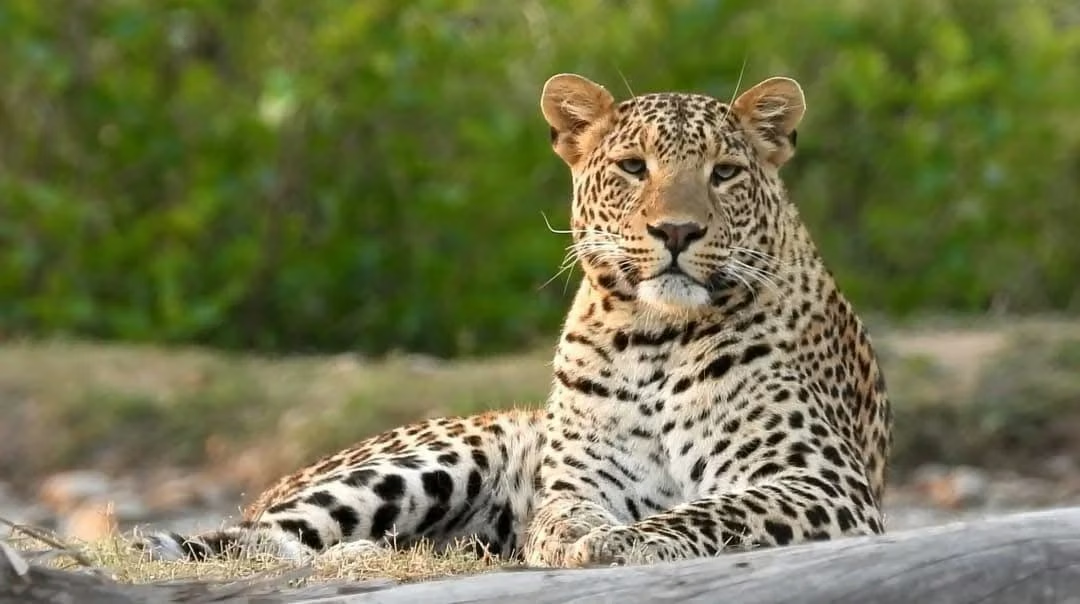
Leopard habitat among the forest and ridges of Rajaji National Park
Flora

The Forests of Rajaji

Sal Forests

Sal (Shorea robusta) dominates large stretches of the park, forming dense, closed-canopy forests that shelter elephants, leopards and countless bird species.

Riverine Belts

Along the Ganga and its tributaries, thick riverine forests of sheesham, khair and arjun trees provide critical habitat for aquatic and semi-aquatic wildlife.

Grasslands

Open grasslands and meadows, particularly in the Chilla range, sustain large herds of chital, sambar and hog deer — the prey base that supports tigers and leopards.

Shivalik Slopes

The higher ridges carry mixed deciduous and pine forests with amaltas, palash, semul and bamboo, covering the park's steeper terrain.

Fauna

The Wildlife of Rajaji National Park

Asian Elephant

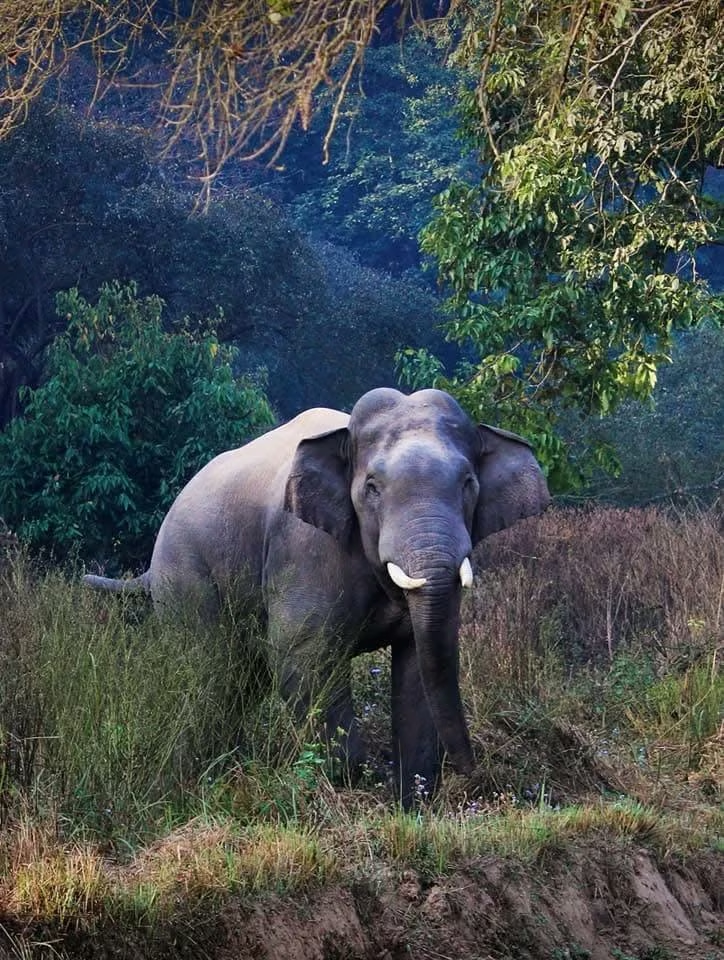
Rajaji is one of India's finest parks for seeing wild elephants. Large herds move through the park, especially in the Chilla and Motichur ranges, and the park forms part of the vital Northwest Elephant Corridor connecting Rajaji to Corbett.

Bengal Tiger

Since its declaration as a tiger reserve in 2015, the tiger population has been steadily recovering. Sightings are less frequent than in Corbett, but the dense sal forests and quiet valleys hold a growing number of these apex predators.

Leopard

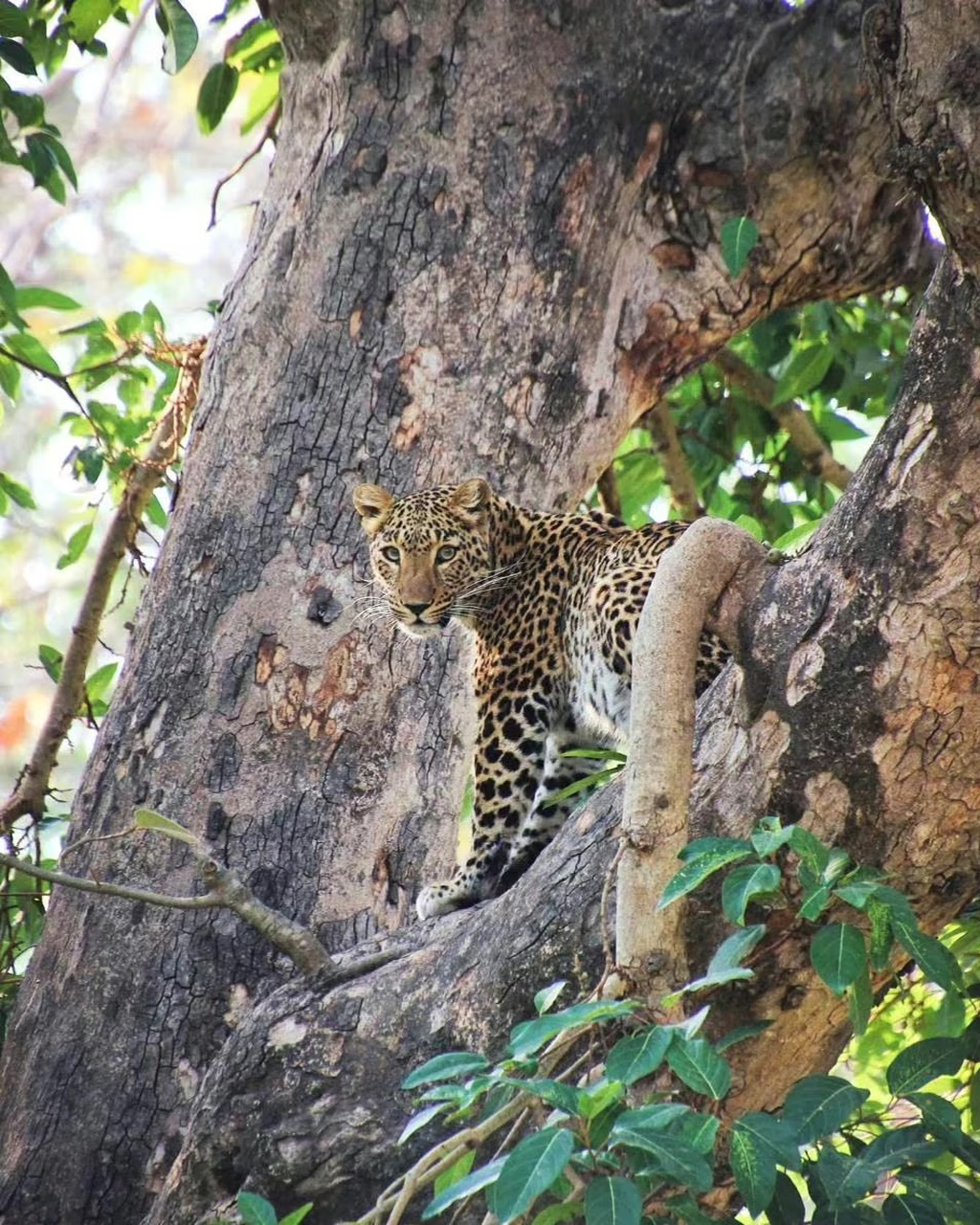
Leopards thrive in Rajaji's hilly terrain and rocky outcrops. They are elusive but widely distributed across all ranges, with higher chances of sightings in Motichur and along the Shivalik ridges.

Other Mammals

Sloth bear, Himalayan black bear, sambar, chital, barking deer, hog deer, nilgai, wild boar, goral, rhesus macaque, common langur, leopard cat, jungle cat, golden jackal and Bengal fox all find refuge in Rajaji's varied habitats.

Birdlife

Over 300 species have been recorded, including great hornbill, Indian grey hornbill, crested serpent eagle, Egyptian vulture, Himalayan vulture, red jungle fowl, peafowl, kingfishers, woodpeckers and seasonal migratory waterfowl.

Reptiles & Aquatic Life

The park's rivers and wetlands are home to gharials, mugger crocodiles, monitor lizards, Indian cobras, king cobras, pythons and over 60 species of fish in the Ganga and its tributaries.

Safari Zones

Exploring Rajaji's Safari Zones

Chilla Range

The most visited zone, accessed from the Haridwar side. Known for reliable elephant sightings, open grasslands with large chital herds, and the scenic Ganga riverbed. The go-to zone for first-time visitors.

Motichur Range

Denser forest cover and quieter trails. A stronghold for tigers and leopards, though sightings require patience. The terrain is more rugged and less crowded than Chilla.

Ranipur Range

A quieter, less commercialised zone ideal for birdwatchers and visitors who prefer a peaceful forest experience away from the busier gates.

Jhilmil Conservation Reserve

A wetland ecosystem famous for the swamp deer (barasingha). A completely different landscape from the sal forests — reed beds, marshes and migratory waterfowl.

View All Safari Zones
Visitor Information

Planning Your Rajaji Visit

Open Season

Mid-November to mid-June. The park closes during the monsoon (July to September) for breeding season and track safety.

Safari Timings

Morning safari: 6:00 AM to 9:00 AM. Evening safari: 3:00 PM to 6:00 PM. Timings shift slightly by season and zone.

Best Time to Visit

Winter (November to February) for pleasant weather and birdwatching. Summer (March to June) for the best elephant sightings near water sources.

Nearest Airport

Jolly Grant Airport, Dehradun — approximately 25 km from the Chilla range. Connected to Delhi, Mumbai and Bengaluru.

Nearest Railway Stations

Haridwar Junction (10 km from Chilla), Rishikesh (20 km) and Dehradun (35 km). All well-connected to Delhi and other major cities.

Road Distance

Approximately 220 km from Delhi (5 to 6 hours). 20 km from Rishikesh, 10 km from Haridwar and 35 km from Dehradun.

Conservation

Why Rajaji Matters

Rajaji is not just a safari destination — it is a vital conservation landscape. As Uttarakhand's second tiger reserve and a key link in the Northwest Elephant Corridor, the park plays an outsized role in protecting two of India's most threatened large mammals.

The Chilla-Motichur corridor inside the park is one of the most important elephant migration routes in northern India. Preserving this passageway is essential not only for elephants but also for tigers, leopards and the entire Shivalik ecosystem that depends on connected habitats.

Challenges remain — urban expansion near Haridwar and Rishikesh, roads cutting through corridors, and human-wildlife conflict — but ongoing habitat restoration, anti-poaching patrols and community engagement programmes are steadily strengthening the park's future.

Asian elephant in the riverine forest of Rajaji National Park
At a Glance

Rajaji National Park Quick Facts

Area
820 square kilometres
Established
1983 as National Park
2015 as Tiger Reserve
Elevation
300 to 1,400 metres
Major River
Ganga (with tributaries Song, Suswa, Birah)
Location
Haridwar, Dehradun & Pauri Garhwal, Uttarakhand
Mammal Species
50+ species including tiger, elephant, leopard, sloth bear
Bird Species
315+ recorded species
Governing Body
Uttarakhand Forest Department
Common Questions

Rajaji National Park FAQs

Rajaji National Park is a national park and tiger reserve spread across Haridwar, Dehradun and Pauri Garhwal districts of Uttarakhand. It encompasses 820 square kilometres in the Sivalik Hills and is known for its Asian elephants, Bengal tigers, leopards and over 300 species of birds.

The area was originally declared the Rajaji Sanctuary in 1948. In 1983, three wildlife sanctuaries — Rajaji, Motichur and Chilla — were merged to form Rajaji National Park. In 2015, it was declared a tiger reserve under Project Tiger.

Rajaji is home to Asian elephants, Bengal tigers, leopards, sloth bears, sambar deer, chital, barking deer, nilgai, wild boar, goral and over 300 species of birds including great hornbills, crested serpent eagles and migratory waterfowl.

The main safari zones include Chilla, Motichur, Ranipur and Jhilmil ranges. Other areas include Dholkhand, Asharori and the Satyanarayan/Kansro routes. Zone availability depends on season and Forest Department operations.

Rajaji National Park is located in the Sivalik Hills of Uttarakhand, spanning Haridwar, Dehradun and Pauri Garhwal districts. The Ganga River flows through the park. It is approximately 220 km from Delhi and close to Haridwar, Rishikesh and Dehradun.

The park is open from mid-November to mid-June. Winter (November to February) offers pleasant weather and excellent birdwatching. Summer (March to June) is best for elephant sightings near water sources. The park remains closed during the monsoon (July to September).

Yes. Rajaji National Park was declared a tiger reserve in 2015, making it Uttarakhand's second tiger reserve after Corbett. It is now officially known as Rajaji Tiger Reserve while still commonly referred to as Rajaji National Park.

Rajaji lies at the confluence of the Indo-Gangetic plains and the Himalayan Shivalik ranges, creating an extraordinary biodiversity hotspot. The Ganga River flows through the park, and it serves as a critical elephant migration corridor in northern India.
Ready to Explore?

Experience Rajaji National Park with Our Local Team

Our drivers and guides know Rajaji's forests, its seasons and its wildlife. Book your safari directly and arrive prepared — with a local team that handles the details.