The short answer: you can drive the public road between Haridwar and Rishikesh, and the park's own directions place the Chilla gate on that road, but passing the gate is not a safari and not a park visit. Going inside the tourism zone is a separate, separately permitted act — and the reserve's internal tracks are not a shortcut between the two cities. This page sets out exactly what the official pages say about the approach, what your own car may and may not do, and where the published record is silent.
Sources checked on 8 November 2026: the reserve's Chilla zone page and its day-visit booking page; plus this site's own published pages, linked at the foot of this article.
What the official Chilla page says about the approach
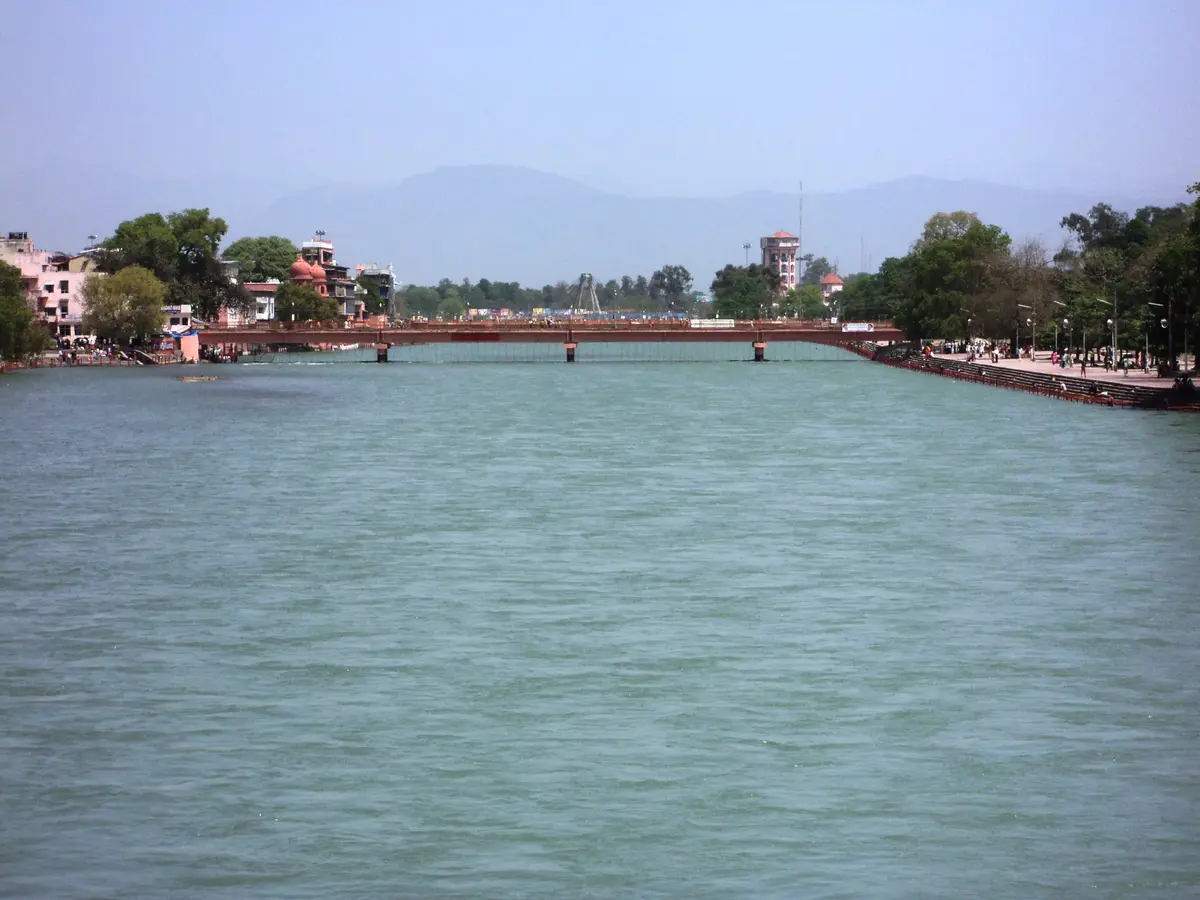
The reserve's own Chilla page describes the approach in one sentence, worth taking on its own terms: the Chilla tourism gate, reception and Chilla FRH is situated in the main tourism zone on road side, and it may be assessed from Haridwar on the National Highway 58 just after the long bridge on the Ganga from Chandi Gate or Ghat, then turning right onto the Chilla power Channel road. That is the park describing how a visitor reaches its gate from Haridwar.
Note what it does and does not say. It describes an approach to a gate inside the main tourism zone — not a through route to Rishikesh, and not a road the reserve controls. The same site prints NH 334 for the Delhi approach, so the numbering across the reserve's own pages mixes older and newer designations. This page reports the park's own wording rather than asserting which formal number is current today.
Where the safari actually starts
Not on the highway — at a gate, on a permit. The published flow is date, zone, shift, visitor details with the group leader, payment, day-visit ticket, then print the permit, and the day visit itself is a jeep safari in the morning or the evening. The permit names the zone and the shift, which is why a drive-through and a safari are two different transactions even when they touch the same landscape.
Two published rules belong to the gate rather than the road: all tourists are advised to reach the gates 20 minutes before the last entry timing, and late arrivals after the last entry time may not be entertained, with no refund of fees deposited in those cases. Nothing on the official pages asks a through traveller to hold a permit for the public road, and this page does not claim that they do.
What you can and cannot do with your own car
The tariff page lists a vehicle entry charge, which is the official signal that a private vehicle may enter the tourism zone — with a permit, for the booked shift and route that permit covers. That is the whole permission: a permit to visit, not a transit pass. The published do's and don'ts state the rest: enter only after taking the necessary permits; keep to the specified roads and trails; do not get off the vehicle except where it is allowed; and do not smoke or light fires in the forest.
So three claims are deliberately absent. It does not say private cars are banned — the tariff's vehicle charge says otherwise. It does not say the public highway needs a safari permit, because the official pages say no such thing. And it does not say the highway closes in monsoon: the day-visit zones' closure is a question about the reserve, while the public road is a separate question these pages do not answer.
The separate Laldhang-Chillarkhal road
Readers who search the reserve's road questions often meet a second road, and it is worth naming so it is not confused with this one. The Laldhang-Chillarkhal road is a separate forest road of about 11.5 km on the reserve's western edge and buffer, used for village access, with commercial vehicles barred under the Supreme Court order of 12 February 2026. It is not the Haridwar-Rishikesh route and it is not a way through the park between the two cities. The full account of that order, its scope and its dates belongs to the Laldhang-Chillarkhal road page, which this page links rather than repeats.
Season, and what the calendar decides
The reserve's pages carry two season statements that do not agree: the site banner and most zone pages say 15 November to 15 June, while the booking page's own Chilla Open/Closed line says the Chilla Range runs 15 October to 15 June with day visit closed from 16 June to 14 October. The Chaurasi Kutiya page says the opposite again, that Chaurasi Kuti is always open for tourists throughout the year. This page resolves none of them: the live booking calendar for your date is the authority, for the safari and for any plan built around it. And note that the closure of a day-visit zone says nothing by itself about the public road beside it.
Adding a safari to a Haridwar-Rishikesh trip
The clean way to combine them is to let the permit set the day. Book the date, zone and shift first, then choose which of the two cities to sleep in based on the gate your permit names — jungle safari in Haridwar covers the Chilla and Ranipur side, and jungle safari in Rishikesh covers what a Rishikesh stay can actually book. The three-city route guide, the Haridwar, Rishikesh and Dehradun page, treats the official railheads and the road legs together, and the official portal and process guide walks the booking itself.
Route planning without invented times
No official Rishikesh-to-gate distance and no official Haridwar-Rishikesh drive time is published in the pages used here, so this page prints neither. The reserve does publish other road figures — Delhi to Chilla at about 224 km, Dehradun at about 55 km, Jolly Grant at about 40 km — and none of them is a Haridwar-Rishikesh statement, so none is converted into one. Plan the leg with your own timing, confirm the route locally, and treat any third-party estimate as an estimate until an official source says otherwise.
What to confirm before you go
- That your date, zone and shift appear in the live calendar, and that the permit names the gate you intend to report to.
- That any vehicle entry you are paying for covers the shift and route you actually plan to drive inside the zone.
- That you will reach the gate 20 minutes before the last entry timing, because late arrival has no refund behind it.
- That your route on the public road is verified locally, since no official time for it exists on these pages.
What this page will not claim
Five abstentions. No Haridwar-Rishikesh distance or drive time, official or estimated. No claim that private cars are banned, and no claim that the public highway requires a safari permit. No monsoon closure for the road, because only the day-visit zones' closure is published. And no shortcut through the reserve's internal tracks, which the specified-roads rule exists to prevent.
Where to read next
For what the day visit itself is before you book it, the jungle safari overview. For the transaction, the official portal and process guide. For the city-by-city access picture, the Haridwar, Rishikesh and Dehradun route guide, with jungle safari in Haridwar and jungle safari in Rishikesh on either end of the trip. For the separate forest road that readers often mistake for this route, the Laldhang-Chillarkhal road page. For direct versus package booking, the packages page; for the Rajasthan alternative, the Sariska comparison. Sources checked 8 November 2026.
Driving from Haridwar to Rishikesh through Rajaji: questions answered
Can I drive from Haridwar to Rishikesh through Rajaji National Park?
You can drive the public road between the two cities, and the park's own directions place the Chilla gate on that road. What you cannot do is treat the reserve's internal tracks as a shortcut or as a park visit. Going inside the tourism zone means a Day Visit permit with a date, a zone and a shift on it, entered through the gate your permit names, and the published rules keep you on the specified roads for the booked route rather than passing through to somewhere else.
Is the Haridwar-Rishikesh road inside the park?
The reserve's own Chilla page describes the approach rather than the transit question: the Chilla tourism gate, reception and forest rest house sit in the main tourism zone on the road side and may be assessed from Haridwar on the National Highway 58 just after the long bridge on the Ganga from Chandi Gate or Ghat, then turning right onto the Chilla power Channel road: https://rajajitigerreserve.uk.gov.in/chilla-zone.aspx. That wording is the park's own, and the same site prints NH 334 for the Delhi approach, so this page reports the numbers as published instead of asserting a current formal designation.
Where is the Chilla gate?
On the official Chilla page, in the park's own sentence: the Chilla tourism gate, reception and Chilla forest rest house are situated in the main tourism zone on the road side, reached from Haridwar on the National Highway 58 just after the long bridge on the Ganga from Chandi Gate or Ghat, with the right turn onto the Chilla power Channel road: https://rajajitigerreserve.uk.gov.in/chilla-zone.aspx. The gate is the reporting point your permit names, so confirm the gate printed on your own permit rather than relying on a description written for someone else's booking.
Can I take my own car into the park?
The tariff page lists a vehicle entry charge, which means a private vehicle can enter the tourism zone with a permit for the booked shift and route. It is not a transit pass: the published rules say to enter the park only after taking the necessary permits, keep to the specified roads and trails, and not get off the vehicle except where it is allowed, with no smoking or lit fires in the forest. Nothing here claims private cars are banned, and nothing here claims the public highway needs a safari permit.
How do I add a safari to the trip?
Treat it as a separate booked leg rather than a detour. Choose the date, zone and shift on the official booking page: https://rajajitigerreserve.uk.gov.in/jungle-safari-booking.aspx, pick the gate that suits the side of the trip you are staying on, plan the morning or evening around the permit instead of the other way round, and reach the gate 20 minutes before the last entry timing because late arrivals may not be entertained and deposited fees are not refunded. The three-city route guide and the two city pages on this site carry the base-city detail. Sources checked 8 November 2026.