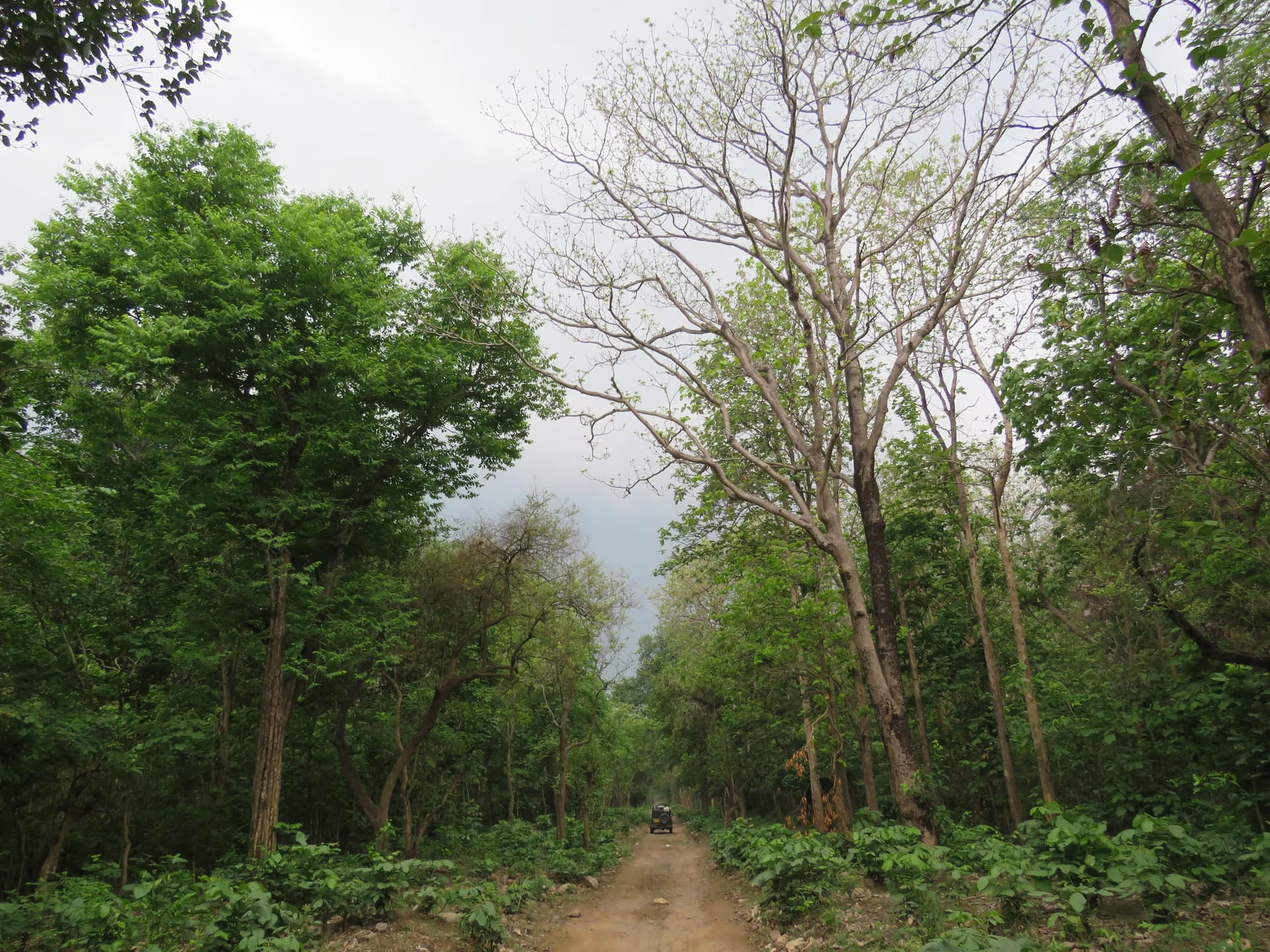
A long-running argument about a forest road on Rajaji's western edge produced a short, unusually clear order of the Supreme Court on 12 February 2026. It does two things at once. It lets the State of Uttarakhand undertake works on the existing Laldhang–Chillarkhal road so that remote villages can be reached, and it takes commercial vehicles off that road entirely, sending them to an alternative route. This page reads the order itself, separates the wildlife-board conditions from the Court's own words, and records what no official source had published as of 28 October 2026.
Sources checked on 28 October 2026: the Supreme Court's order dated 12 February 2026 in Writ Petition (Civil) No. 202 of 1995, listed that day as Item 4 concerning Rajaji Tiger Reserve, Uttarakhand; the minutes of the 56th meeting of the Standing Committee of the National Board for Wildlife held on 17 December 2019, agenda item 56.4.1, published by the Environment Ministry. No news report, press release or travel website is used as a source on this page.
What the order is, and which road it concerns
The item sits in the long-running Godavarman proceedings, listed as Contempt Petition (C) No. 319 of 2021 together with the Central Empowered Committee's report and several applications. The order places the Laldhang–Chillarkhal road in the buffer zone of the tiger reserve, notes that the Court had already stayed any work on it by order of 11 January 2023, and records that the State moved to lift that stay while two private parties filed applications seeking the same relief. The order is a permission with conditions attached, not a report on progress.
The figures the order prints about the road
Two lengths appear four paragraphs apart, and both belong to the same document. Paragraph 12 describes the matter as concerning an approximately 11 km long Laldhang–Chillarkhal Road. Paragraph 13 puts the total stretch at approximately 11.5 km and then narrows the field: the controversy that survives concerns the central stretch of 4.7 km from Chamaria bend to Sigadi Sot.
Paragraph 13 also records why the road became contentious. The State's proposal was not limited to connecting villages; it included commercial use, revealed in a plan to allow 150 heavy vehicles comprising dumpers, trucks and other commercial vehicles. Four expert bodies examined these proposals: the National Board for Wildlife's standing committee, the tiger conservation authority, the Environment Ministry and the Central Empowered Committee. The State first opposed some of their recommendations, but the Court found no merit in those objections, and counsel conceded that the recommendations would be strictly adhered to.
What the Court granted
Paragraph 16 grants the permission: works on the subject road, for the purpose of providing better access and facilities, including basic amenities, to residents of villages located in remote areas that the road was meant to connect. The permission is expressly subject to the conditions set out in the order.
That permission does not establish that the works are finished, that the surface has been upgraded, that the route has opened to visitors or safari vehicles, or that every statutory clearance along the stretch is in place. None of that appears in the order, so none is made here.
What the Court restricted
Paragraph 17 takes up the commercial proposal and notes that the Central Empowered Committee had accepted the State's plan to permit 150 commercial vehicles per day even though an alternative road was on record, a point State counsel acknowledged, while adding that the alternative route is longer. Paragraph 18 resolves it in one direction: no commercial vehicle shall be permitted to ply on the subject road, and such vehicles shall instead operate only from the alternative road available for them. The Court frames that as balancing forest ecology in the buffer zone against the interests of the beneficiary villages.
Paragraph 19 adds the enforcement step: the measures that will prevent commercial vehicles from using the road are to be placed on record before the Court, with an advance copy circulated to the Central Empowered Committee, which will examine them with the learned amicus curiae and report. Paragraph 20 disposes of the contempt petition and the pending applications, which are partly allowed subject to those conditions.
Where the engineering conditions actually come from
The detailed numbers circulating with this story are wildlife-board conditions, not sentences of the Supreme Court, and the distinction matters. Agenda item 56.4.1 of the minutes of the 56th meeting of the Standing Committee of the National Board for Wildlife, held on 17 December 2019, is a proposal for strengthening and black-topping the old existing road from Chillarkhal to Laldhang at 3 m width through the buffer zone of Rajaji National Park. It covers the use of 7.70 ha of land, and it was recommended by the State Chief Wildlife Warden and by the State Board for Wildlife.
The conditions recorded in those minutes include the following, each attributed here to the minutes themselves:
- An elevated road with underpasses for wildlife on the central 4.7 km from Chamaria bend to Sigadi Sot, designed with substantial clearance for elephants, 8 m above ground, following the Ministry's guidance on mitigating the impact of linear infrastructure on wildlife.
- A permeable space of 705 m along that stretch, arrived at as at least 100 m of passage way per km, increased by half again because the area is elephant dense, with the exact location or a breakdown into structures of not less than 50 m span to be decided by the Chief Wildlife Warden with the Wildlife Institute of India.
- No traffic between sunset and sunrise, because night vehicular travel coincides with high animal movement and raises collision and mortality risk, together with no construction work in the forest at night.
- Forest clearance for the whole Laldhang to Chillarkhal stretch under the Forest (Conservation) Act, 1980, and a monitoring committee under the Chief Wildlife Warden that reports to the National Tiger Conservation Authority during and after the work.
The minutes also record that the first stretch, from the Laldhang check post to Chamaria bend, had already been black-topped by the public works department and is to be maintained as it is, and that the Standing Committee's own recommendation was conditional on a road design modified to the animal passage plan, a conflict-mitigation plan with manual patrolling at project cost, and annual compliance certificates. The Supreme Court's own words are narrower: it has gone through the expert bodies' reports, and those recommendations shall be strictly adhered to.
What the order does not say, and what was not published as of 28 October 2026
- No completed road. Nothing in the order records the road as finished, upgraded or open, and no official source checked for this page said otherwise on 28 October 2026.
- No completed clearances. The order grants permission subject to conditions; it does not say clearance for the whole stretch has been granted or complied with.
- No enforcement record yet located. The order requires the anti-commercial-traffic measures to be filed for the Central Empowered Committee's examination, and no later compliance report on them was found for this page.
- No highway story here. Crossing work on national highways and the railway in the same landscape is a separate story, covered in our wildlife crossings article, and nothing here mixes it with this forest road.
Where to read next
For crossing and corridor work in the landscape, start with wildlife crossings and linear infrastructure. The order's buffer-zone wording sits inside the geography covered by the park's history and geography and by national park versus tiger reserve. The Jhilmil Jheel Conservation Reserve nearby is a different protected area and is not part of this road's story.
Laldhang–Chillarkhal road order: questions answered
What exactly did the Supreme Court allow on this road?
Permission for the State of Uttarakhand to undertake works on the subject road, described in paragraph 16 of the order of 12 February 2026 as works for better access and facilities, including basic amenities, for residents of villages in remote areas that the road was meant to connect. That permission is granted subject to the conditions in the order, and it is permission to carry out works: the order does not record the road as completed, upgraded, cleared or open to visitors, and this page does not read it that way.
What did the Court restrict, and what happens next on the record?
Paragraph 18 directs that no commercial vehicle shall be permitted to ply on the subject road and that such vehicles shall instead operate only on the alternative road available for them, an alternative the State’s counsel accepted was available though longer. Paragraph 19 then requires the measures that will prevent commercial vehicles from using the road to be placed on record before the Court, with an advance copy to the Central Empowered Committee, which will examine them with the amicus curiae and report. Paragraph 20 disposes of the contempt petition and the pending applications, which are partly allowed.
Which stretch was still in dispute, and how long is the road?
Paragraph 13 puts the total stretch at approximately 11.5 km and says the surviving controversy concerns the central 4.7 km from Chamaria bend to Sigadi Sot, while paragraph 12 describes the road as approximately 11 km long. Both figures are printed in the same order, so this page reports both rather than choosing one. The order also places the road in the buffer zone of the tiger reserve, not in the core.
Where do the 7.70 ha, 3 m width, elevated passages, 705 m and the sunset-to-sunrise restriction come from?
From the minutes of the 56th meeting of the Standing Committee of the National Board for Wildlife held on 17 December 2019, agenda item 56.4.1, which recommends strengthening and black-topping the existing road at 3 m width over 7.70 ha, with elevated animal passages giving 8 m clearance for elephants on the central 4.7 km, a permeable space of 705 m, and no traffic between sunset and sunrise, published by the Ministry at https://moef.gov.in/uploads/2018/03/Minutes-of-56th-Meeting-of-the-Standing-Committee-of-National-Board-for-Wild-Life-held-on-17.-12.-2019.pdf. Those are wildlife-board conditions reproduced from that document. The Supreme Court order itself says only that it has read the expert bodies’ reports and that their recommendations shall be strictly adhered to, so this page does not present those engineering figures as sentences written by the Court.
Is the road finished, open to tourists, or formally cleared as of 28 October 2026?
This page found no official source saying any of that on 28 October 2026. The order of 12 February 2026 gives permission subject to conditions and asks for enforcement measures to be filed, and no later compliance report or Central Empowered Committee report on those measures was located for this page. Whether works have physically progressed, and whether statutory clearances for the whole stretch are in place, are questions the sources checked here do not answer, so neither is asserted. The order is at https://api.sci.gov.in/supremecourt/1995/2997/2997_1995_1_301_68581_Order_12-Feb-2026.pdf.