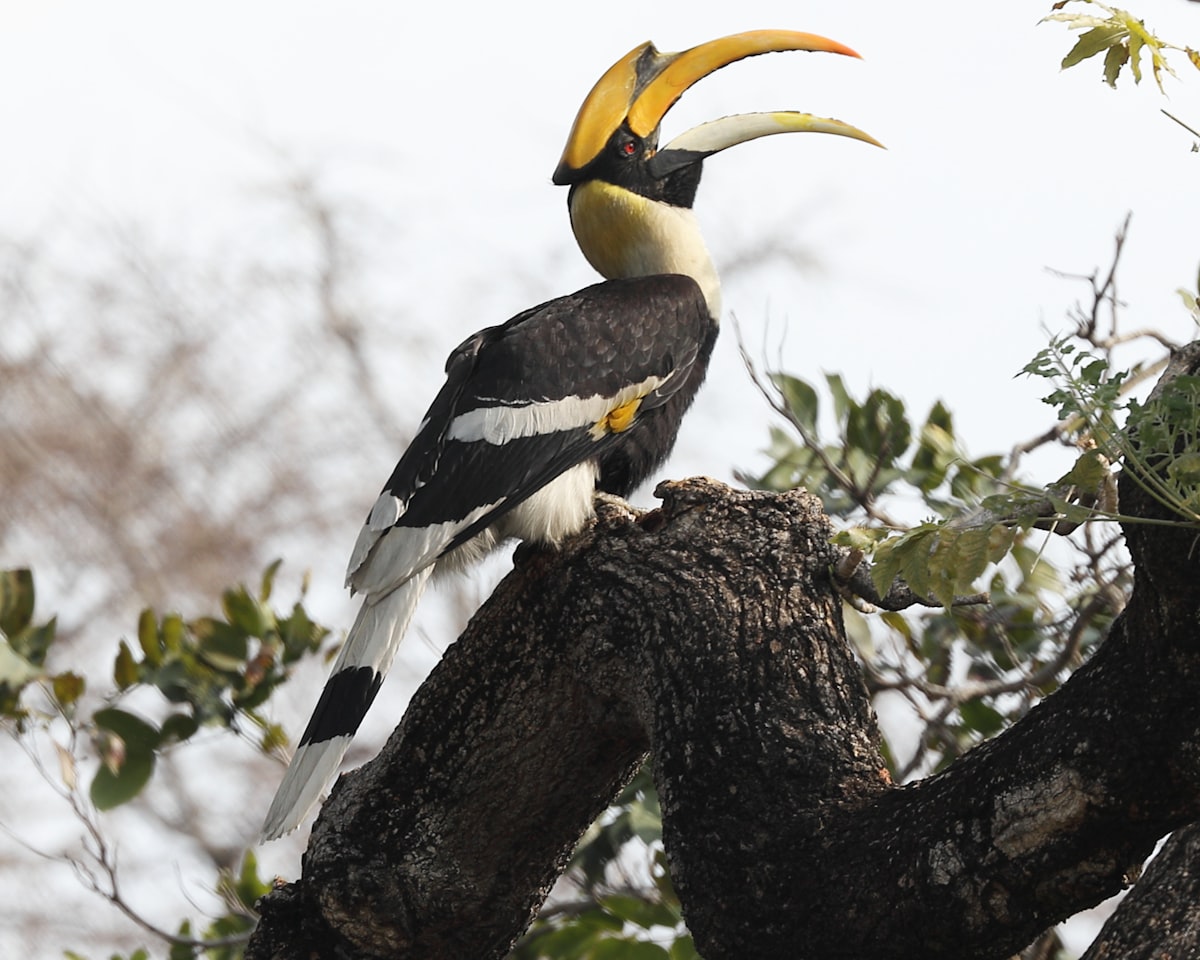
The birds of Rajaji have an official list with a date on it: 168 species, recorded in a Zoological Survey of India volume published in March 1995. This page reads the birds chapter — by M. L. Narang, running from page 25 to page 53 — for its author, its method, its own summary lines and the boundary it worked against. Every figure below belongs to a historical inventory built on fieldwork of 1982 to 1987, and none of them is a checklist of what the park holds today.
Sources checked on 4 November 2026: the Zoological Survey of India's own copy of Fauna of Conservation Area 5: Rajaji National Park (March 1995), read as a scanned PDF; and this site's own published pages, linked at the foot of this article.
The chapter, its author and its agreement
The chapter is titled BIRDS (AVES), is signed M. L. Narang of the Zoological Survey of India, Solan (H. P.), and runs from page 25 to page 53 of the volume. The volume's summary records 168 birds for the park, and the chapter's own summary, printed at the close of the chapter, says the same thing in its own words: in all, 168 species of birds have been recorded from the park. Here the chapter and the volume's summary agree, which is worth noting because the same book does not always provide it.
The chapter also states its own limits. It says that about 25 species, mostly in the family Muscicapidae, could not be identified in the field though they are often observed, and that such species cannot be identified unless in hand. A chapter that tells you where its own list stops is a chapter you can quote safely, and that sentence is reported here rather than quietly dropped.
Why the chapter lists the park, not the district
Ornithology around Dehradun had a long head start, and the chapter opens by setting out that history before separating itself from it. It records that Osmaston's 1935 paper listed 405 species of birds for Dehra Dun and adjacent hills, and that Wright published a list of 227 species for Dehra Dun in 1949 and 1957, alongside other later work on the district's birds.
It then draws the line that gives this chapter its purpose: all of that work, it says, relates to birds found either in Dehra Dun proper or in the Himalayan portion of the district, while the area forming the present-day park — Rajaji Sanctuary, Motichur Sanctuary, Chilla forest and some portion of the Shivalik Hills in district Dehra Dun — had not been given much attention by past workers. The chapter therefore sets out to prepare a list of the birds of that area specifically. Two older, larger numbers for a wider area sit beside the chapter's 168 for the park, and the chapter itself explains why they are not the same list.
How the list was made
The method is stated in a single short paragraph, and it is a birding method rather than a collecting one. The studies were carried out from 1982 to 1987, and the birds were identified with the help of field binoculars of 16 x 50. No specimens are claimed for the identifications, and no permit story appears in this chapter as it does in the mammals chapter next door.
Each entry in the list then carries a status abbreviation and, where the observer had one, a short field note. The abbreviations are R for resident, C for common, U for uncommon, WM for winter migrant and SM for summer migrant, and the notes record where and how a bird was seen — on the banks of a river, in flocks, in ponds near villages, in grassland. That structure makes the list a record of observations with status labels attached, which is exactly what a chapter of this kind can support: what was seen, where, in which season, over seven years of fieldwork.
What the chapter's own summary counts
The chapter's closing summary does more than repeat the total. It states that the 168 species belong to 17 orders and 47 families, and it splits the total four ways: 116 species found to be resident, 35 recorded as winter migrant and 5 recorded as summer visitors, with the status of the remaining 12 uncertain — arithmetic that closes exactly on 168 — and then adds that further often-observed species can be appended only because they cannot be identified without capture.
All of those are summary lines about the chapter's own list, describing a study of 1982 to 1987 published in 1995. They are reproduced here as the chapter's account of itself. This page does not restate any of them as present-day status for any species: "resident" in this book means resident in the observer's window, not resident in 2026, and no bird on the list is described here as common, scarce, declining or secure today.
The boundary and the date
The chapter notes that the major part of Rajaji National Park lies in District Dehra Dun, and the volume's foreword describes the park as the former Rajaji, Motichur and Chilla wildlife sanctuaries in the State of Uttar Pradesh — the park as it stood when the surveys were organised. The volume was published in March 1995, which places it before the final national park notification of 14 September 2013 and before the tiger reserve declared in 2015.
The 168 therefore belong to an earlier boundary and an earlier district arrangement, and to a park rather than to the wider tiger reserve. A reserve-wide or present-day bird total would be a different claim against a different footprint, and this page makes neither.
What this page will not claim
Four abstentions. There is no current bird total for Rajaji on this page — none was verified for this article as of 4 November 2026, and no later figure is imported here. There is no trend: one inventory with one date cannot say whether birds have become more or fewer, and no second list is set beside it. There is no current status for any species, since the resident, winter migrant and summer visitor labels belong to the chapter's own study window. And there is no species list transcribed from the scan, because 168 names read off a photograph is 168 opportunities to be wrong.
Where to read next
For birding practice, seasons and zones, the birdwatching guide is this site's page for that. For the park's fauna in one place, the animals list gathers mammals, birds and reptiles together, and the habitats and flora guide describes the sal forest, riverine belts and grassland the birds live in. Five companions hold other chapters of the same 1995 volume: the butterfly record, the dragonfly and damselfly record, the fish record, the termites, centipedes, wasps and scorpions record and the reptile and amphibian record. The two companion pages in this release are the 2022 tiger estimate article and the 1995 mammal inventory article. Sources checked 4 November 2026.
Rajaji's 1995 ZSI bird record: questions answered
How many bird species does the 1995 ZSI volume record for Rajaji?
168. The birds chapter by M. L. Narang runs from page 25 to page 53, the volume's summary records 168 birds, and the chapter's own summary repeats the same figure: https://zsi.gov.in/public/PDFVolumes/cas/005/index.pdf. Here chapter and summary agree. The 168 is a March 1995 publication figure for a historical inventory, not a current checklist and not a count for today.
How was the chapter's list made?
From fieldwork with binoculars rather than specimens in hand. The chapter states that the studies were carried out from 1982 to 1987 and that the birds were identified with the help of field binoculars of 16 x 50. Its entries carry status abbreviations for resident, common, uncommon, winter migrant and summer migrant, and it notes that about 25 species, mostly in the family Muscicapidae, could not be identified in the field and can be added to the list only because they are often observed — such species, it says, cannot be identified unless in hand.
What does the chapter's own summary add to the 168?
Four summary lines about its own list: the 168 species belong to 17 orders and 47 families; 116 were found to be resident, 35 were recorded as winter migrant and 5 as summer visitors; the status of the remaining 12 was uncertain; and a further 25 often-observed species could not be identified without capture. Those lines describe a study of 1982 to 1987 published in 1995, and this page does not restate any of them as present-day status for any species.
How does the chapter relate to the older Dehra Dun bird lists?
It separates itself from them. The chapter records that Osmaston's 1935 paper listed 405 species of birds for Dehra Dun and adjacent hills and that Wright published a list of 227 species for Dehra Dun in 1949 and 1957, then states that all of that work relates to birds found either in Dehra Dun proper or in the Himalayan portion of the district, while the area forming the present-day park — Rajaji Sanctuary, Motichur Sanctuary, Chilla forest and some portion of the Shivalik Hills in district Dehra Dun — had not been given much attention. The chapter therefore sets out to list the park area's own birds, and reaches 168.
Is this a current checklist of Rajaji's birds?
No. It is a historical official inventory published in March 1995 from fieldwork of 1982 to 1987, describing the park as then defined, before the final national park notification of 14 September 2013 and before the tiger reserve of 2015. This page claims no current bird total and no trend. For birding practice and where to look, the birdwatching guide on this site is the page to read; for the wider fauna, the animals list and the habitats and flora guide; for other chapters of the same volume, the butterfly, dragonfly, fish, termite and reptile records. Sources checked 4 November 2026.