A visitor who wants to know how many butterflies Rajaji holds usually finds a number within a minute — 68, or sometimes 69 — and almost never a date attached to it. Both figures come from a single official publication: the Zoological Survey of India's Fauna of Conservation Area 5: Rajaji National Park, published in March 1995. This page sets out what that volume actually says about the park's butterflies, who wrote the chapter, when the insects were collected, why the book prints two different totals for the same group, and why neither figure describes the park today.
Sources checked on 2 November 2026: the Zoological Survey of India's own copy of Fauna of Conservation Area 5: Rajaji National Park (March 1995, 323 pp.), read as a scanned PDF; and this site's own published pages, linked at the foot of this article.
An inventory, not a census
The 1995 book is an official state inventory. The Zoological Survey of India compiled it after the Indian Board of Wildlife asked for faunal accounts of conservation areas, and the field and museum work was carried out by the survey's Northern Regional Station in Dehradun. It records what was collected and identified before the book went to press. It is not a census, not a monitoring series, not a repeated count and not a statement about the park as it stands now. The volume's own summary gives its totals for the park in a single block:
- 49 mammals
- 168 birds
- 28 snakes
- 12 turtles and tortoises
- 9 lizards
- 10 toads and frogs
- 49 fishes
- 7 centipedes
- 21 termites
- 38 odonates
- 68 butterflies
- 14 hymenoptera
Every number in that list is a 1995 publication figure resting on collections made earlier. None of them is a current total for Rajaji, and this page never uses one as if it were.
The butterfly chapter, and a one-species gap
The butterflies are treated by G. S. Arora of the Northern Regional Station in a chapter running from page 245 to page 300. The book does not agree with itself about how many species that chapter covers. Arora's introduction to the volume states that the butterfly fauna of the park "represents as many as 69 species under eight families". The volume's summary lists 68 species of butterflies. Inside the chapter, both of its own statements give 68: the introduction says the study "is based on over 950 exs., representing 68 species in 50 genera and eight families", and the closing summary says the account "deals with sixty eight species in fifty genera and 8 families".
This page reports that gap instead of closing it. A one-species difference of this kind is normally an addition or an omission made between chapter text and summary table, but the scanned copy offers no erratum, no corrigendum and no date that would show which figure was set last. So the honest statement is two figures in one volume, by the same author: 69 in the introduction, 68 in the summary and again in the chapter's own closing words. Nothing here chooses between them, and neither number is presented as settled.
Eight families, three counts that are legible
Arora's chapter names eight families, in the order the volume uses:
- Papilionidae
- Pieridae
- Danaidae
- Satyridae
- Acraeidae
- Nymphalidae
- Lycaenidae
- Hesperiidae
Three family-level counts are stated clearly enough in the chapter text to be quoted directly: Pieridae with 15 species in 11 genera, Nymphalidae with 22 species in 14 genera, and Lycaenidae with 8 species. The chapter also notes that Satyridae, Lycaenidae and Hesperiidae were poorly represented in the collections, and suggests reasons for it — the regular burning of ground grass and undergrowth and the practice of collecting the larger, brighter specimens first. The family-wise summary table at the end of the chapter is partly garbled in the scan: characters dropped, columns blurred. No other family count is reproduced here, because reconstructing a damaged table would put a guess where a quotation should be. Anyone who needs the full family-level breakdown should open the volume itself and judge the printed table directly.
When the butterflies were collected
The fieldwork behind the chapter was carried out in 1990, and Arora describes extensive tours across pre-monsoon, monsoon and post-monsoon periods for the specific purpose of surveying the butterfly fauna, which had been inadequately represented in the station's older collections. That seasonal spread matters more for butterflies than for most groups, because different species fly in different parts of the year in the northern Indian foothills; a single-season list would be visibly incomplete. The chapter also records the material examined — over 950 specimens — and its own summary observes that the extent of that material shows collections were made almost throughout the year.
The dates run in a chain: collected in 1990, published in March 1995, read here on 2 November 2026. That chain is the whole reason this page cannot be turned into a present-day statement. A list is only as current as the season that produced it, and this one is three decades older than the reader.
The boundary the volume used
In 1995 the park lay in the Dehradun, Haridwar and Pauri districts of Uttar Pradesh — the chapter says so directly, noting that the areas had previously been referred to Saharanpur district until Haridwar was declared a district in its own right. The volume therefore predates the final national park notification, No. 3807/X-2-2013-19(7)2002 of 14 September 2013, and uses the park boundary as it stood when the surveys were organised. Two consequences follow. "Rajaji" in the 1995 book means the park as then defined, not the notified area of today. And it does not mean the wider tiger reserve declared in 2015 either: the reserve is a larger legal object than the park, and an inventory of the park is not an inventory of the reserve.
What this page will not claim
Four abstentions, stated so that their silence is not mistaken for an oversight. There is no current butterfly total for Rajaji here, because none was published or located as of 2 November 2026. There is no claim that Rajaji has 69 butterflies today — or 68 today, or any other number today. There is no species list transcribed from the chapter: the volume's own tables are the record, and this page quotes only the three legible sub-counts and the eight family names. And there is no trend, because one historical inventory cannot be joined to a present-day figure to make a line when there is no present-day figure to join it to. This site carries no current butterfly checklist, and this article does not become one.
Where to read next
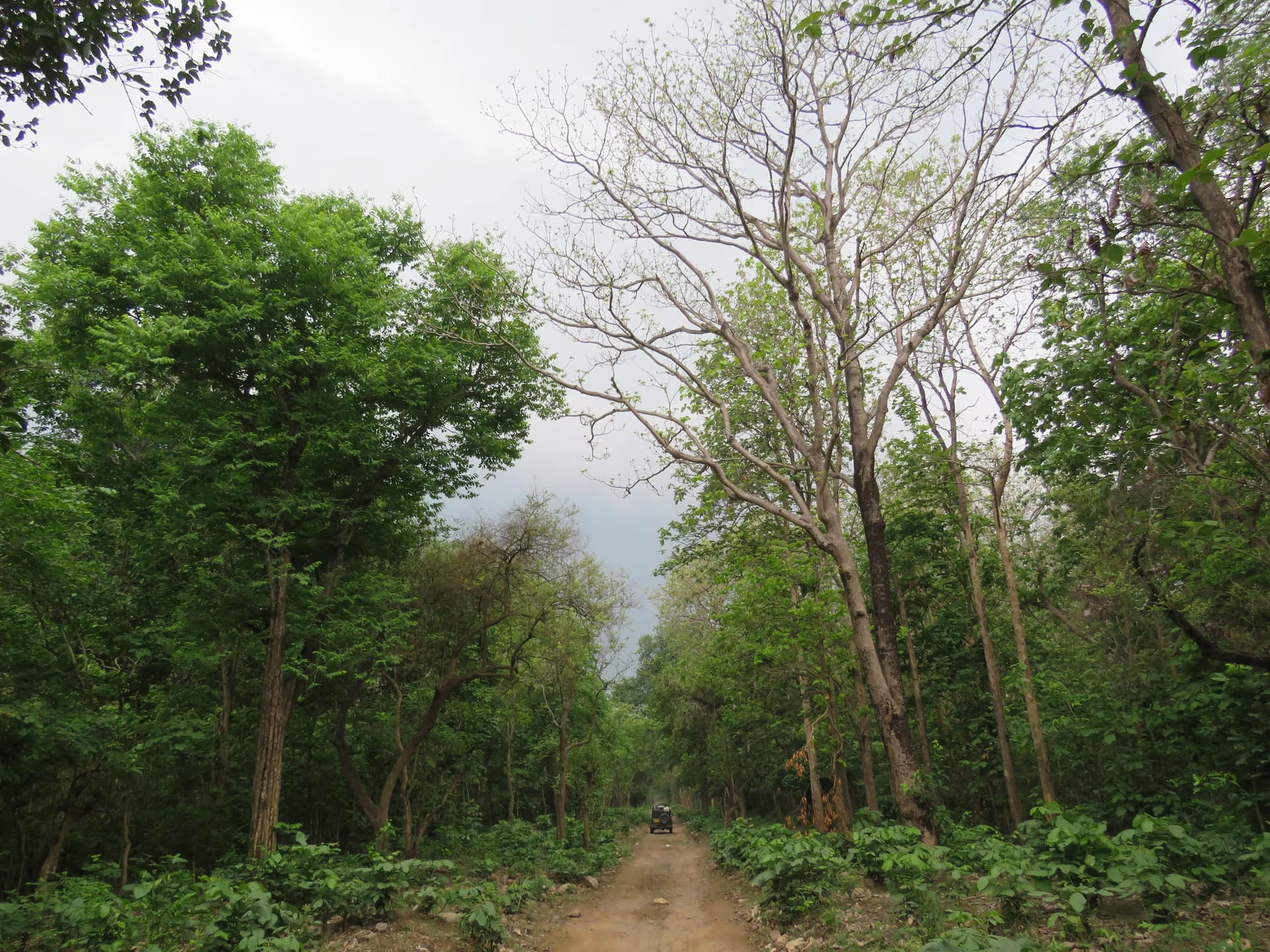
For the wider fauna the same volume inventories, start with the animals list; for the ground those butterflies fly over — sal forest, riverine belts, grassland and the park's trails — the habitats and flora guide carries the habitat story behind the forest-trail image at the top of this page. For birds, the birdwatching guide covers a group the same volume counts at 168 species. Two companions hold the other chapters of the same book: the dragonfly and damselfly record (38 species) and the fish record (42 or 49). Sources checked 2 November 2026.
Rajaji's 1995 ZSI butterfly record: questions answered
How many butterflies does Rajaji have today?
This page gives no current total, because none was published or located as of 2 November 2026. What it does give is the dated record: the Zoological Survey of India's March 1995 volume prints 69 species under eight families in its introduction and 68 species of butterflies in its summary, and the butterfly chapter's own summary says sixty eight species in fifty genera and eight families from over 950 specimens. The surveys behind those figures were made in 1990.
Who wrote the butterfly chapter, and where does it sit in the volume?
G. S. Arora of the Zoological Survey of India's Northern Regional Station, Dehradun, in a chapter running from page 245 to page 300 of Fauna of Conservation Area 5: Rajaji National Park, published in March 1995. The same author also wrote the volume's introduction, which is where the 69-species figure appears. Volume: https://zsi.gov.in/public/PDFVolumes/cas/005/index.pdf
Which butterfly families are recorded for the park?
Eight families are named: Papilionidae, Pieridae, Danaidae, Satyridae, Acraeidae, Nymphalidae, Lycaenidae and Hesperiidae. Only three sub-counts are legible enough in the scan to quote — Pieridae with 15 species in 11 genera, Nymphalidae with 22 species in 14 genera, and Lycaenidae with 8 species. The family table is partly garbled in the scan, so no other family count is given here.
When were the butterflies surveyed, and against which boundary?
In 1990, across pre-monsoon, monsoon and post-monsoon periods. At that time the park lay in the Dehradun, Haridwar and Pauri districts of Uttar Pradesh, and the 1995 volume uses that then-park boundary: it predates the final national park notification of 14 September 2013 and knows nothing of the later notified area or of the 2015 tiger reserve.
Is this volume a current census of the park?
No. It is a historical official inventory published in March 1995 from surveys and collections made before it went to press, and this site carries no current butterfly list. Nothing on this page should be read as saying Rajaji has 69 butterflies today, or 68, or any other number today. For the park's wider fauna and its habitats, see the animals list and the habitats and flora guide.