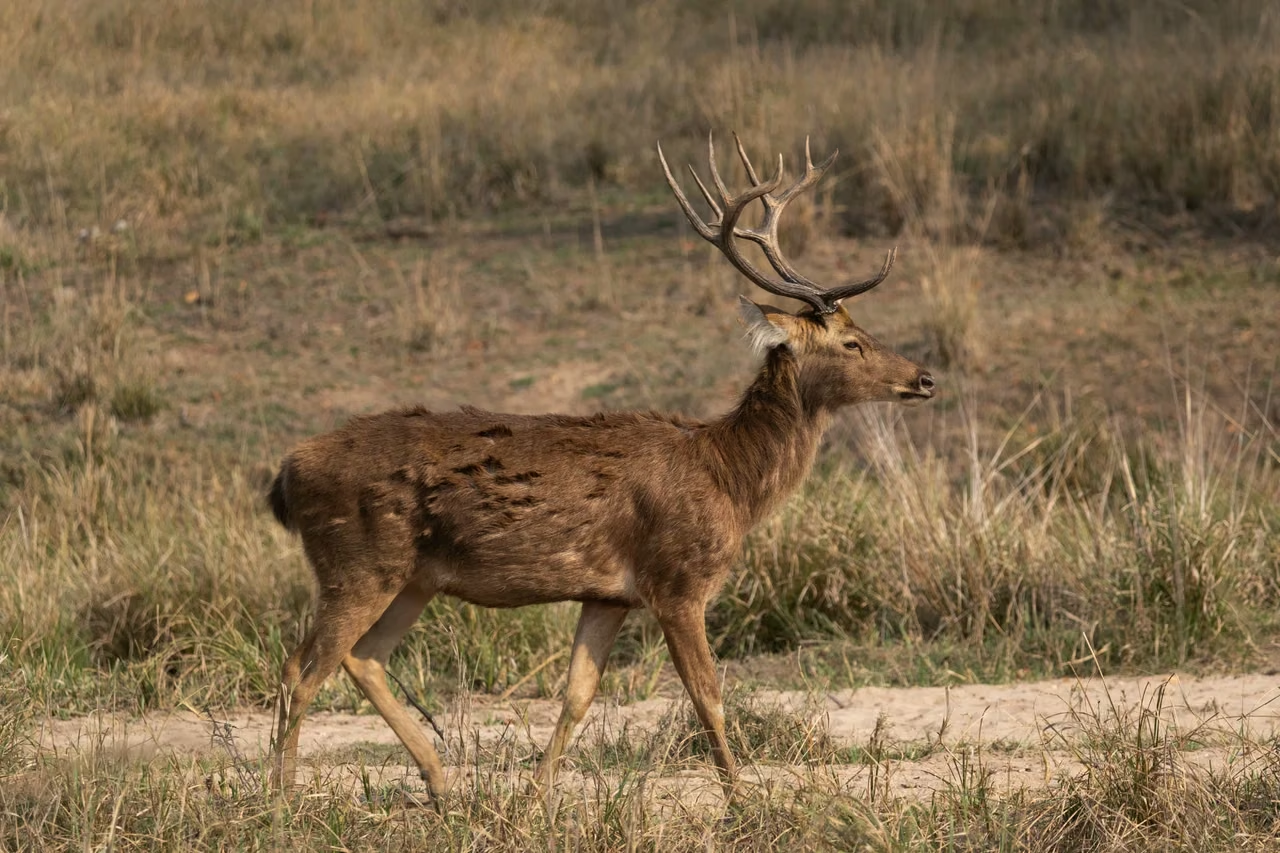
Jhilmil Jheel is known in conservation writing for its wetland landscape and its association with swamp deer, also called barasingha. The Wildlife Institute of India (WII) describes Jhilmil Jheel Conservation Reserve as home to Uttarakhand’s only surviving herd of swamp deer. This is an important regional record, but it should be read with its source date in mind: the WII profile was last updated on 22 November 2016 and does not give a current population count.
This article explains the relationship between barasingha and wetland habitat using the facts WII publishes. It does not promise wildlife sightings or repeat unsupported population estimates. Jhilmil is also not listed as a selectable zone on the Rajaji Tiger Reserve booking pages checked on 16 October 2026; see the separate official-listings guide for what visitors should verify.
What “barasingha” means here
Barasingha is the common name used for swamp deer. In its Jhilmil profile, WII identifies a surviving herd of swamp deer in Uttarakhand and associates that herd with this Conservation Reserve. The profile is a source for the reserve’s ecological importance, not a live census or a guarantee that visitors will encounter the deer.
That distinction is important for responsible wildlife writing. A statement that a species has been recorded or that a herd is associated with a habitat is not the same as a current head count. No number is supplied in the cited WII page, so this guide does not estimate one. It also avoids claims about the deer’s legal status or trend that are not documented in the sources cited here.
Why wetland and grassland habitat matter
The WII description of Jhilmil Jheel includes a central oxbow lake, seasonal and perennial swamps, short and tall grasslands, tropical mixed moist deciduous forest and secondary scrub. These habitat types occur together as a landscape mosaic. The swamp deer association belongs in that broader description rather than being reduced to “deer near a lake.”
Wetland edges and grasslands are different from closed forest. Water, vegetation and open ground combine in patterns that shift through the year. WII describes the swamps as shaped by changing river channels, which explains why the reserve’s wetland character is connected to its river setting. The profile does not provide a visitor-season timetable for observing deer, so no month or hour should be treated as a guaranteed viewing window.
For a wider explanation of the protected-area landscape and its habitat, see the Jhilmil Jheel Conservation Reserve guide. For the park-wide bird inventory, use our Rajaji National Park birdwatching guide; this article stays focused on the wetland and barasingha connection.
Other wildlife recorded in the reserve profile
WII’s Jhilmil profile lists chital, sambar, barking deer, Asian elephant, nilgai and leopard, and notes that tigers occur occasionally. It also describes a large number of resident and winter-migratory birds. These are species records in an institutional profile, not a sighting list for an individual trip.
That wider fauna context helps place barasingha within a diverse wetland and forest landscape. It should not turn into a promise that all listed species are seen together, or that one species is likely at a particular point. Visitors who do come to an authorised site should follow the directions of the responsible staff and keep a respectful distance from wildlife.
Conservation pressures noted by WII
The WII profile identifies several pressures in its discussion of Jhilmil: livestock grazing and lopping, unregulated extraction of water, a receding groundwater table, and check dams at a drainage exit that may affect the water regime. These points are part of a profile last updated in 2016. They are useful context about the types of pressure described at that time, but they should not be presented as a current assessment of severity or as proof that the conditions remain unchanged.
Wetland conservation depends on the relationship between water and habitat. If the water regime changes, the wetland mosaic can change too. This is why the WII profile describes both the species and the hydrological setting rather than treating barasingha as a stand-alone attraction. Current monitoring results or population updates should come from a newer Forest Department or research publication, not an assumption based on an older profile.
Responsible observation, not guaranteed sightings
Wild animals move freely, and an ecological record does not say where a visitor will see them. The responsible expectation is to learn about the habitat without expecting a particular encounter. No guide, operator or article can guarantee a barasingha or any other animal at a specified time.
For any authorised visit, use only current access instructions from the responsible authority. The WII conservation profile is not a visitor booking page. The Rajaji Tiger Reserve homepage and booking page reviewed for this article do not list Jhilmil as a selectable safari zone, so do not assume that a Rajaji zone permit, schedule or rate applies to the Conservation Reserve.
What the WII source can support
- Jhilmil Jheel is described as a Conservation Reserve in Haridwar district.
- WII reports a swamp deer or barasingha herd there, and identifies it as Uttarakhand’s only surviving herd in the profile.
- The reserve contains an oxbow, swamps, grasslands, forest and scrub.
- Other fauna and resident and winter-migratory birds are recorded in the profile.
- The page is dated 2016, so it should not be treated as a current population survey or current access notice.
For the full source context, read WII’s Jhilmil Jheel Conservation Reserve profile. It is the basis for the ecological facts above. The companion article on Jhilmil and official Rajaji zone listings covers the separate visitor-information question.
Barasingha and Jhilmil questions answered
What is the connection between Jhilmil Jheel and barasingha?
The Wildlife Institute of India profile identifies Jhilmil Jheel as home to Uttarakhand’s only surviving herd of swamp deer, also called barasingha. The profile was last updated in 2016, so it should not be read as a current population count.
What kind of habitat does the swamp deer use at Jhilmil Jheel?
The WII profile describes a wetland mosaic with an oxbow lake, seasonal and perennial swamps, short and tall grasslands, mixed moist deciduous forest and secondary scrub.
Which other animals does the WII record at Jhilmil Jheel?
The WII profile lists chital, sambar, barking deer, Asian elephant, nilgai, leopard and occasional tiger, along with resident and winter-migratory birds. These are reserve records, not a promise of sightings.
Does the WII publish a current barasingha population for Jhilmil Jheel?
The WII profile cited here describes the herd but does not provide a current population figure. It was last updated in 2016, so this article does not infer a present-day count.
Are swamp deer sightings guaranteed at Jhilmil Jheel?
No. A habitat record does not guarantee that visitors will see an animal on a particular day. Wildlife moves freely, and the cited WII profile is ecological information rather than a visitor sighting forecast.