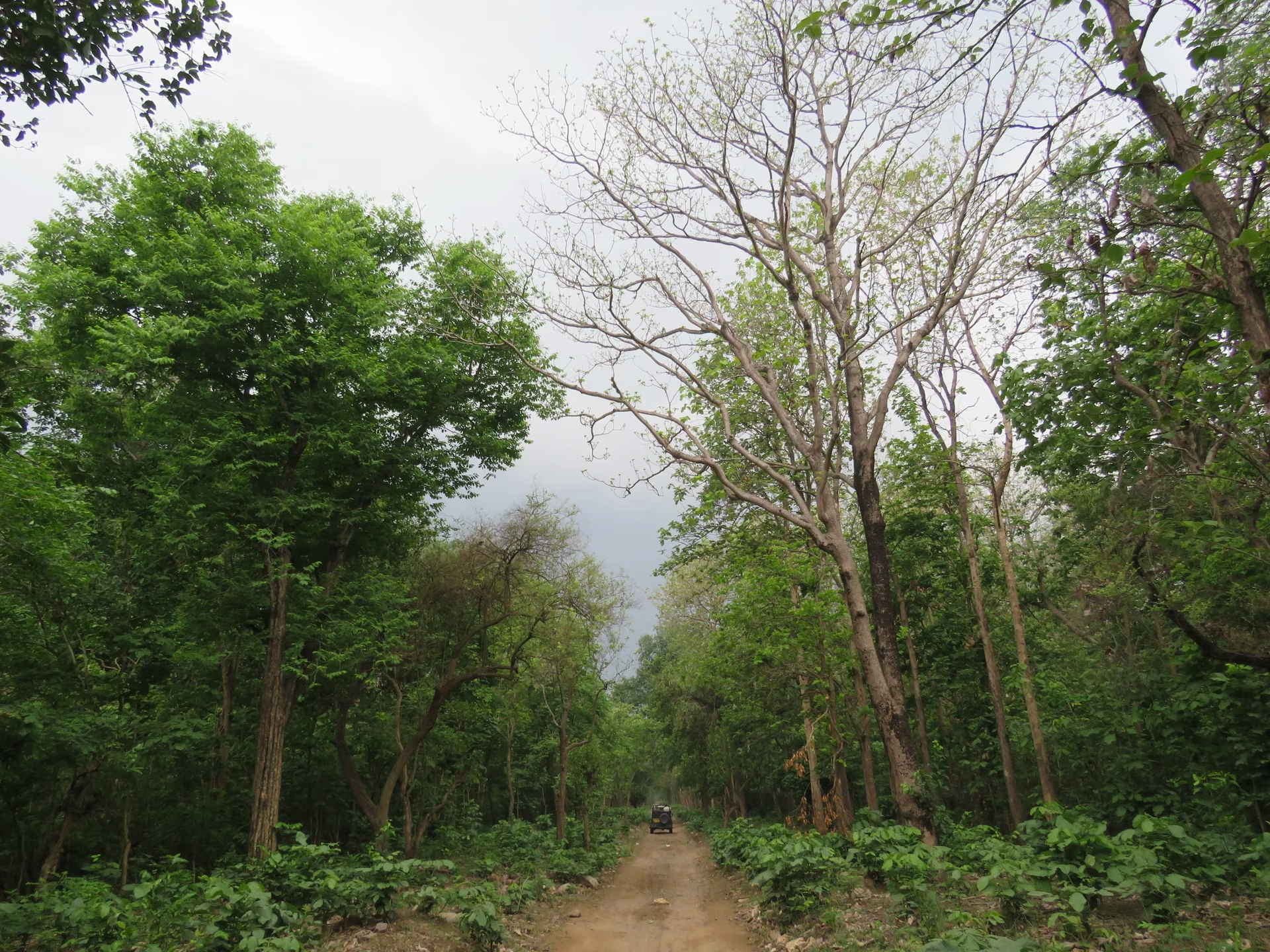
Searches for “Jhilmil safari in Rajaji National Park” can mix together two different questions: what Jhilmil Jheel is as a protected area, and what a current visitor can actually book through the Rajaji Tiger Reserve portal. The first has an answer in conservation sources. For the second, check the live official listings rather than assuming that every nearby protected area is a selectable safari zone.
As checked on 16 October 2026, the Rajaji Tiger Reserve homepage and day-visit booking page reviewed for this guide did not list Jhilmil as a selectable safari zone, and those pages did not publish a Jhilmil-specific tariff or schedule. This describes those pages on that date; it does not prove that no local visitor access or separately authorised service exists.
What official sources say about Jhilmil
The Wildlife Institute of India (WII) describes Jhilmil Jheel as a Conservation Reserve in Haridwar district, on the left bank of the Ganga, in the Chiriyapur forest range. Its profile records the wetland’s oxbow and swamp system, grasslands, forest and scrub. WII’s profile is an ecological source, not a safari booking portal.
By contrast, the Rajaji Tiger Reserve homepage and its day-visit booking page publish the reserve’s visitor information and zone-selection process. The pages checked for this guide list other Rajaji options but do not show Jhilmil as a selectable zone. A separate protected-area designation should not be treated as proof that a Rajaji Tiger Reserve portal booking covers that place.
What the portal omission does—and does not—mean
A missing name on a booking page is a useful limit on what can be claimed from that page. It means a visitor cannot use that page as evidence of a Jhilmil-specific date, zone selection, fee or permit. It does not prove that Jhilmil is closed, that no local visitor arrangements exist, or that another office has not issued separate instructions.
For that reason, this article does not publish a Jhilmil rate, opening date, daily timing, safari duration, vehicle arrangement or reporting gate. Those details require a current, relevant authority source. Do not copy a Chilla, Motichur or other Rajaji zone tariff into a Jhilmil plan, and do not rely on a third-party listing as if it were a Forest Department notice.
Questions to ask before making a Jhilmil plan
Contact the responsible Forest Department office and ask for clear answers to the following. If the response points you to another division or office, record the name of that authority and use its current instructions.
- Authority: Which office is responsible for the visit or activity being offered at Jhilmil Jheel?
- Permission: Is a visitor permit required, and which official system or counter issues it?
- Location: What is the exact authorised reporting point? “Jhilmil” by itself is not a gate address.
- Access: Which dates and hours are currently permitted, and are any restrictions in place?
- Transport: Is a vehicle or guide included, separately authorised, or arranged by visitors?
- Charges: What is the current fee, what does it cover, and where is the tariff published?
- Confirmation: What official receipt, permit or written confirmation should the visitor carry?
How Rajaji Tiger Reserve booking differs
The Rajaji Tiger Reserve booking page describes its own day-visit flow: choose a date, zone and shift; enter visitor and group-leader details; complete payment; then receive and print the permit. That process applies to the options shown by that system. It should not be assumed to cover Jhilmil when Jhilmil is not displayed there.
The reserve’s official contact page publishes contact information for asking about the portal or which office can answer a Jhilmil-specific question. Ask the contact to identify the responsible authority if the request belongs to a different Forest Division. Keep the two topics separate: official Rajaji portal bookings, and any separately confirmed Jhilmil access arrangement.
Use conservation information without treating it as a booking notice
WII’s Jhilmil Jheel Conservation Reserve profile helps explain the place: it describes a wetland, an oxbow and surrounding swamps, and the swamp-deer herd associated with the reserve. The WII profile was last updated in 2016, so it should not be used to confirm today’s visitor arrangements.
Read our Jhilmil wetland facts guide for protected-area geography, or the barasingha and wetland habitat article for WII’s wildlife records. Neither replaces a current access permit or Forest Department instruction.
A simple verification checklist
- Use the official Rajaji booking portal only for zones it currently displays.
- Ask which Forest Department authority is responsible for Jhilmil-specific access.
- Get the reporting point, permission, date, timing, transport arrangement and fee in writing.
- Check that the payment receipt or permit names the same place and activity you plan to visit.
- Reconfirm shortly before travel in case official instructions have changed.
This approach lets visitors plan around verified information without confusing the Rajaji Tiger Reserve portal with the separate Jhilmil Jheel Conservation Reserve record. It also leaves room for the responsible authority to confirm local access arrangements that are not shown on the portal pages reviewed here.
Jhilmil safari and booking questions answered
Is Jhilmil listed as a selectable zone on the Rajaji Tiger Reserve booking portal?
On 16 October 2026, the Rajaji Tiger Reserve homepage and day-visit booking page reviewed for this guide did not list Jhilmil as a selectable safari zone. Portal listings can change, so check the live official pages before making plans.
Does the portal omission prove that no local Jhilmil visitor activity exists?
No. The omission only describes what the Rajaji Tiger Reserve pages reviewed here list. It does not establish whether another Forest Department office authorises separate visitor access or services at Jhilmil Jheel.
Does the Rajaji Tiger Reserve portal publish a Jhilmil safari price?
The official pages reviewed for this guide do not publish a Jhilmil-specific tariff. Do not apply another zone’s fee to Jhilmil; ask the responsible Forest Department office for current written information.
What details should I verify before travelling to Jhilmil Jheel?
Ask which authority manages the visit, whether a permit is required, the exact reporting point, the approved transport arrangement, the date and hours of access, the applicable fee and how written confirmation is issued.
Where can I ask Rajaji Tiger Reserve about the current listings?
The official Rajaji Tiger Reserve contact page publishes the reserve office phone and email. Contact the office and ask which Forest Department authority can confirm Jhilmil-specific access, since the portal pages reviewed do not list it as a safari zone.