Jhilmil Jheel is often discussed alongside Rajaji National Park, but the first useful fact is its protected-area identity: the Wildlife Institute of India (WII) describes it as Jhilmil Jheel Conservation Reserve, a wetland in Haridwar district. Understanding that distinction helps visitors separate conservation geography from safari-zone labels and find the right source for current access information.
This guide focuses on the land and water system, not on safari availability, fees or timings. The WII profile used here was last updated on 22 November 2016. It is a valuable institutional description of the reserve’s geography and habitat, but it cannot confirm present-day visitor arrangements.
Where Jhilmil Jheel is located
The WII profile places Jhilmil Jheel on the left bank of the Ganga, in the Chiriyapur forest range of Haridwar district, Uttarakhand. It describes the wetland as a saucer-shaped area covering 37.83 square kilometres. That is 3,783 hectares when expressed in a different unit; both figures describe the same area.
For readers searching for Jhilmil in relation to Rajaji National Park, this is the key distinction: WII records Jhilmil as a Conservation Reserve, while Rajaji Tiger Reserve’s own current booking pages use their own zone list. A location’s connection with the wider landscape does not automatically make it a selectable safari zone. See what the current official listings confirm before treating the two designations as interchangeable.
How a wetland can contain an oxbow lake
WII describes Jhilmil’s central swamp as an oxbow lake surrounded by seasonal and perennial swamps. The profile explains that these wet areas formed over time as river channels shifted. An oxbow is a water body associated with a former bend or course of a river; at Jhilmil, the official description emphasizes a larger wetland mosaic rather than a single open-water lake.
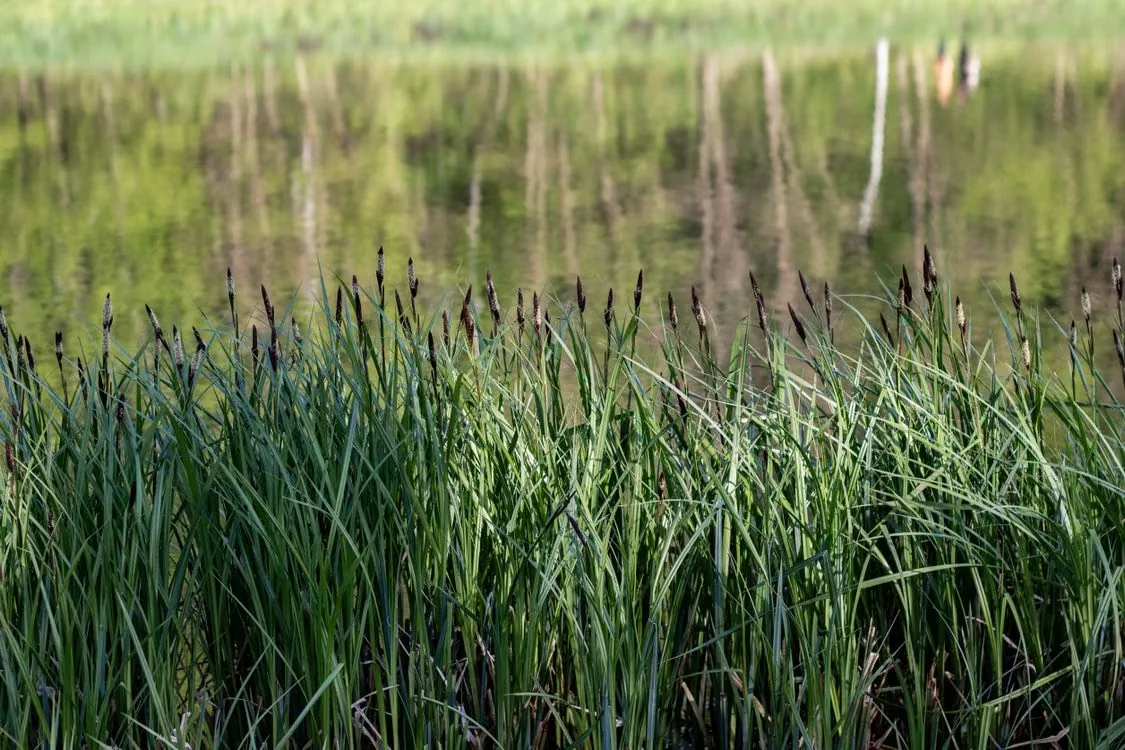
The difference matters when describing the place. Jhilmil is not simply a lake with a shoreline. Its central water, surrounding swamp, grassland and woodland are parts of an interconnected landscape. Some areas hold water seasonally, while others are described as perennial. Water movement and the shape of the land influence which plants and animals can use each patch.
A mosaic of grassland, marsh and forest
The WII profile records short and tall grasslands, tropical mixed moist deciduous forest and secondary scrub. Alongside the oxbow and swamps, those habitats create a varied landscape in one protected area. The grassland and marsh are especially important to understanding why Jhilmil is associated with swamp deer, while the forest and scrub add further habitat types.
Calling the area a mosaic is more accurate than describing it as one uniform wetland. A visitor reading about Jhilmil may see references to marsh, grassland and woodland in the same account because all are reported within the reserve. That variety is also why a short description of the area should not treat every part as open water.
Why WII identifies it as a Conservation Reserve
The WII profile states that Jhilmil Jheel was declared a Conservation Reserve on 14 August 2005 and describes it as among India’s first Conservation Reserves. This designation identifies it as a protected area with a conservation purpose. It is different from a tourism booking label: a protected-area category does not, by itself, publish a safari gate, visitor timetable, vehicle tariff or online reservation process.
For context, Rajaji National Park and Rajaji Tiger Reserve are also part of the broader protected-landscape discussion in Uttarakhand. WII’s profile for Rajaji National Park covers its own geography and protected-area history. Keep each official designation attached to its own name when researching conservation or planning travel.
What the wetland description tells us—and what it does not
The official WII account gives readers a grounded picture of location, area, designation and broad habitat. It does not provide current day-visit dates, entry charges, safari schedules or a present-day visitor map. Those details should not be inferred from the reserve’s ecological description or copied from an old third-party listing.
Likewise, the presence of suitable wetland habitat does not make an animal sighting certain. Habitat records describe where species have been documented, not what a particular visitor will see on a particular day. For a sourced account of the swamp deer associated with Jhilmil, continue to the Jhilmil barasingha and wetland habitat guide.
How to use this information when planning a visit
Use the WII profile to understand what Jhilmil is: a large wetland Conservation Reserve in Haridwar district with an oxbow, marshes, grasslands, forest and scrub. Use current Forest Department information for the separate question of whether, when and how visitors may enter. Do not assume that a Rajaji Tiger Reserve zone selection or permit applies to Jhilmil unless the responsible authority confirms it.
- Keep the name “Jhilmil Jheel Conservation Reserve” attached to the WII facts.
- Check the live Rajaji Tiger Reserve booking pages for the zones and options they actually publish.
- Ask the responsible Forest Department office to confirm any Jhilmil-specific access, reporting point and permit requirement.
- Recheck official instructions close to travel; the WII ecological profile is dated 2016.
Jhilmil Jheel questions answered
What is Jhilmil Jheel Conservation Reserve?
Jhilmil Jheel is a Conservation Reserve in Uttarakhand described by the Wildlife Institute of India as a saucer-shaped wetland of 37.83 square kilometres in Haridwar district. It was declared a Conservation Reserve on 14 August 2005.
Where is Jhilmil Jheel located?
The Wildlife Institute of India places Jhilmil Jheel on the left bank of the Ganga, in the Chiriyapur forest range of Haridwar district, Uttarakhand.
How did the Jhilmil Jheel wetland form?
The WII profile describes a central oxbow lake surrounded by seasonal and perennial swamps formed over time as river channels shifted.
What habitats are found at Jhilmil Jheel?
The WII profile describes short and tall grasslands, tropical mixed moist deciduous forest, secondary scrub and a mosaic of marshes and swamp habitat.
Is Jhilmil Jheel listed as a Rajaji Tiger Reserve safari zone?
The WII identifies Jhilmil Jheel as a Conservation Reserve. The Rajaji Tiger Reserve booking pages checked on 16 October 2026 did not list Jhilmil as a selectable safari zone; check with the responsible Forest Department office for current access information.