Why Rajaji Is a Birding Paradise
Rajaji National Park is one of the most rewarding birdwatching destinations in the Shivalik foothills of Uttarakhand. With over 315 recorded bird species, the park offers an extraordinary diversity of avian life across its varied habitats — dense sal forests, riverine belts along the Ganga, open grasslands, wetlands and the rocky ridges of the Shivalik hills.
Unlike some birding destinations where you need to trek for hours, Rajaji allows you to observe a remarkable variety of species from the comfort of a jeep safari. The combination of accessible forest roads, diverse habitats and a healthy bird population makes Rajaji an excellent choice for both casual birdwatchers and serious listers.
Key Bird Species to Look For
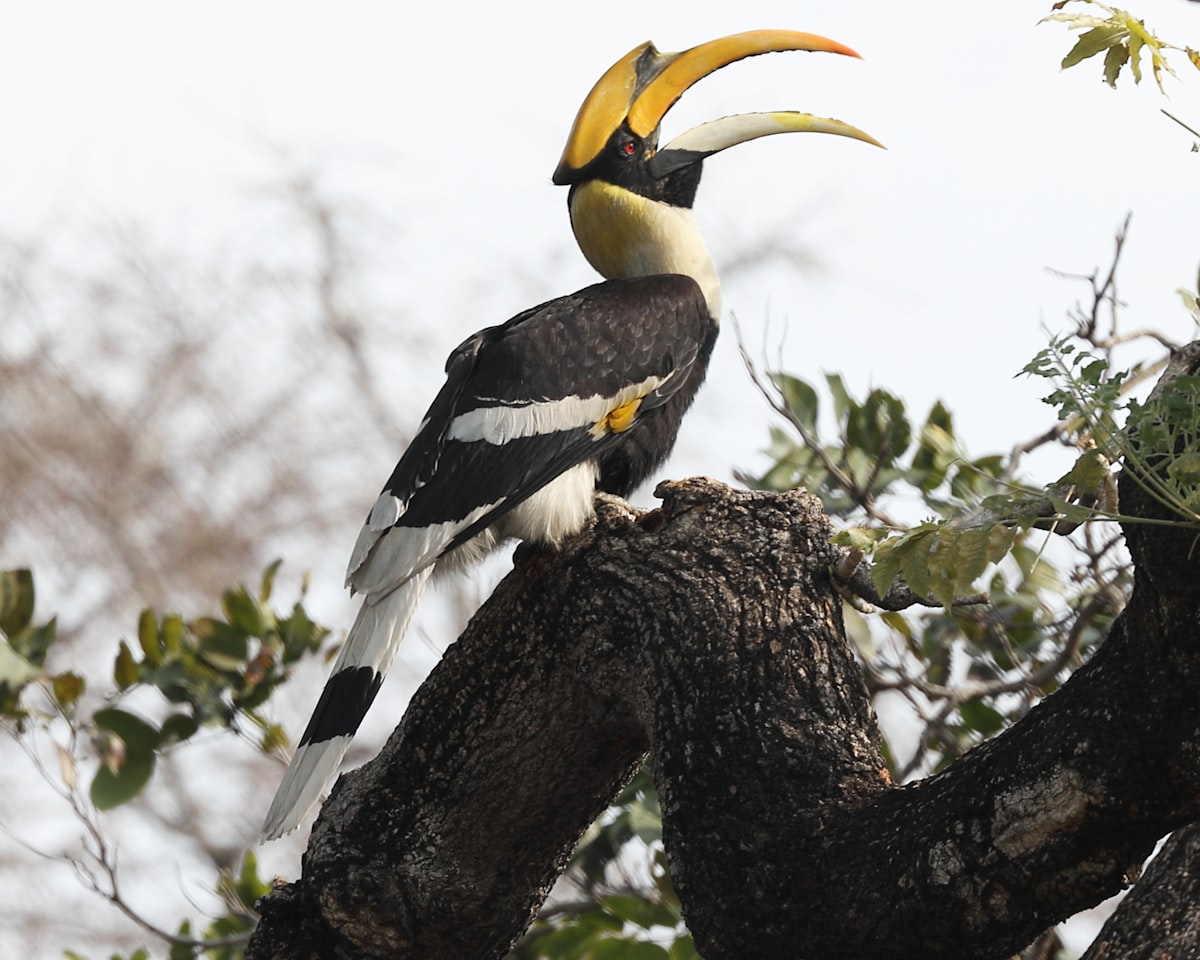
Great Hornbill: The great hornbill is Rajaji's most iconic bird. With its massive curved casque, black-and-white plumage and impressive wingspan, it is unmistakable. Great hornbills are most commonly seen in the Motichur and Chilla zones, often near fruiting fig trees in the early morning. They are resident year-round but are most active during the breeding season from March to June.
Indian Grey Hornbill: Smaller and more common than the great hornbill, the Indian grey hornbill is seen across multiple zones. Look for them in pairs or small groups moving through the canopy, often heard before they are seen.
Crested Serpent Eagle: A striking raptor commonly seen soaring over forested ridges or perched on bare branches. The crested serpent eagle's distinctive call is one of the characteristic sounds of Rajaji's forests.
Peafowl (Indian Peafowl): The national bird of India is abundant in Rajaji. Peacocks with their iridescent blue plumage are commonly seen on forest roads, in grasslands and near water sources. The peacock's display during the monsoon breeding season is one of India's great wildlife spectacles, though the park is closed during this period.
Kingfishers: Rajaji is home to several kingfisher species including the common kingfisher, white-throated kingfisher, pied kingfisher and the stork-billed kingfisher. The Ganga riverbed and seasonal streams provide ideal kingfisher habitat.
Woodpeckers: Multiple woodpecker species inhabit Rajaji's forests, including the great slaty woodpecker, lesser golden-backed woodpecker, brown-capped pygmy woodpecker and the Himalayan flameback. Listen for their drumming on dead trees during morning safaris.
Raptors: Beyond the crested serpent eagle, Rajaji supports a healthy raptor population including the changeable hawk-eagle, mountain hawk-eagle, oriental honey-buzzard, Egyptian vulture, Himalayan vulture, white-rumped vulture and various owl species. Winter brings additional raptor visitors from the higher Himalayas.
Owls: The Indian scops owl, spot-bellied eagle owl, brown fish owl and mottled wood owl are among the owl species recorded in Rajaji. Owls are most likely to be encountered during early morning or late evening safaris, or near roosting sites identified by your guide.
Best Birding Zones in Rajaji
Jhilmil Conservation Reserve: The premier birding zone in Rajaji for wetland and waterbird species. The marshes, reed beds and open water attract herons, storks, egrets, cormorants, migratory ducks, waders and marsh harriers. Winter is the best season when migratory waterfowl arrive in large numbers. The swamp deer (barasingha) habitat also supports a rich bird community.
Motichur Zone: Excellent for forest species including hornbills, woodpeckers, flycatchers, warblers and raptors. The dense sal canopy and rocky ridges create diverse micro-habitats. Early morning safaris in Motichur are particularly productive for birding.
Chilla Zone: A good all-round zone for birding with a mix of forest, grassland and riverine habitats. The Ganga riverbed area is productive for waders, kingfishers and riverine species. Grassland patches support pipits, larks and raptors.
Satyanarayan and Kansro: Quieter zones on the Dehradun side that offer excellent forest birding with fewer visitors. Ideal for birders who prefer a peaceful, unhurried experience.
Ranipur Zone: The hilly terrain and dry deciduous forest support species adapted to drier habitats. Raptors are commonly seen soaring over the ridges.
Seasonal Birding Guide
Winter (November to February) — Peak Birding Season: This is the best time for birding in Rajaji. Migratory species from Central Asia, Siberia and the higher Himalayas join the resident population, pushing the total species count to its highest. Migratory waterfowl — including bar-headed geese, ruddy shelduck, common teal, northern pintail and garganey — arrive at the Jhilmil wetland. Winter visitors also include various warblers, flycatchers, thrushes and raptors. Mornings are cold but bird activity is at its peak in the first two to three hours after sunrise.
Summer (March to June) — Breeding Season: Many resident species are breeding during summer. Hornbills are nesting, raptors are raising chicks and the forest is alive with territorial calls. The great hornbill's breeding behaviour is particularly fascinating to observe. Summer is also good for raptors as they are more active hunting for their young. Waterbirds concentrate around shrinking water sources, making them easier to locate.
Monsoon (July to October) — Park Closed: The park is closed during the monsoon. However, the breeding season continues and many species are raising fledglings. If the park reopens in October, the fresh green landscape supports active insect life and the birds that feed on them.
Birding Tips for Rajaji
Start early: The first two hours after sunrise are the most productive for birding. Birds are most active in the cool morning air, feeding and calling before the heat of the day. Request a morning safari for the best birding experience.
Be quiet and patient: Birds are sensitive to noise. Speak in whispers, avoid sudden movements and ask your driver to stop frequently at promising spots. Patience is rewarded — some of the best sightings come from waiting quietly near water sources or fruiting trees.
Hire an experienced guide: A knowledgeable guide who knows bird calls and habitats makes an enormous difference. Rajaji Jeep Safari can arrange guides with birding expertise. Mention your interest in birdwatching when booking so the team can match you with the right guide and zone.
Listen before looking: Many forest birds are heard before they are seen. Learn to recognise common calls — the great hornbill's loud whooshing wingbeats, the crested serpent eagle's distinctive whistle, the white-throated kingfisher's cackling call. Your guide can help identify calls.
Focus on edges and ecotones: The boundaries between different habitats — forest and grassland, forest and riverbed, wetland and dry land — are the most productive areas for birding. These transition zones support species from both habitats.
Photography Tips for Birds
Equipment: A telephoto lens of at least 400mm is needed for most forest birds. A 200-600mm zoom offers the most versatility. Use a fast shutter speed (1/1000s or faster) to freeze bird motion. High ISO settings are often necessary in the forest understorey — modern cameras handle ISO 1600-3200 well.
Technique: Pre-focus on areas where birds are likely to appear — water sources, fruiting trees, bare branches. Use burst mode to capture the decisive moment. For birds in flight, use continuous autofocus and track the bird smoothly. A beanbag on the jeep edge provides stable support for heavy lenses.
Light: Early morning light is soft and warm, ideal for bird photography. Avoid shooting in harsh midday light. Overcast days provide even lighting that reduces harsh shadows. Backlit subjects can create dramatic silhouettes but are harder to expose correctly.
Notable Migratory Waterfowl at Jhilmil
The Jhilmil wetland is Rajaji's premier site for migratory waterfowl. Species recorded include bar-headed geese, greylag geese, ruddy shelduck, common shelduck, northern pintail, common teal, garganey, Eurasian wigeon, mallard, spot-billed duck, great cormorant, Indian cormorant, grey heron, purple heron, great egret, intermediate egret, cattle egret, little egret, black-headed ibis, painted stork, woolly-necked stork and various sandpipers and plovers.
Must-See Bird Checklist for Rajaji
Here is a starter checklist of species to look for on your Rajaji safari:
Hornbills: Great hornbill, Indian grey hornbill.
Raptors: Crested serpent eagle, changeable hawk-eagle, oriental honey-buzzard, Egyptian vulture, Himalayan vulture, white-rumped vulture, shikra, besra.
Woodpeckers: Great slaty woodpecker, lesser golden-backed woodpecker, brown-capped pygmy woodpecker, Himalayan flameback, streak-throated woodpecker.
Kingfishers: Common kingfisher, white-throated kingfisher, pied kingfisher, stork-billed kingfisher.
Forest birds: Red jungle fowl, Indian peafowl, oriental magpie-robin, Indian robin, white-rumped shama, Asian paradise flycatcher, tickell's blue flycatcher, verditer flycatcher.
Waterbirds: Bar-headed goose, ruddy shelduck, common teal, painted stork, woolly-necked stork, grey heron, great egret, black-headed ibis.
Owls: Indian scops owl, spot-bellied eagle owl, brown fish owl, mottled wood owl.
For more on Rajaji's wildlife beyond birds, see our complete wildlife guide.
Frequently Asked Questions
How many bird species are in Rajaji?
Over 315 bird species have been recorded in Rajaji National Park. The park's diverse habitats — dense sal forests, riverine belts, grasslands, wetlands and the Ganga riverbed — support a rich mix of resident and migratory birds.
Which is the best zone for birdwatching in Rajaji?
Jhilmil is the best zone for wetland and waterbird species including herons, storks, egrets and migratory ducks. Motichur and Satyanarayan zones are excellent for forest species including hornbills, woodpeckers, flycatchers and raptors.
When is the best time for birding in Rajaji?
Winter (November to February) is the best time for birding as migratory species join the resident population. Early morning hours between 6:00 and 9:00 AM offer peak bird activity. Resident species can be observed year-round.
Can I see hornbills in Rajaji?
Yes, both the great hornbill and the Indian grey hornbill are regularly seen in Rajaji National Park. The great hornbill is most commonly spotted in the Motichur and Chilla zones, often near fruiting fig trees in the early morning.