Termites in the sal forest, centipedes under the leaf litter, scoliid wasps working the soil and scorpions in the stonework are all recorded for Rajaji in a single official publication: the Zoological Survey of India's Fauna of Conservation Area 5: Rajaji National Park of March 1995. Four chapters of that book are read here — termites, hymenoptera, scolopendrid centipedes and scorpions — for their printed page ranges, counts, families, authors and survey dates. Each figure is a 1995 publication figure resting on collections made before it went to press, and none of them is presented as a count of what lives in the park today.
Sources checked on 3 November 2026: the Zoological Survey of India's own copy of Fauna of Conservation Area 5: Rajaji National Park (March 1995), read as a scanned PDF; and this site's own published pages, linked at the foot of this article.
Termites: 21 species, 8 genera, two families
The Isoptera chapter runs from page 217 to page 235, is by S. C. Verma, and records 21 species in 8 genera across two families — Rhinotermitidae and Termitidae. Several supporting figures travel with that total, and they are the part of the chapter that shows its method rather than its result:
- One species new to science, described from the material examined.
- 35 localities represented in the record.
- Surveys spanning 1965 to 1987 — a working period of more than two decades behind a chapter published in 1995.
- 60 association records — documented associations with other organisms rather than bare occurrences.
- Seven species recorded as attacking eucalyptus, which is a statement about what the chapter observed in the record, not a claim about damage happening now.
The spread of that material is worth pausing on: fieldwork beginning in 1965 and ending in 1987, published in 1995, is an accumulation rather than a survey of a season, so every one of the 21 species is a documented historical occurrence. Nothing in the chapter gives a current termite count, infestation figure or trend line, and none is invented here.
Hymenoptera: 14 species from 128 specimens
The Hymenoptera chapter occupies pages 301 to 307, is by S. K. Gupta, and reports 14 species drawn from 128 specimens in two families: Tiphiidae and Scoliidae. Both are families of parasitoid and solitary wasps rather than the social wasps a visitor is likely to notice, which is part of why a museum-based chapter can document them at all: the evidence is pinned specimens, not sightings.
One numbering trap is avoided deliberately. The volume's introduction separately mentions 13 scolioid wasps, and that sentence circulates as if it were a second total for the park. It is not used that way here. The count taken for this page is the 14 species of the chapter summary, and the introduction's 13 is reported only as a different sentence in the same book — a figure about scolioids alone, not a rival tally for the park's Hymenoptera. Where two numbers exist inside one publication, this page prints both and refuses to average them.
Centipedes: 7 scolopendrid species, and a synonym
The Scolopendridae chapter runs from page 309 to page 316 and records 7 species in 4 genera for the park, set in the chapter against a wider background: 86 species on the Indian checklist and 24 recorded from Uttar Pradesh, the state the park then lay in. Seven of 24 is a proportion of a period checklist and nothing more — it is not a statement about how common scolopendrids are in the park.
Two taxonomic acts in the chapter change what names a reader will find in later literature, so both are reported precisely. Rhysida lithobioides shivalikensis is described as a new subspecies, from material in the surveyed area. And Cormocephalus pseudonudipes is treated as a junior synonym of Cormocephalus dentipes — which means the two names refer to one species, with C. dentipes the name that stands. The monograph of C. dentipes sits elsewhere in the same volume, at pages 237 to 243, so both the park account and the fuller treatment are in one book. A junior synonym is a nomenclatural conclusion, not a population statement: no abundance is read into either act.
Scorpions: 5 species in 3 families
The scorpion chapter runs from page 317 to page 323, is by A. T. Biswas, and records 5 species in three families — Buthidae, Scorpionidae and Vaejovidae — from 43 specimens collected between 1974 and 1988 at nine localities in three districts. Every one of those figures is small enough to be read literally, and this page reads them literally: five names, three families, forty-three specimens, nine places, three districts, fifteen years of collecting.
A figure that should never be attached to this park also needs correcting in passing. The 16-species scorpion figure belongs to Uttar Pradesh as a whole, not to Rajaji. The chapter's own count for the park is 5, and 16 appears only as a state-level reference point in the period literature. Repeating 16 as a Rajaji total would be the easiest error to make on this page, so the two numbers are printed side by side instead: 5 for the park, 16 for the state, never the same measure.
Why no grand total is offered
It is tempting to add these groups together, and the volume's own summary invites the attempt by printing some of them in one block: 21 termites, 7 centipedes and 14 hymenoptera appear there as summary lines, and they sum to 42. That sum is reported here only as what it is — a labelled addition of three summary lines from a 1995 book. The summary carries no scorpion line, so the 5 scorpion species would have to be added from a chapter while the other three come from the summary, mixing two levels of the same publication to make one number that the book never prints. This page therefore gives no combined total for termites, centipedes, wasps and scorpions at Rajaji, and treats any such figure met elsewhere as someone else's arithmetic, to be asked about before it is repeated.
What this page will not claim
Four abstentions. There is no current count for any of the four groups: no present-day termite total, no current centipede, wasp or scorpion figure for Rajaji, and none was located as of 3 November 2026. There is no abundance, density or trend — a set of chapter totals from one book has no second date to be drawn against. There is no statement of harm or hazard: no claim that termites are damaging forest today, that eucalyptus plantations are under attack now, or that any scorpion or centipede in the park is dangerous to visitors. And there is no species list transcribed from the scan, because a list reconstructed by eye would put guesses where the printed names should be.
Where to read next
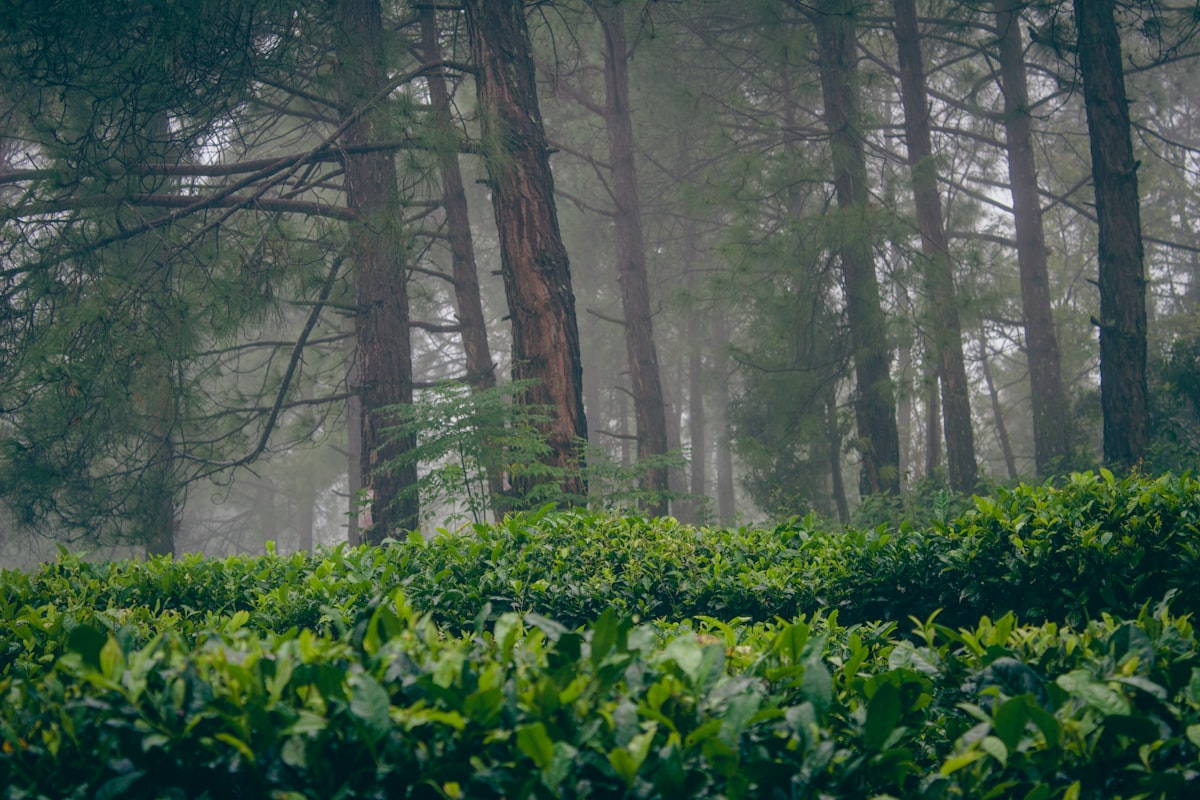
Three companions hold other chapters of the same 1995 volume: the butterfly record, the dragonfly and damselfly record and the fish record. For the vertebrates this book also counts, the animals list gathers mammals, birds and reptiles in one place, and the reptile and amphibian record reads the four herpetology chapters — 10 amphibians, 12 turtles and tortoises, 9 lizards and 28 snakes. The ground those invertebrates live in is described in the habitats and flora guide, which covers the sal forest, grassland and riverine belts behind the forest image at the top of this page. For the legal question sitting over the park's boundaries, the eco-sensitive zone status page sets out the court record. Sources checked 3 November 2026.
Rajaji's 1995 ZSI termites, centipedes, wasps and scorpions record: questions answered
What does the volume record for termites at Rajaji?
The Isoptera chapter at pages 217 to 235, by S. C. Verma, records 21 species in 8 genera and 2 families — Rhinotermitidae and Termitidae — with one species new to science, material from 35 localities, surveys running from 1965 to 1987, 60 association records and seven species recorded as attacking eucalyptus. These are figures from a March 1995 historical inventory, not a current count: https://zsi.gov.in/public/PDFVolumes/cas/005/index.pdf
How many hymenoptera are recorded, and by whom?
14 species from 128 specimens, in the families Tiphiidae and Scoliidae, in the chapter at pages 301 to 307 by S. K. Gupta. The volume's introduction separately mentions 13 scolioid wasps; that figure is not used on this page as a second total, because the chapter summary's 14 is the count taken for the park.
What do the centipede pages say?
The Scolopendridae chapter at pages 309 to 316 records 7 species in 4 genera, set against 86 species on the Indian checklist and 24 in Uttar Pradesh. It describes Rhysida lithobioides shivalikensis as a new subspecies and treats Cormocephalus pseudonudipes as a junior synonym of Cormocephalus dentipes; the monograph of C. dentipes sits at pages 237 to 243 of the same volume.
How many scorpion species are recorded for the park?
5 species in 3 families — Buthidae, Scorpionidae and Vaejovidae — from 43 specimens collected between 1974 and 1988 at nine localities in three districts, in the chapter at pages 317 to 323 by A. T. Biswas. The 16-species figure that circulates belongs to Uttar Pradesh as a whole, not to Rajaji, and it is never used here as a park total.
Can these groups be added into one total for Rajaji?
Not without labelling what is being added. The volume's own summary prints 21 termites, 7 centipedes and 14 hymenoptera as three separate summary lines, and it prints no scorpion line at all, so those three lines reach 42 only as a labelled sum of summary entries. Adding the 5 scorpion species to them would mix a chapter count with summary counts, and this page does not do it. Every figure here is a 1995 publication figure for a historical inventory; no current total, abundance or trend is claimed.