If the question is which animal Rajaji National Park is famous for, the shortest honest answer is the Asian elephant. The official Rajaji home page leads with the elephant, the About page describes a sizeable population of tiger and Asian elephants, and the zone pages describe elephant herds in the sal forest and the Haridwar forest region. The tiger is the flagship of the tiger reserve, but the elephant is the animal the official pages put first.
Sources checked on 26 November 2026: the Rajaji official home page, About page, Chilla zone page, Motichur zone page and Haridwar zone page.
The short answer, in the official words
The home page has a section headed Elephant and says the park is home to the elephant, widely found in the park, with a large part of the elephant staying in the park. The About page says the reserve has a sizeable population of tiger and Asian elephants. Those are the two animals the official record treats as the signature species. If you need one answer for a quiz or a school project, say the Asian elephant; if you need the reserve's flagship, say the tiger.
Why the elephant fits Rajaji
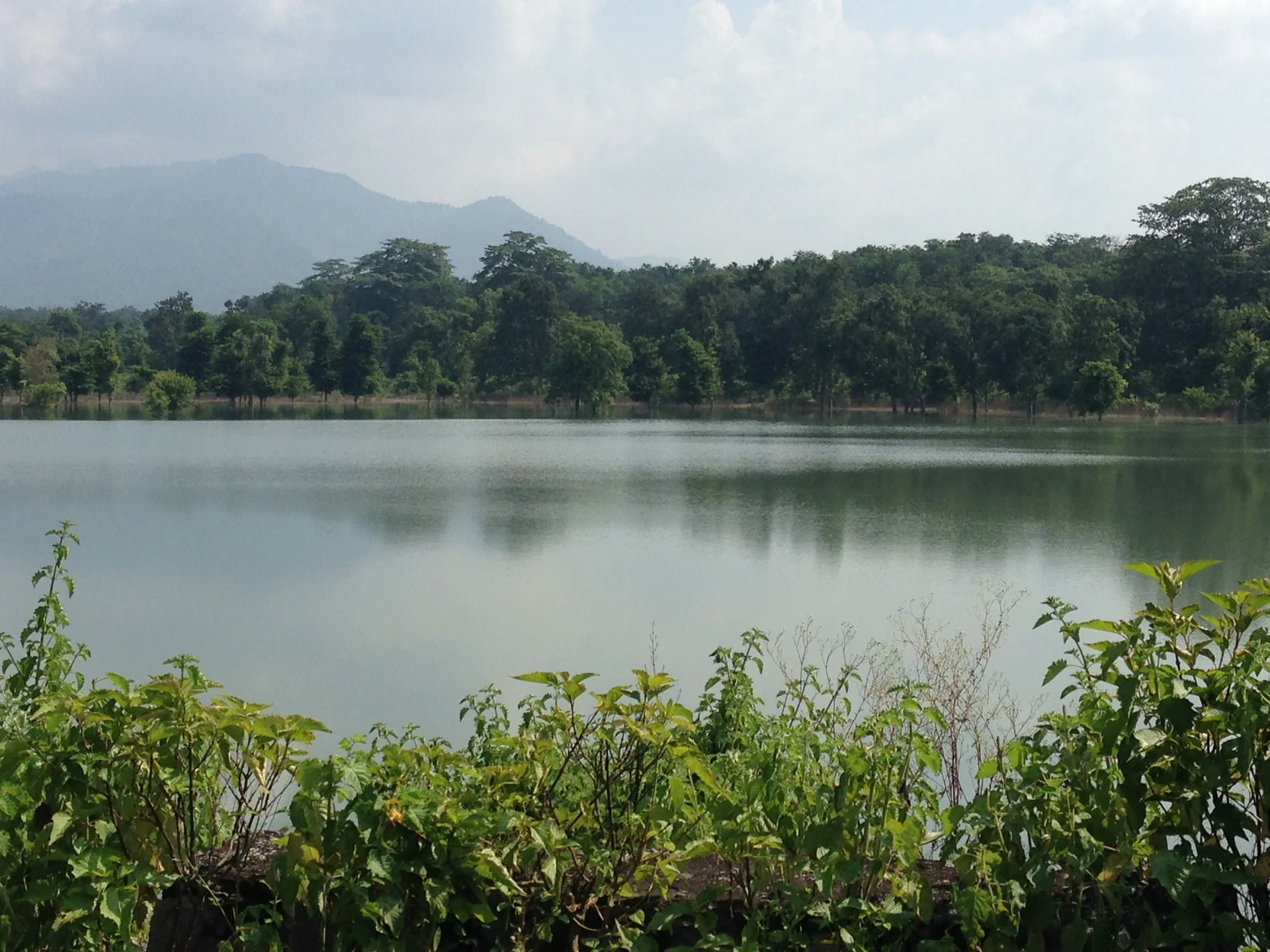
Rajaji is a Shivalik and Ganga riverine landscape: sal forest, mixed broad-leaved forest, grassland, scrub and riverine vegetation, from the foothills to the Ganga belt. That is elephant habitat. The official Motichur page says small or large herds of elephants are seen in summer, along with spotted deer, sambar, barking deer and wild boar, and pairs that with a 25 km sal-forest route. The Haridwar page says the forest region offers a chance to sight various wild animals including elephant, and places the city temples beside the same forest. The Chilla page describes a two-and-a-half-hour circuit through Mundal, Mithawali and Khara, with a brief halt at Mundal and Ghasiram machans, and lists elephant among the animals you may see. None of the pages promises a sighting, and none prints a population figure.
How to plan an elephant-focused safari
Start with the gate, not the slogan. Motichur is the sal-forest side with the 25 km route and the summer herd note; Haridwar is the city-side forest entry with the temples nearby; Chilla is the riverine and grassland circuit with the Mundal and Ghasiram halts. Pick the gate that matches your base, then check the live calendar for the date. The official pages publish 15 November to 15 June on most pages, a Chilla line of 15 October to 15 June and a reversed FAQ statement, so the calendar decides. Shifts are 6 to 10 am and 2 to 6 pm, with a conducted tour generally two to three hours. Carry the photo ID the permit requires, read the mobile phone, food, plastic and vehicle rules, and treat every elephant as a wild animal: no feeding, no teasing, no leaving the vehicle. The official pages do not publish a seasonal elephant calendar, so the zone page and the booking calendar are the planning tools.
The tiger is still the flagship
The reserve is a tiger reserve under Project Tiger, and the tiger is the reason the 2015 notification took the whole area to 1,075 sq km. The official About page lists the tiger first among the carnivores, and the Chilla page says tourists can spot tigers, leopards and elephants. The tiger is the flagship; the elephant is the signature. Those two statements are not in conflict, and this page does not rank one over the other.
The rest of the official fauna
The About page lists leopard, jungle cat, Himalayan black bear, sloth bear, striped hyena, goral, sambar, wild pig, spotted deer and barking deer, plus primates including the Hanuman langur, Indian langur and rhesus macaque. It records around 315 bird species, including hornbills, barbets, woodpeckers and vultures, and around 42 fish species in the rivers and streams. The zone pages add the smaller mammals and reptiles. The elephant is the signature animal, not the whole park.
What the zone pages do not say
The zone pages describe habitat and routes; they are not a sightings log. Motichur's 25 km route and summer herd note, Haridwar's city-side forest and Chilla's Mundal-Ghasiram circuit are descriptions of where a safari goes, not a promise of what will appear. The pages also do not publish a monthly elephant calendar or a population figure. Read them for the gate and the route, then use the live calendar for the date. That is the difference between a useful zone page and a brochure promise.
Season and shifts
The official pages publish 15 November to 15 June on most pages, a Chilla line of 15 October to 15 June and a reversed FAQ statement, so the live calendar decides. Shifts are 6 to 10 am and 2 to 6 pm, with a conducted tour generally two to three hours. The elephant is not a reason to ignore the season: the same calendar that opens the gate also decides whether your date is available. The official pages do not publish a monthly elephant calendar, so a date that fits the shift is more useful than a month name; check the zone page and the live calendar together.
Confirm before you book
- That your date and zone appear on the official Rajaji calendar.
- That you have read the zone page for the gate you are booking, not just the home page.
- That you carry the photo ID the permit requires, and a passport if you are a non-Indian visitor.
- That you have read the mobile phone, food, plastic and vehicle rules before entering.
- That you treat the elephant as a wild animal: no feeding, no teasing, no leaving the vehicle.
Where to read next
For the two companion answers in this batch, the national tiger-sighting guide and why keep your arms inside the jeep. For the full species inventory, the Rajaji animals list. For the elephant record, the elephant sightings guide and the elephant census record. For the tiger, the tiger sighting guide. For the zones, which safari zone, the Motichur guide and the Chilla heritage guide. For the transaction, the official portal and process guide. Sources checked 26 November 2026.
Rajaji famous animal: questions answered
Which animal is Rajaji National Park famous for?
The Asian elephant is the animal the official Rajaji pages lead with. The home page says the park is home to the elephant, widely found in the park, and the About page describes a sizeable population of tiger and Asian elephants. The tiger is the flagship of the tiger reserve, but the elephant is the animal most closely associated with Rajaji in the official wording.
Is Rajaji famous for tigers or elephants?
Both, with different roles. The tiger is the flagship carnivore and the reason the reserve is a tiger reserve under Project Tiger; the elephant is the animal the official home page leads with and the one the zone pages describe in herds. The honest answer is that Rajaji is an elephant landscape with a tiger reserve at its centre, not a single-species park.
Where can I see elephants in Rajaji?
The official zone pages name elephants in several places. The Motichur page says small or large herds of elephants are seen in summer; the Haridwar page says the forest region offers a chance to sight various wild animals including elephant; the Chilla page says the circuit passes through forest where elephants may be seen. No page promises a sighting, and no population count is printed here.
Does Rajaji have a lot of birds?
The official pages record about 315 bird species, including hornbills, barbets, woodpeckers, vultures and migratory waterbirds. The reserve is a Shivalik and Ganga riverine landscape, so the bird list spans forest, grassland and riverine habitat. Birders should read the zone pages and the site birdwatching guide rather than rely on a single checklist.
Is the elephant the only reason to visit Rajaji?
No. The official fauna list includes tiger, leopard, jungle cat, Himalayan black bear, sloth bear, striped hyena, goral, sambar, wild pig, spotted deer and barking deer, plus about 315 bird species and around 42 fish species. The elephant is the signature animal, not the whole park.