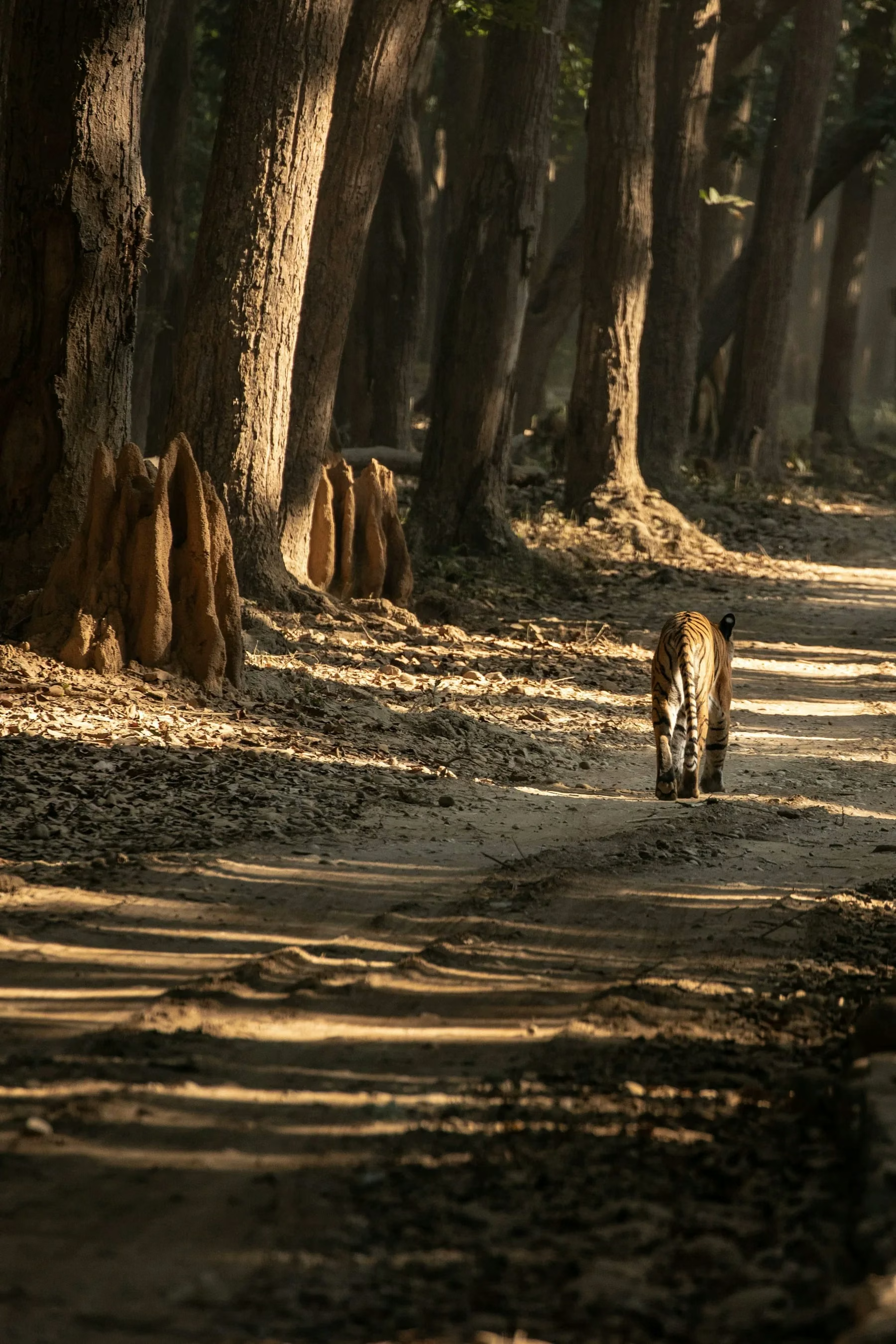
The query is simple: which tiger reserve is best for tiger sighting in India? The honest answer is that no official body publishes that ranking. The NTCA publishes the reserve list, the notification years, the core and buffer areas and a brief note for each; the reserves publish their seasons, zones, gates and permits. None of them publishes a sighting league table. This guide therefore does the next best thing: it shows how to judge a reserve on the official records, with six verified examples.
Sources checked on 26 November 2026: the NTCA reserve table and brief notes, the Rajaji official booking page, the MP Forest Kanha page, the Tadoba official page, the Kaziranga booking page, the Bandipur official site and the Periyar official site.
What the official record does and does not rank
The NTCA list used here runs to 58 tiger reserves. For each it gives the state, the protected-area notification year, the tiger-reserve notification year and the core, buffer and total area. The brief notes add habitat, flora, fauna and management context. That is a conservation record, not a visitor ranking. It does not say which reserve gives the best chance of a tiger sighting, and any page that claims an official ranking is inventing one.
What the reserves do publish is more useful for planning: the season, the tourism zones and gates, the shift times, the permit window, the vehicle rules and the access routes. Those are the figures this guide compares.
How to judge a reserve
Five official questions do most of the work. First, is the core open on your dates? A reserve can be famous and still have its core closed for the monsoon. Second, which zone or gate can you actually book? A buffer gate and a core gate are different products. Third, what is the permit window? Some reserves open 120 days ahead, some 15 days, some use a Tatkal window. Fourth, how do you reach the gate? A published airport or rail distance is worth more than a generic road time. Fifth, what do the rules require? ID, vehicle type, mobile phone and camera rules differ, and a permit that does not match your documents is no use.
What a sighting actually depends on
None of the official pages publishes a sighting probability. A sighting depends on animal movement, water, vegetation, the route the vehicle is allowed to take, the time of day and the guide's local knowledge. The records that help you plan are the season, the zone, the shift and the permit, not a promise. A reserve that publishes a clear calendar and a gate you can reach is a better bet than a famous name with a closed core. This is why the six examples below are compared on those records.
Six official examples
Rajaji is the Shivalik and Ganga option in Uttarakhand. The NTCA table gives core 819.54 sq km, buffer 255.63 sq km and total 1,075.17 sq km; the official pages publish a 15 November to 15 June season on most pages, a Chilla line of 15 October to 15 June and a reversed FAQ statement, so the live calendar decides. Shifts are 6 to 10 am and 2 to 6 pm, and the zone count is itself disputed across the official pages. Access figures are published: Delhi 224 km, Jolly Grant 40 km, Dehradun 55 km.
Kanha is the Central Indian sal and maidans option. The NTCA table gives core 917.43 sq km, buffer 1,134.36 sq km and total 2,051.79 sq km. The core season is published as 15 October to 30 June, the entry points are Khatia, Mukki and Sarhi, and the MP Forest portal opens the 120th day at 11:00.
Tadoba-Andhari is the Chandrapur teak and bamboo option. The NTCA table gives core 625.82 sq km, buffer 1,101.77 sq km and total 1,727.59 sq km. The core timing table runs from 1 October to 30 June, core is closed on Tuesday and buffer on Wednesday, and the published November-to-February window is 6:30 to 10:30 am and 2:00 to 6:00 pm. The portal opens 120 days ahead and a Tatkal window opens three days before entry.
Kaziranga is the Brahmaputra floodplain option. The NTCA table gives core 625.58 sq km, buffer 548.00 sq km and total 1,173.58 sq km. The park is typically closed from 1 May to 31 October, day trips run 7:30 to 10:00 am and 1:30 to 3:00 pm, and there are four ranges: Kohora, Bagori, Agaratoli and Burapahar.
Bandipur is the Western Ghats option in Karnataka. The NTCA table gives core 872.24 sq km, buffer 584.06 sq km and total 1,456.30 sq km. Safari windows are 6:30 to 9:00 am and 3:30 to 6:00 pm; online visitors report 30 minutes early, offline visitors one hour early, and mobile phones are prohibited in the safari tourism zones.
Periyar is the Thekkady lake and Western Ghats option in Kerala. The NTCA table gives core 881 sq km, buffer 44 sq km and total 925 sq km. It sells programmes rather than one standard jeep shift: boating, nature walk, green walk, bamboo rafting, the Periyar Tiger Trail, border hiking, jungle scout, pugmark trail, watch tower, jungle camp, jungle inn and the Gavi safari. The programme calendar, not a generic shift table, is the authority.
The honest answer
If your dates are fixed, the best reserve is the one whose core is open, whose gate you can reach and whose permit system accepts your group. A reserve with a famous name and a closed core is not the best for that week. A smaller reserve with an open gate and a published shift can be the better trip. This is why the six examples above are compared on season, zone, permit and access rather than on a slogan.
Confirm before you book
- That the official calendar shows your date and zone, not a generic season sentence.
- That the gate you book is the gate you can reach, with a published airport, rail or road figure.
- That the permit window and any Tatkal rule are clear before you pay.
- That every visitor has the ID the reserve requires, including a passport where it is mandatory.
- That you have read the vehicle, mobile phone, camera and food rules for that reserve.
Where to read next
For the two companion answers in this batch, the Rajaji famous animal answer and why keep your arms inside the jeep. For the Rajaji side, the tiger sighting guide, the official portal and process guide and which safari zone. For the comparison set, Rajaji against other Indian tiger reserves, Corbett, Kanha, Tadoba-Andhari, Kaziranga, Bandipur and Periyar. For the booking mechanics, the documents and permit guide. Sources checked 26 November 2026.
Best tiger reserve: questions answered
Which tiger reserve is best for tiger sighting in India?
There is no official ranking. The NTCA publishes area, notification year and a brief note for each reserve, and the reserves publish seasons, zones and permits, but neither publishes a sighting league table. The honest answer is that the best reserve for you is the one whose official season, zone and permit match your dates and base. This page compares six official records rather than inventing a ranking.
Does a bigger tiger reserve mean better sightings?
No official source makes that claim. A larger core or buffer is a conservation figure, not a sighting forecast. The records that matter for a visitor are the season, the tourism zone, the gate, the shift and the permit system. A reserve with a famous name but a closed core is not the best choice for a week when the core is shut.
When is the best season for tiger sighting?
Each reserve publishes its own season. Rajaji publishes 15 November to 15 June on most pages, with a Chilla line of 15 October to 15 June and a reversed FAQ statement, so its live calendar decides. Kanha publishes a core season of 15 October to 30 June. Kaziranga is typically closed from 1 May to 31 October. Tadoba publishes a core timing table from 1 October to 30 June. Check the reserve own calendar rather than a generic month guide.
How do I book a tiger safari?
Book only through the official portal for the reserve. Rajaji uses its own portal: https://rajajitigerreserve.uk.gov.in/jungle-safari-booking.aspx. Kanha uses the MP Forest portal: https://forest.mponline.gov.in/Search.aspx?park=2. Tadoba uses the Maharashtra Safari portal, Kaziranga uses its official booking site: https://kazirangasafari.in/booking/user/index, Bandipur uses its official site: https://bandipurtr.in/, and Periyar uses its official programme calendar: https://www.periyartigerreserve.org/.
Can I visit more than one reserve in one trip?
Yes, but each reserve has its own booking system, season and permit, and no combined ticket exists. Plan the reserves in the same state or region, leave a travel day between them, and confirm each official calendar before paying. This page prints no distance or travel time between reserves, because no official figure was verified for those combinations.