Two reserves in two very different forests: Rajaji in the Shivalik foothills and Ganga riverine belt of Uttarakhand, and Bhadra in the Western Ghats of Karnataka, where bamboo, dry and moist deciduous forest and the Bhadra reservoir fill a saucer-shaped valley below the Bababudan hills. Both are official tiger reserves with their own booking systems and published rules. This page sets the two records side by side and stops there: no verdicts, no counts, and no figure the sources do not print.
Sources checked on 23 November 2026: the Bhadra official about page and contact page, the official ticket portal, the NTCA reserve table and Bhadra brief, and Rajaji's own booking page and FAQ; plus this site published guides, linked below.
Location and landscape
Bhadra lies in the Western Ghats of Karnataka, in Chikmagalur district (Chikmagalur, Narashimarajapura and Tarikere taluks) and Shimoga district (Bhadravathi taluk). The NTCA brief describes a saucer-shaped reserve with mostly undulating terrain, valleys and steep hillocks, drained by the Bhadra river and its tributaries. The official site describes dry deciduous forest bordering the north around the Bhadra reservoir, taller moist deciduous forest in the south and shola evergreen patches in the east, with bamboo very common and valuable trees including teak, rosewood, mathi, honne, nandi, tadasalu and kindal. The reserve also holds the Jagara Giant, described as the largest teak tree in Karnataka, with a girth of 5.1 m, a height of 32 m and an age of about 400 years. Rajaji is the Shivalik and Ganga counterpart, with sal forest, riverine vegetation and the 820.42 sq km national park of 1983.
Size and notification history
Bhadra official pages give several area sets, and they are kept apart. The NTCA table gives core 492.46 sq km, buffer 571.83 sq km and total 1,064.29 sq km; the NTCA brief gives core 500.16 sq km, buffer 571.84 sq km and total 1,072.00 sq km. The official site gives 571.84 sq km in one line and about 500 sq km in another. The official about page records that Bhadra was declared the 25th Tiger Reserve of India in 1998; the NTCA table records the protected area notification in 1998-99 and the tiger reserve notification in 2007. Those are different layers, and none is merged here. Rajaji history is shorter: the 1983 intent notification merged the Rajaji, Motichur and Chilla sanctuaries, and the 2015 buffer took the reserve to 1,075 sq km.
Gates, safari types and timings
Bhadra has two main entry points: Muthodi on the Chikmagalur side and Lakkavalli on the Shimoga side, with Kemmangundi also listed at about 63 km from Chikmagalur. The official contact page gives Muthodi at 33 km from Chikmagalur and Lakkavalli at 30 km from Shimoga; the ticket portal gives 31 km and 32 km respectively. Both official figures are printed, not merged. The ticket portal lists bus, jeep, boat, short boat, Hebbe Falls and Z Point Trek options. Bus, jeep and boat slots run at 6:00 and 8:00 am and 2:30 and 4:30 pm, each about 1.5 hours; the short boat runs at 10:30 and 11:30 am and 12:30 pm for about 45 minutes; Z Point is listed from 7:00 am to 4:00 pm and Hebbe Falls from 8:00 am to 4:00 pm. Rajaji publishes shifts of 6 am to 10 am and 2 pm to 6 pm, with a conducted tour generally two to three hours.
Season, booking and rules
The Bhadra pages checked publish safari slots, gates and activities but no seasonal closure notice, so the official ticket portal is the authority for your date. Rajaji publishes three season statements that do not agree: 15 November to 15 June on most pages, a Chilla line of 15 October to 15 June on the booking page, and a reversed 15 June to 15 November in the FAQ. Bhadra booking runs through the official ticket portal: register with a working mobile number, complete OTP verification, carry a clear photo ID and report 30 minutes before the slot. The portal states that for non-Indian visitors a valid passport is strictly mandatory, that mobile phones and mobile cameras are not allowed in the safari zone, that domestic pets are not permitted, and that school student groups are booked only on weekdays and not on weekends or government holidays. Rajaji runs a different system: online booking with a static IP and desktop, passport mandatory for non-Indians, a printed permit, approved vehicles only, and mobile phones prohibited inside the safari zones under a Supreme Court order dated 17.11.2025.
Wildlife, without counts
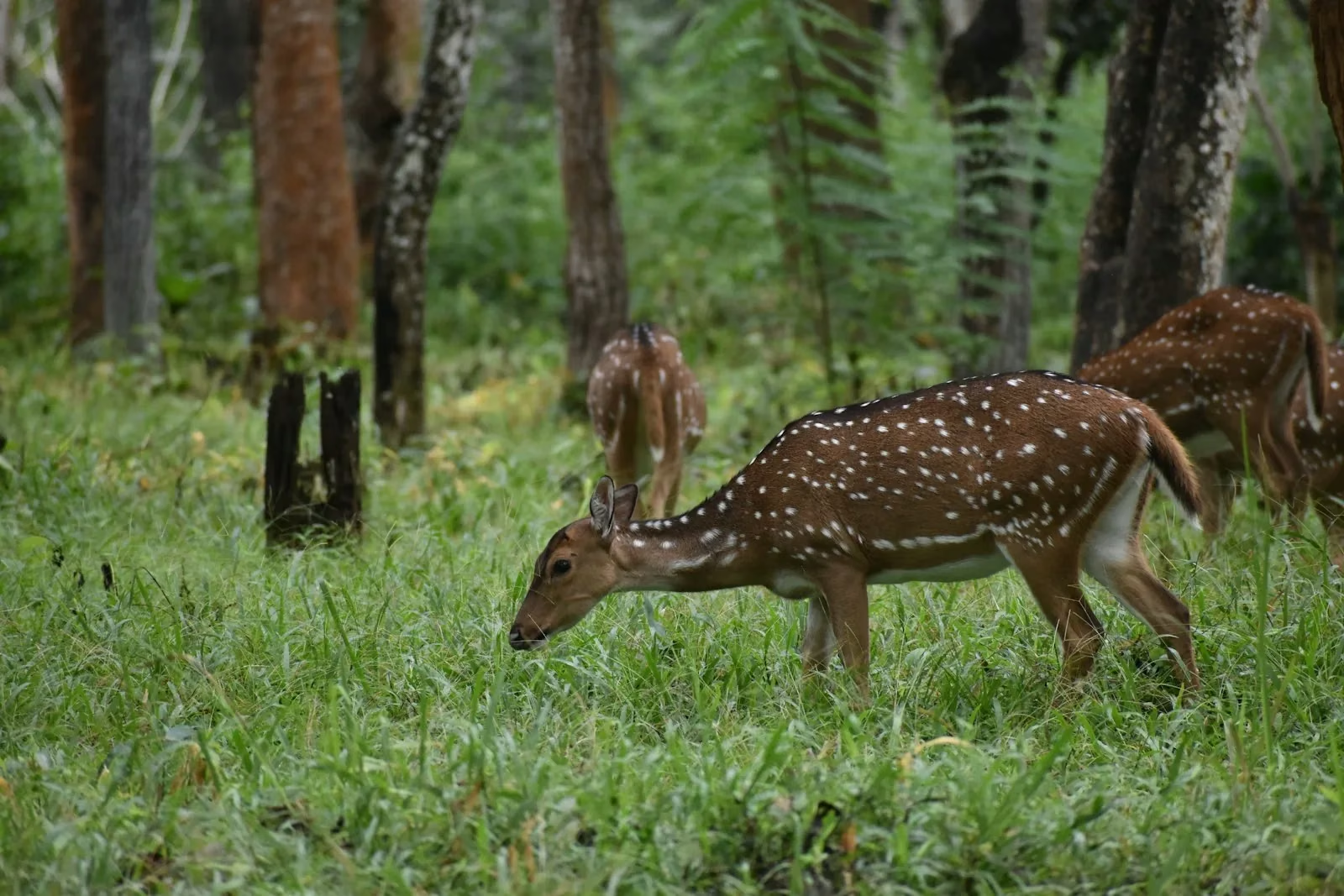
The Bhadra official home page records 40 species of mammals, about 250 species of birds, more than 20 species of reptiles, 10 species of amphibians, 50 species of butterflies and 10 species of fish, many endemic to the Western Ghats. The NTCA brief records 40 large mammal species, 250 birds and 81 fish species, so the fish figures are reported apart. The fauna includes tiger, leopard, leopard cat, dhole, Indian civet, gaur, sambar, barking deer and elephant. Rajaji's material lists elephants, tigers, leopards and deer, with around 315 bird species. Species lists are not population counts, and no sighting is promised by either permit.
Access
The Bhadra official contact page publishes the access figures: the nearest airport is Mangalore International, about 180 km away; the nearest railway stations are Shimoga, 30 km from Lakkavalli, and Chikmagalur, 33 km from Muthodi; and the reserve is about 273 km from Bangalore via NH75 and NH173. Rajaji Chilla figures are published: Delhi 224 km via NH 334, Jolly Grant 40 km and Dehradun 55 km. No drive time is published for either set, and none is invented here.
Who each suits
Bhadra suits travellers based in Chikmagalur, Shimoga or the Malnad circuit who want a Western Ghats valley, a choice of Muthodi or Lakkavalli, and a ticket portal that lists bus, jeep, boat and trek options. Rajaji suits travellers based in Dehradun, Haridwar or Rishikesh who want the Shivalik and Ganga setting, the elephant landscape and a zone decision that has to be confirmed against the live calendar. Neither is a better holiday in the abstract; each is a different starting point.
Confirm before you pay
- That your date and slot appear on the official Bhadra ticket portal.
- That you have chosen Muthodi, Lakkavalli or Kemmangundi and planned the road leg.
- That every visitor carries a clear photo ID, and non-Indians carry a passport.
- That you have read the mobile phone, camera and pet restrictions before entering.
- That you know whether your group is a school group, because weekday-only rules apply.
Where to read next
The other comparisons in this series are Rajaji versus Pakke and Rajaji versus Nagzira. For the wider set, Rajaji against other Indian tiger reserves, Corbett, Sariska, Dudhwa, Bandhavgarh, Pilibhit, Pench, Kanha, Kaziranga, Satpura, Tadoba-Andhari, Nagarhole, Valmiki, Bandipur, Periyar, Mudumalai, Melghat, Sundarbans and Manas. For the Rajaji transaction, the official portal and process guide and the jungle safari guide; for the official charges, the per-zone price guide; for Rajaji zone selection, the safari gates and zone entry guide and which safari zone. Sources checked 23 November 2026.
Rajaji versus Bhadra: questions answered
Is Bhadra better than Rajaji for tigers?
This page does not rank them and prints no tiger count for either. Bhadra lies in the Western Ghats of Chikmagalur and Shimoga districts in Karnataka, with bamboo, dry and moist deciduous forest and the Bhadra reservoir; Rajaji is a Shivalik and Ganga riverine landscape in Uttarakhand. Both publish permits rather than sightings, and a permit buys an entry, not an encounter.
How do I book a Bhadra safari?
Bhadra bookings run through the official Bhadra ticket portal. Register with a working mobile number, complete OTP verification, carry a clear photo ID and report 30 minutes before the slot. The portal publishes bus, jeep, boat, short boat, Hebbe Falls and Z Point options; the pages checked do not publish one fixed season table, so the portal is the authority for your date: https://tickets.bhadratigerreserve.in/login/?next=/booking/activities/.
When are Rajaji and Bhadra open?
Rajaji publishes 15 November to 15 June on most pages while its booking page Chilla line says 15 October to 15 June, so its live calendar decides. The Bhadra pages checked publish safari slots and gates but no seasonal closure notice, so the official ticket portal is the authority for your date. Confirm the gate, the slot and the reporting time before you travel: https://tickets.bhadratigerreserve.in/login/?next=/booking/activities/.
Can I combine Rajaji and Bhadra in one trip?
Nothing stops you planning both, but they are reserves in different states with separate booking systems and no combined permit. Rajaji is booked on the reserve's own portal: https://rajajitigerreserve.uk.gov.in/jungle-safari-booking.aspx. Bhadra is booked on its own ticket portal, with Muthodi and Lakkavalli as the two main entry points. This page prints no distance or travel time between the two parks, because no official figure was verified for it.
Which is better for a family?
That is a question about your starting point rather than about the parks. Families in Karnataka compare the Bhadra and Chikmagalur option with the Uttarakhand foothill option; logistics turn on whether you use Muthodi or Lakkavalli, whether the family wants a bus, jeep or boat, and which calendar offers your day. Read the two bodies side by side and confirm the identity document each system asks for at booking. Sources checked 23 November 2026.