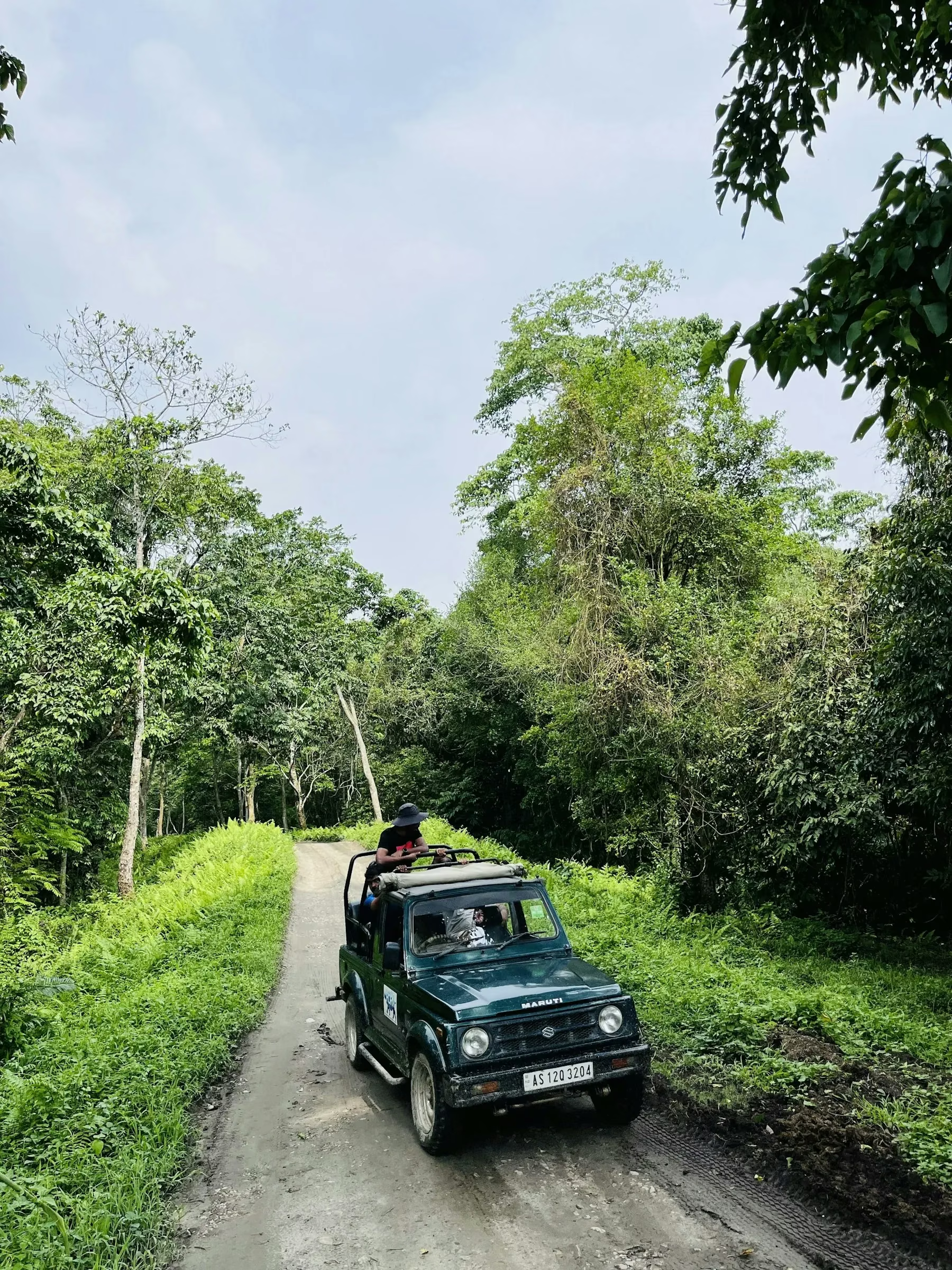
The question sounds small: why keep your arms inside the safari jeep? The answer is a mix of an official rule and plain physics. Rajaji's published safari rules say to keep seated in the vehicle and not get down inside the tiger reserve. The practical instruction that follows is to keep arms, hands and legs inside. This page explains the rule, the reasons behind it, and how to photograph and watch without testing it.
Sources checked on 26 November 2026: the Rajaji official booking and rules page and FAQ, plus this site's published jeep safari safety guide.
What the official rule says
The published Rajaji rules include a short line with a lot behind it: keep seated in the vehicle, do not get down from the vehicle inside the Tiger Reserve area. The same rule set requires a valid entry permit and photo ID, a non-transferable permit, approved Forest Department safari vehicles only, no private vehicles, no mobile phones in the core zone, no flash photography, no food during the safari, a plastic-free visit, no smoking or alcohol, no teasing or feeding, and strict adherence to the safari timetable. It also says that any violation is treated as an offence under the Wildlife Protection Act 1972.
The rules do not use the phrase arms inside in every line, but the seated rule and the no-getting-down rule define the same boundary: the vehicle is your place for the whole circuit, and the window line is the edge of it.
Why the boundary matters
Branches and thorns. Rajaji's tracks run through sal forest, mixed broad-leaved forest, scrub and riverine vegetation. Branches and thorny species sit at window height, and a vehicle that passes close to a tree can sweep the side of the jeep. An arm outside is the first thing that hits.
Narrow tracks and passing vehicles. Many forest tracks are single-lane. When two jeeps pass, the gap between them is small, and a hand or elbow outside the window is in that gap. The driver is watching the track, the wildlife and the other vehicle; they cannot watch your arm as well.
Sudden stops. Safari drivers stop quickly for a sighting or an animal on the road. A passenger who is standing or leaning out keeps moving when the vehicle stops. The seated rule exists partly because a seated passenger is braced by the seat and the vehicle frame.
Wildlife movement. An elephant, leopard or even a langur can move faster than a passenger expects. The official rules ask visitors to maintain a safe distance and let an animal cross the road first. An arm outside the vehicle shortens that distance to nothing.
Dust, insects and heat. Even when no animal is close, the track throws dust and insects. Keeping the window gap small and your hands inside is also the comfortable way to travel.
What to do instead
- Keep both hands and both feet inside the vehicle for the whole circuit.
- Use the zoom or a telephoto lens from a seated position; rest the camera on the inside of the window frame if you need stability.
- Use binoculars inside the vehicle; brace your elbows on the inside of the window, not outside it.
- Ask the driver to stop if you need a steady shot; do not stand up while the vehicle is moving.
- Keep camera straps, hats and scarves inside; a loose strap is as exposed as an arm.
- Put children in the middle of the vehicle, with an adult between them and the open side.
The window line rule for photographers
Photographers are the group most tempted to lean out, and the fix is to decide the shot before the vehicle moves. A telephoto lens from a seated position, braced on the inside of the window frame, gives a stable image without putting anything outside. If the vehicle is moving, wait for the stop; if the driver stops for a sighting, stay seated and shoot across the vehicle. A bean bag on the inside window sill is safer than an elbow outside. The rule is not anti-photography; it is pro-return-trip.
What not to do
Do not lean out for a better angle, stand on the seat, sit on the bonnet, dangle a hand over the side, hold food outside the vehicle or reach toward an animal. Do not use flash photography, and do not make animal calls or play bird calls from a phone. The official rules prohibit teasing, feeding and noise, and the vehicle rule is part of the same code of conduct.
Children and photography
Children copy adults, so the simplest family rule is that the window line is the boundary for everyone, including the adults. The site's family guide covers seating and planning; the wildlife photography guide covers lenses and settings from inside the vehicle. A good photograph from a seated position is worth more than a risky one from the window.
What happens if someone leans out
The driver or guide will ask them to sit back, and the reserve can cancel a permit or take action under the Wildlife Protection Act 1972. The rules also say the administration may cancel permits without prior notice in an emergency. The simplest way to avoid the problem is to decide before the gate that the window line is the boundary for the whole trip.
Confirm before you book
- That you have read the official safari rules on the booking page, not just the operator's summary.
- That every passenger knows the seated and arms-inside rule before the gate.
- That children are seated in the middle, away from the open side.
- That cameras, binoculars and straps stay inside the vehicle.
- That you have planned the photography from a seated position, not from the window.
Where to read next
For the two companion answers in this batch, the national tiger-sighting guide and the Rajaji famous animal answer. For the wider safety picture, the jeep safari safety guide. For the vehicle choice, the jeep versus gypsy guide. For the rules and penalties, the rules and penalties guide. For families, the family guide. For photography, the wildlife photography guide. For the booking itself, the official portal and process guide. Sources checked 26 November 2026.
Arms inside the jeep: questions answered
Why should I keep my arms inside the safari jeep?
The official Rajaji rule is to keep seated in the vehicle and not get down inside the tiger reserve. The practical instruction that follows is to keep arms, hands and legs inside. Forest tracks are narrow, branches and thorns sit at window height, vehicles stop suddenly for wildlife, and an arm outside the vehicle is exposed to all of it.
Is it illegal to lean out of the jeep?
The published rules prohibit getting down from the vehicle inside the tiger reserve and require visitors to stay seated. They also require a valid permit and photo ID, approved vehicles only, no teasing or feeding, no flash photography, no food, no plastic and no smoking or alcohol. Any violation is treated as an offence under the Wildlife Protection Act 1972.
Can I stand up to take a photo?
The safe answer is no. The official rule is to stay seated; standing changes the vehicle balance and puts you above the roll bar and outside the protected space. Photograph from a seated position, use the zoom, rest the camera on the inside of the window frame and ask the driver to stop if you need a steady shot.
What should children do during the safari?
Children should sit in the middle of the vehicle, away from the open sides, with an adult between them and the window. They should not hang arms or legs out, stand on the seats or sit on a lap at the window. The site family guide and the safety guide cover the rest of the planning.
What happens if someone leans out?
The driver or guide will ask them to sit back, and the reserve can cancel a permit or take action under the Wildlife Protection Act 1972. The rules also say the administration may cancel permits without prior notice in an emergency. The simplest way to avoid the problem is to treat the window line as the boundary for the whole trip.