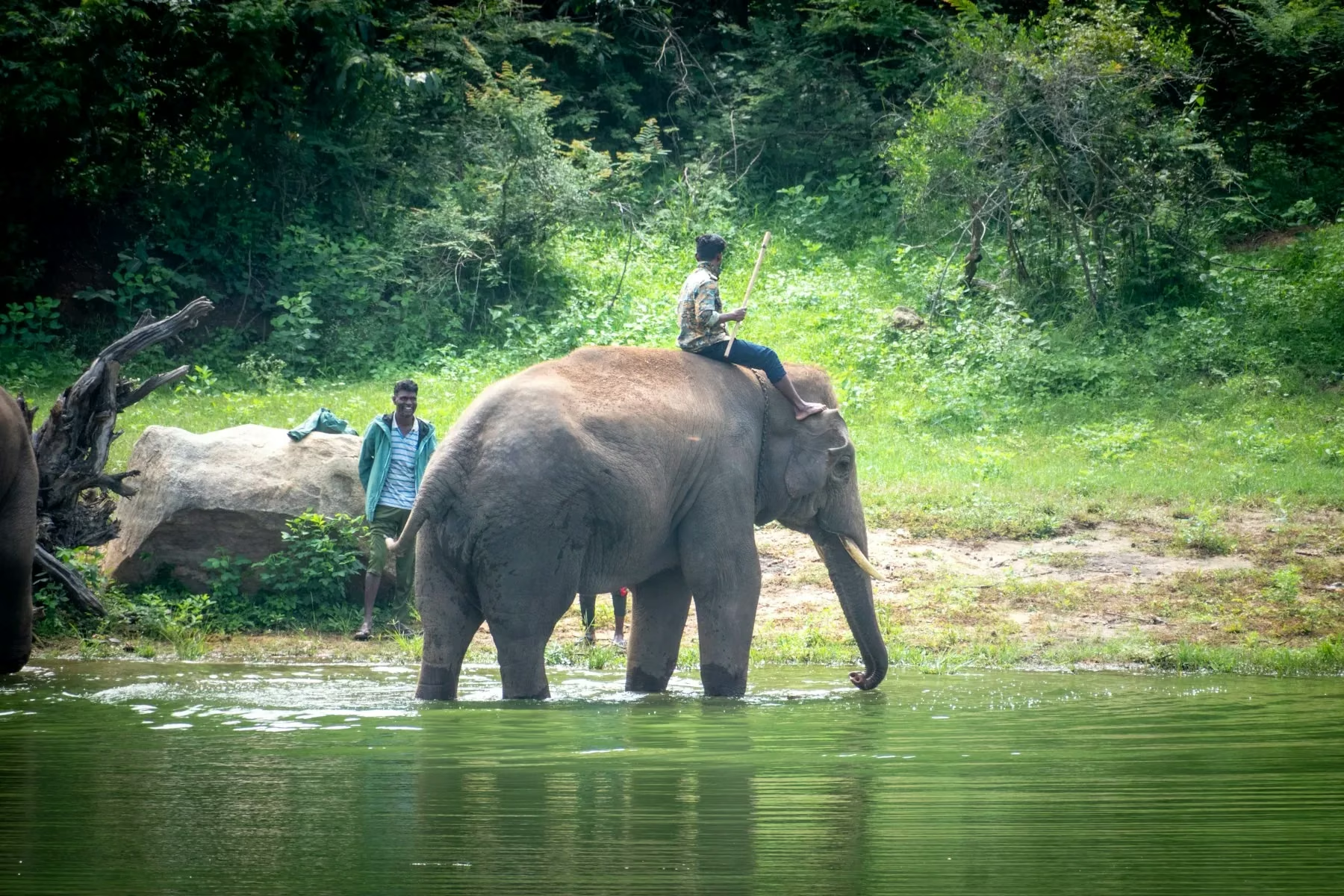
Two reserves that could not look less alike: Rajaji in the Shivalik foothills and Ganga riverine belt of Uttarakhand, and Kaziranga on the floodplain of the Brahmaputra in Assam, at the foothills of Karbi Anglong. Both are official protected areas with their own booking systems, gates and published rules. This page sets the two official records side by side and stops there: no verdicts, no counts, and no figure the sources do not print.
Sources checked on 15 November 2026: Kaziranga's official booking page, the NTCA reserves list and brief, the Assam State Portal's Kaziranga material, and the reserve's own Chilla page and booking page; plus this site's own published pages, linked at the foot of this article.
Location and landscape
Kaziranga lies in Assam on the Brahmaputra floodplain, against the foothills of Karbi Anglong, in the Golaghat and Nagaon districts — with the NTCA brief adding Sonitpur, a district difference this page reports rather than resolves. The landscape is published as tall grassland, shallow pools and reeds, wetlands and sandy chaurs with semi-evergreen and deciduous woodland, drained by the Dhansiri and Moradifalu tributaries. Rajaji is a single-state reserve in the Shivalik foothills along the Ganga across Dehradun, Haridwar and Pauri Garhwal districts.
The practical difference is floodplain grassland against foothill and riverine forest — two ecosystems that shape entirely different days out of the same word, safari.
Area layers and history, never merged
Kaziranga's numbers describe three different objects, and this page keeps them apart. The UNESCO World Heritage property is 42,996 hectares, about 429.96 sq km, inscribed in 1985. The NTCA tiger reserve record gives core 625.58 sq km, buffer 548.00 and a total of 1,173.58. The Assam State Portal gives a national park of about 430 sq km. Three layers, three publishers, no blending. Rajaji by comparison is a national park notified in 1983 at 820.42 sq km, declared a tiger reserve in 2015 at 1,075 sq km.
The history is short and official: a national park in 1974, the World Heritage inscription in 1985, a tiger reserve in 2007, and the distinction of being the oldest park in Assam.
Ranges and gates
Rajaji publishes six day-visit zones — Chilla, Chillawali, Chaurasi Kutiya, Haridwar, Motichur and Ramgarh. Kaziranga publishes four ranges, each with its own gate: Kohora, the Central range at Mihimukh; Bagori, the Western range; Agaratoli, the Eastern range; and Burapahar at Ghorakati. Four gates against six zones, and in both cases the booking names what you can actually buy.
Season and timings
The two calendars are published differently, and both are reported as written. Kaziranga is typically closed from 1 May to 31 October, with November to April described as the ideal window. Its published day trips run 07:30 to 10:00 and 13:30 to 15:00, with the gate opening at 07:00 and closing at 17:00 or sunset. The official site also describes an elephant safari from 05:30 to 07:30, about an hour, at Mihimukh and Bagori — that is the site's own wording, reproduced as published, with no price attached to it here. Rajaji carries its own conflict: 15 November to 15 June on most pages against the booking page's Chilla line of 15 October to 15 June, with the live calendar as the authority.
Booking and identity
Kaziranga is booked on its official booking page, and the flow runs register and mobile verification, profile, Book Now, then date, timing, range, safari type and nationality, members, camera details, verification, operator ID, terms, payment and a downloadable acknowledgement. This page prints no prices from it. On foreign visitors, the system publishes a separate foreign fee category and requires nationality plus one authorised document uploaded by the primary member; the passport is not explicitly named in that rule, so Rajaji's passport requirement is not copied across — check what the form asks for when you book. Rajaji for its part states passport mandatory for non-Indians, the static-IP desktop caveat, a printed permit and the 20-minute gate rule.
Vehicle and escort
Kaziranga's vehicle rules are stricter than Rajaji's and are published as such. No private vehicles are allowed; the safari runs in an authorised Maruti Gypsy from the Kohora or Bagori associations, registered for the purpose, with an armed escort mandatory and no unescorted vehicles permitted. The published speed is 20 km/h, and the prohibitions cover firearms, plastics and loud music, with alighting only at designated points. Rajaji's rules differ in kind rather than degree — its do's and don'ts keep you on specified roads and off the vehicle except where allowed — so the two systems are read separately.
Wildlife, without counts
Kaziranga's published list runs the greater one-horned rhinoceros, Asian elephant, tiger, wild water buffalo, eastern swamp deer, gaur, hoolock gibbon and Ganges dolphin. Rajaji's pages describe elephants, tigers, leopards and deer, with approx. 315 bird species on the Chilla page. Neither list is a population figure: this page states no tiger, rhino or barasingha count for either park, and a permit buys an entry, not an encounter.
Access: hours here, kilometres there
The official sources publish two different kinds of figure for reaching Kaziranga, and this page refuses to convert one into the other. The park site publishes times only — Guwahati to Kohora about 4 to 5 hours, Jorhat to Kohora about 1.5 hours — and no km distance for those legs. The Assam State Portal publishes kilometres instead: Jorhat airport 97 km, Guwahati airport 239, and by road to Kohora Jorhat 89, Nagaon 96, Guwahati 219, Golaghat 73 and Bokakhat 21. The time-versus-km difference is the finding, not a problem to smooth over. For Rajaji the reserve publishes Delhi to Chilla about 224 km via NH 334, Dehradun 55 km and Jolly Grant 40 km, and no figure is invented for either park.
Who each park suits
Rajaji suits a trip anchored in Uttarakhand — Haridwar, Rishikesh or Dehradun — with six zones, a riverine landscape and an extension beside a northern itinerary. Kaziranga suits a northeast itinerary built on Guwahati or Jorhat, with four ranges, a floodplain landscape and rules shaped by escort and grassland. Families, photographers and first-timers appear on both lists; what decides it is your starting point, dates and which calendar offers the day.
What to confirm before you decide
- Which calendar offers your dates — Rajaji's live calendar, and Kaziranga's window around the 1 May to 31 October closure.
- Which range and gate your booking names — Kohora, Bagori, Agaratoli or Burapahar — and the timing band attached to it.
- Which document the booking form requires of you, since the passport rule is Rajaji's and not Kaziranga's.
- Which escort and vehicle rules apply on the day, as published by the park rather than by a third party.
What this page will not claim
Six abstentions. No verdict about which reserve is better. No tiger, rhino or barasingha count for either park. No merged area figure for Kaziranga, because the World Heritage property, the NTCA tiger reserve and the state portal's national park are three different objects. No conversion of published hours into kilometres, or published kilometres into hours. No fixed season date where the sources conflict, and no passport rule borrowed from Rajaji. And no sighting guarantee behind either permit.
Where to read next
For the rest of this comparison series, Rajaji versus other Indian tiger reserves, Rajaji versus Jim Corbett, the Sariska comparison, the Dudhwa comparison, the Bandhavgarh comparison, the Pilibhit comparison and the Pench comparison. For the Rajaji transaction itself, the official portal and process guide, and for what a Rajaji day visit is, the jungle safari overview. The two companion pages are the Kanha comparison and the Satpura comparison. Sources checked 15 November 2026.
Rajaji versus Kaziranga: questions answered
Is Kaziranga better than Rajaji for rhinos?
This page does not rank them and prints no count of any species for either park. Kaziranga's official material lists the greater one-horned rhino alongside elephant, tiger, wild water buffalo, eastern swamp deer, gaur, hoolock gibbon and Ganges dolphin on the Brahmaputra floodplain; Rajaji's pages describe elephants, tigers, leopards and deer in a Shivalik and riverine belt. Both sell permits rather than sightings, and a permit buys an entry, not an encounter.
How do I reach Kaziranga from Guwahati or Jorhat?
Two different kinds of official figure exist here, and they are not interchangeable. The park site publishes times only — Guwahati to Kohora about 4 to 5 hours and Jorhat to Kohora about 1.5 hours — while the Assam State Portal publishes kilometres: Jorhat airport 97 km, Guwahati airport 239 km, and by road Jorhat 89, Nagaon 96, Guwahati 219, Golaghat 73 and Bokakhat 21 to Kohora. Report the difference rather than converting one into the other; this page invents no figure.
When are Rajaji and Kaziranga open?
Rajaji publishes 15 November to 15 June on most pages while its booking page's Chilla line says 15 October to 15 June, so its live calendar is the authority. Kaziranga is typically closed from 1 May to 31 October, with November to April described as the ideal window, and its published day trips run 07:30 to 10:00 and 13:30 to 15:00 with the gate opening at 07:00. Confirm your date on the official booking page: https://kazirangasafari.in/booking/user/index.
Can I combine Rajaji and Kaziranga in one trip?
Nothing stops you planning both, but they are reserves in different states with separate booking systems and no combined permit. Rajaji is booked on the reserve's own portal: https://rajajitigerreserve.uk.gov.in/jungle-safari-booking.aspx. Kaziranga is booked on its official site through registration, mobile verification, profile, then date, timing, range, safari type, nationality and members, ending in a downloadable acknowledgement. This page prints no distance or travel time between the two parks, because none was verified for it.
Which is better for a family?
That is a question about your starting point rather than about the parks. Travellers in the northeast compare the Brahmaputra grassland option with the Uttarakhand foothill option; family logistics turn on the four Kaziranga ranges, the armed escort rule, the published timings and which calendar offers your day. Read the two bodies side by side and confirm the identity document each system asks for at booking. Sources checked 15 November 2026.