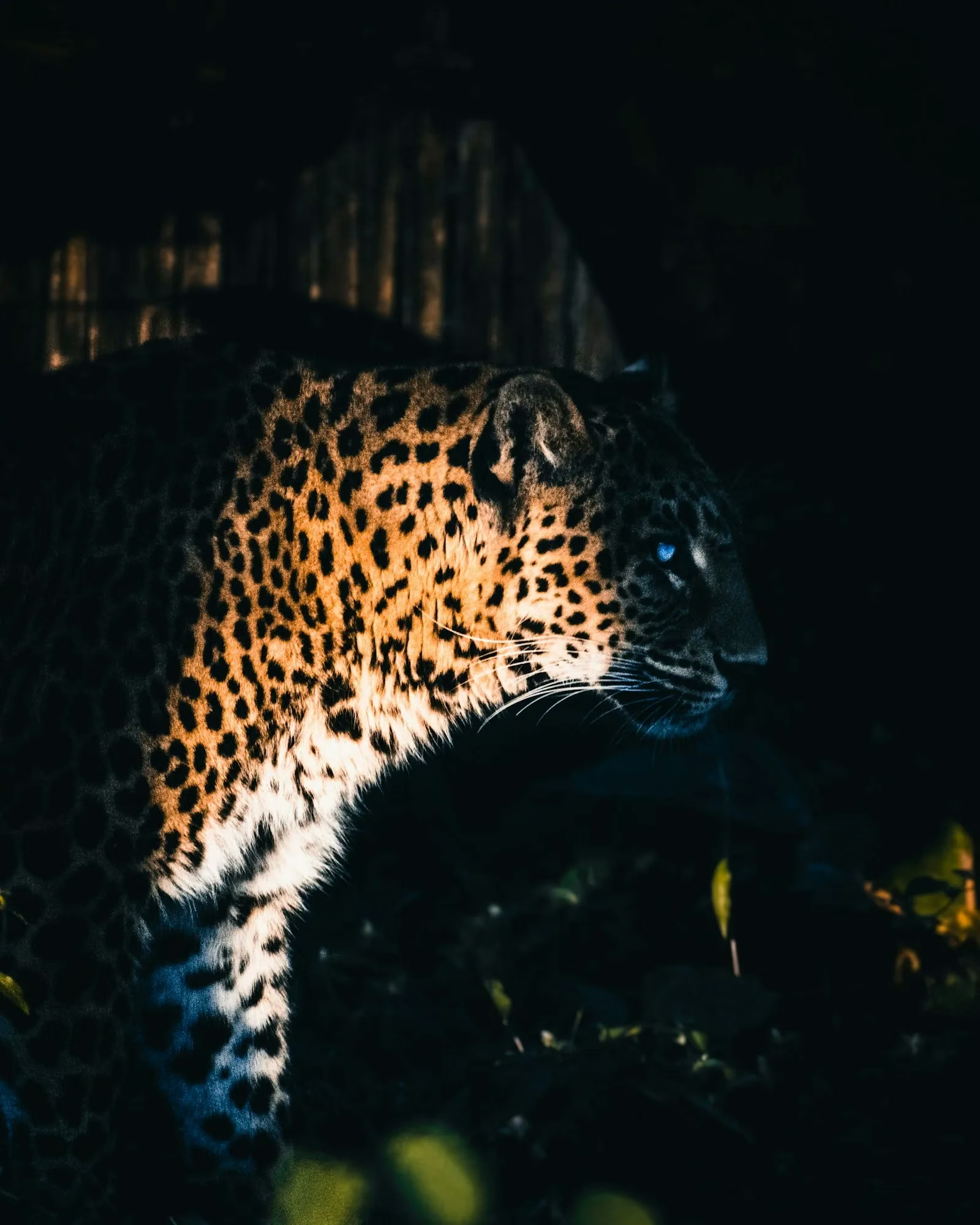
Two reserves in two hill systems: Rajaji in the Shivalik foothills along the Ganga in Uttarakhand, and Satpura south of the Narmada in the Satpura range of Madhya Pradesh, whose hills are described in the official text as seven folds. Both are official tiger reserves with their own booking systems, gates and published rules. This page sets the two records side by side and stops there: no verdicts, no counts, and no figure the sources do not print.
Sources checked on 15 November 2026: the MP Forest Satpura booking page, the reserve's own site, the NTCA list, and the reserve's own Chilla page and booking page; plus this site's own pages, linked below.
Location and landscape
Satpura lies in Madhya Pradesh, south of the Narmada in the Satpura range. The district wording differs by source: the reserve's site says Narmadapuram district, the MP Forest FAQ says Hoshangabad, now Narmadapuram, with Betul and Chhindwara, and the buffer spans the Narmadapuram, Rampur Bhatodi and West Chhindwara divisions. This page reports the conflict and uses the reserve site's line — Narmadapuram district — as primary. The landscape: Narmada-Tapti watershed, sal on the Pachmarhi plateau, teak on the lower plains, the Denwa and Tawa buffer ranges, the Tawa reservoir, over fifty rock shelters. Rajaji is a single-state reserve in the Shivalik foothills along the Ganga across Dehradun, Haridwar and Pauri Garhwal districts.
Size and history
The figures agree across sources: Satpura's core is 1,339.26 sq km, the buffer 794.04 and the total 2,133.30, with the NTCA table giving 2,133.31. Rajaji by comparison is a national park notified in 1983 at 820.42 sq km, declared a tiger reserve in 2015 at 1,075 sq km.
The notification chain: the Bori Reserve of 1865, the Bori Sanctuary of 1931, the Bori wildlife sanctuary in 1975, the Pachmarhi sanctuary in 1977, Satpura National Park in 1981, the Pachmarhi Biosphere Reserve in 1999, Satpura as a tiger reserve under Project Tiger in 2000, the core and critical habitat in 2007, the buffer in 2010, unified control in 2013, and the eco-sensitive zone in 2017.
Zones, gates and activities
Rajaji publishes six day-visit zones — Chilla, Chillawali, Chaurasi Kutiya, Haridwar, Motichur and Ramgarh. Satpura's core zones are Bheemkund, written Churna, Madhai, Mallupura and Panaarpani at Pachmarhi, with a buffer of Burgodi at Pipariya, Jamani Dev, Parsapani and Tamia Delakhari, and the five tourist gates are Panaarpani, Madhai, Bheemkund, Jamanidev and Parsapani. The activities published for Satpura go beyond a jeep shift — gypsy rides, elephant safari, canoeing, boating, walking and trekking, camping, cycling and machans or hides — with no prices attached to any of them here, and with the booking system, not this page, naming what is actually offered on your date.
Season and timings, with the conflicts
The season statements disagree and are printed with their sources: one line says open 16 October to 30 June while another part of the same material says 15 October; Madhai and Churna are published as closed from 16 June to 30 September, Pachmarhi as open year-round, and Wednesday afternoons, Holi and Diwali as closed. The timings differ too: the reserve site gives 06:30 to 10:00 and 16:00 to 18:00, its seasonal bands give winter 06:00 to 10:00 and 14:30 to 17:30 and summer 05:45 to 09:30 and 15:00 to 18:30, and the MP Forest FAQ gives 06:00 to 11:00 and 15:00 to 18:00. Three tables, no reconciliation invented — confirm yours at booking. Rajaji carries its own conflict, 15 November to 15 June against the Chilla line of 15 October — live calendar as the authority.
Booking and identity
Satpura is booked on the MP Forest portal's Satpura page, with the window opening on the 120th day at 11:00. A guide is compulsory and paid at the gate, along with the vehicle charge — this page prints no prices. Capacity rules are published: 24 vehicles a day at Madhai, none at Pachmarhi, an own pollution-free vehicle allowed at Churna, six persons per vehicle maximum. The permits are round-specific and non-transferable.
On identity, Satpura publishes separate foreign rates but no foreign identity rule, so Rajaji's passport requirement is not copied across — check what the form asks. Rajaji states its own rules plainly: passport mandatory for non-Indians, the static-IP desktop caveat, a printed permit and the 20-minute gate rule.
UNESCO status, stated precisely
Two designations get confused in summaries, so this page separates them. Satpura is on UNESCO's Tentative List, added in 2021 under reference 6532, and is not inscribed on the World Heritage List. The surrounding Pachmarhi Biosphere Reserve carries a Man and the Biosphere designation from 2009. This page therefore never writes World Heritage Site for Satpura and never calls it India's first biosphere — it states the Tentative List entry and the biosphere designation, each with its own date.
Wildlife, without counts
Satpura's published lists run tiger, gaur, sambar, chital, flying squirrel, Indian giant squirrel and leaf-nosed bats. Rajaji's pages describe elephants, tigers, leopards and deer, with approx. 315 bird species on the Chilla page. Neither list is a population figure: this page states no tiger, rhino or barasingha count for either park, and a permit buys an entry, not an encounter.
Access, gate by gate
The reserve's own gate table gives: Panaarpani and Pachmarhi — Bhopal 210 km, Jabalpur 241, Nagpur 259; Madhai — Bhopal 140, Nagpur 300; Bheemkund and Churna — Itarsi 65, Bhopal 106. Other official tables differ — one site gives 170 and 340, the Pachmarhi brochure 230, 285 and 260, an Itarsi to Churna figure of 100 — so the gate table is used and the variation stated, not averaged. No Delhi distance is published for Satpura. For Rajaji the reserve publishes Delhi to Chilla about 224 km via NH 334, Dehradun 55 km and Jolly Grant 40 km.
Who each park suits
Rajaji suits a trip anchored in Uttarakhand — Haridwar, Rishikesh or Dehradun — with six zones, a riverine landscape and an extension beside a northern itinerary. Satpura suits a Central India itinerary built on Bhopal, Itarsi or Pipariya, where the activities extend to water and on foot as well as the vehicle. Families, photographers and first-timers appear on both lists; what decides it is your starting point, dates and which calendar offers the day.
What to confirm before you decide
- Which live calendar offers your dates, and which of the published season lines applies to your gate.
- Which of the three published timing tables your booking actually issues.
- Which gate your permit names — Panaarpani, Madhai, Bheemkund, Jamanidev or Parsapani — and where you will sleep relative to it.
- Which identity document that system asks for, since no foreign identity rule is published for Satpura.
What this page will not claim
Six abstentions. No verdict about which reserve is better. No tiger, rhino or barasingha count for either park. No World Heritage Site claim and no biosphere first — only the Tentative List entry of 2021 and the Man and the Biosphere designation of 2009. No merged figures: the district wording, the season lines and the three timing tables are reported apart. No Delhi distance or drive time for Satpura, and no passport rule borrowed from Rajaji. And no sighting guarantee behind either permit.
Where to read next
For the rest of this comparison series, Rajaji versus other Indian tiger reserves, Rajaji versus Jim Corbett, the Sariska comparison, the Dudhwa comparison, the Bandhavgarh comparison, the Pilibhit comparison and the Pench comparison. For the Rajaji transaction itself, the official portal and process guide, and for what a Rajaji day visit is, the jungle safari overview. The two companion pages are the Kanha comparison and the Kaziranga comparison. Sources checked 15 November 2026.
Rajaji versus Satpura: questions answered
Is Satpura better than Rajaji for tigers?
This page does not rank them and prints no tiger count for either. Satpura lies south of the Narmada in the Satpura range, whose hills are described as seven folds, with sal on the Pachmarhi plateau, teak on the lower plains, the Denwa and Tawa buffer ranges and more than fifty rock shelters; Rajaji is a Shivalik and Ganga riverine landscape. Both publish permits rather than sightings, and a permit buys an entry, not an encounter.
Is Satpura a UNESCO World Heritage Site?
No. Satpura is on UNESCO's Tentative List, added in 2021 under reference 6532, and is not inscribed on the World Heritage List. The surrounding Pachmarhi Biosphere Reserve carries a Man and the Biosphere designation from 2009. This page therefore never calls Satpura a World Heritage Site and never calls it India's first biosphere — it states the Tentative List status and stops there.
When are Rajaji and Satpura open?
Rajaji publishes 15 November to 15 June on most pages while its booking page's Chilla line says 15 October to 15 June, so its live calendar decides. Satpura's own pages conflict: one line says open 16 October to 30 June while another says 15 October, Madhai and Churna are published as closed 16 June to 30 September, Pachmarhi as year-round, and three different timing tables circulate. Confirm the window and the timings at booking: https://forest.mponline.gov.in/Search.aspx?park=5.
Can I combine Rajaji and Satpura in one trip?
Nothing stops you planning both, but they are reserves in different states with separate booking systems and no combined permit. Rajaji is booked on the reserve's own portal: https://rajajitigerreserve.uk.gov.in/jungle-safari-booking.aspx. Satpura is booked through the MP Forest portal, opening on the 120th day at 11:00, with round-specific, non-transferable permits and a compulsory guide paid at the gate. This page prints no distance or travel time between the two parks, because none was verified for it.
Which is better for a family?
That is a question about your starting point rather than about the parks. Travellers anchored in Uttarakhand compare the Shivalik and riverine option with a Central Indian hill option whose activities include gypsy rides, canoeing and walking as well as safaris; family logistics turn on the gates, the conflicting published timings and which calendar offers your day. Read the two bodies side by side and confirm identity documents on each system's own rules. Sources checked 15 November 2026.