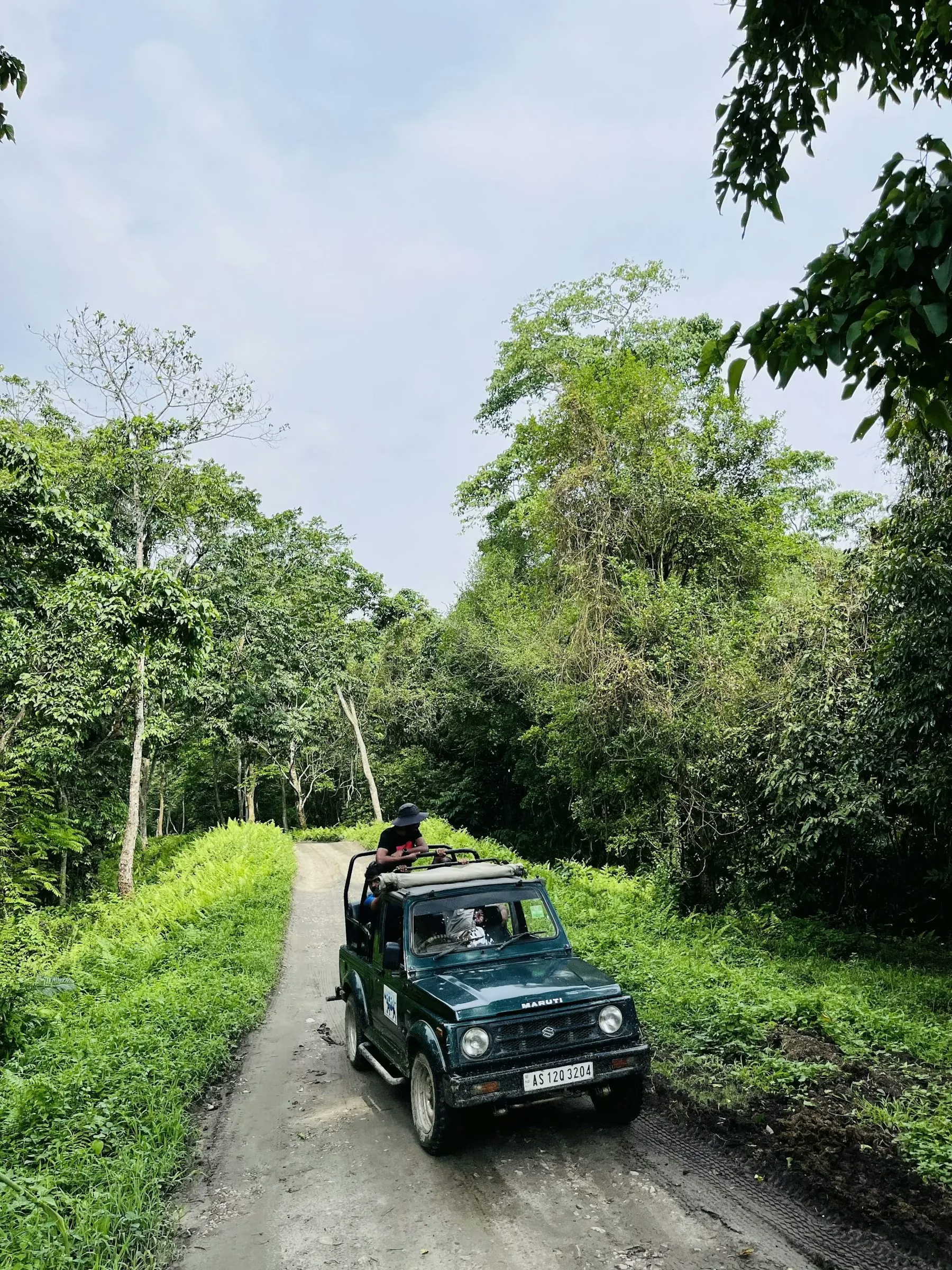
Binoculars are one of the most useful optional pieces of equipment on a Rajaji jeep safari. A camera tries to preserve a frame; binoculars help you see what is happening right now. They can reveal a bird’s bill shape, the markings on a deer, movement on a far riverbank or an animal partly hidden behind leaves without encouraging the driver to move closer.
You do not need expensive equipment to benefit. A comfortable, compact pair that you can hold steady is better than a heavy model with impressive specifications that stays in its case. Choose for the way you actually travel: seated in a moving jeep, often in changing light, with limited space and a short window to observe a sighting.
Choosing a practical pair
For most safari visitors, 8x binoculars are the safest all-round choice. The first number is magnification: an object appears eight times closer than it does to the unaided eye. The second number is the objective lens diameter in millimetres. A common 8x42 pair gives a bright view and is still manageable, although an 8x32 pair is lighter for a short holiday.
10x binoculars can show more detail at distance, but the higher magnification also exaggerates hand movement. That matters in a jeep, where the vehicle, your breathing and your excitement can all make the view shake. A wide field of view, good focus wheel and comfortable eye relief are usually more valuable than maximum power.
- Test that the focus wheel turns smoothly and reaches a sharp image quickly.
- Check that the two eyepieces can be adjusted for your eye spacing.
- Choose a neck strap or harness that does not swing while the vehicle moves.
- Prefer a pair you can hold with one hand while keeping the other hand secure.
- Carry a soft case and a clean lens cloth rather than wiping glass with clothing.
Using binoculars from a jeep
Keep the binoculars around your neck but not pressed against your face while the vehicle is moving. When the driver stops, brace your elbows lightly against your body or the vehicle’s stable edge, bring the binoculars to your eyes and focus. If the subject moves, lower the binoculars briefly, find the animal with your unaided eyes and then raise them again. Trying to search through magnified glass from the start is the fastest way to lose a bird.
Ask the guide to describe direction using fixed references such as a tall tree, rock, riverbank or open patch. Find that reference with your eyes first. Do not ask the driver to approach simply because the view is not perfect; distance is part of responsible wildlife watching. Our wildlife etiquette guide covers the wider rules that protect animals and other visitors.
What binoculars help you notice
Birds are the obvious use, but binoculars are helpful for every class of sighting. On an open riverbed, look for posture, ear shape and movement rather than trying to identify a distant animal from colour alone. In woodland, scan slowly through gaps in the vegetation and look for a flicking tail, a change in texture or a pair of reflective eyes. Your guide can often tell you where to look, but the instrument lets you make your own observation.
For birds, note the silhouette, bill, wing bars, tail length, habitat and call. A bird seen for two seconds may be impossible to name confidently; writing “small green bird, short tail, fast flight across scrub” is still a useful record. The birdwatching guide can help you turn those observations into better identifications later.
Light, dust and condensation
Rajaji can move from bright open ground to shaded forest quickly. Do not keep changing settings or wiping the lenses every few seconds. Let your eyes adjust, use the focus wheel gently and avoid pointing directly at the sun. If dust settles on the outer lens, use a blower or clean lens brush if you have one; rubbing grit across the glass can scratch it.
Condensation often appears when equipment moves from an air-conditioned room into warm, humid air. Keep the binoculars closed in their case for a few minutes and let them acclimatise. A small waterproof pouch protects against a brief shower, but do not seal damp equipment away for a long period when you return to the hotel.
Binoculars and photography together
Binoculars and cameras complement each other. Use the binoculars to understand behaviour and the camera only when a photograph can be made without pressure, flash or repeated disturbance. If your camera has a long lens, do not assume it removes the need for binoculars: a bright, stable visual view is often more satisfying than a blurred image.
For children or first-time visitors, one shared pair can work if the group takes turns. Agree that the person who finds the animal gets the first look, and pass the instrument only after the vehicle is stationary. Keep voices low and avoid making every sighting a competition. A short, calm observation teaches more than a rushed search for a perfect photograph.
What to pack with them
- Binoculars with a secure strap and protective case.
- Microfibre lens cloth in a small sealed pouch.
- A notebook or phone note for quick descriptions.
- A downloaded bird or mammal reference for later, not constant use inside the forest.
- Neutral clothing and a cap that does not interfere with the eyepieces.
Binoculars reward patience. If you learn to find the subject with your eyes, hold the instrument steadily and let the guide set a respectful distance, you will notice much more than a list of species. The best pair is the one that helps you look longer and behave more quietly.