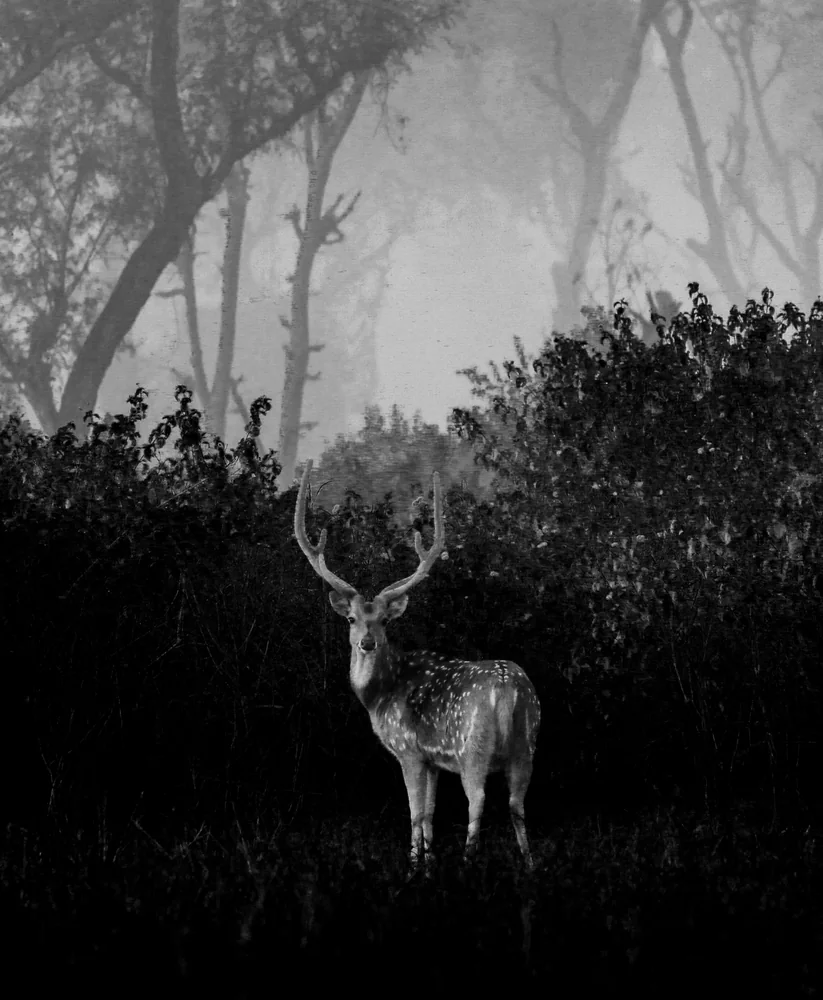
What is the correct way to behave during a Rajaji jeep safari?
A Rajaji jeep safari takes you into a protected national park where wild animals live, feed, raise their young and move through their natural habitat. Your behaviour inside the forest directly affects the wildlife, the experience of other visitors and the long-term health of the ecosystem. Responsible safari behaviour is not just a courtesy — it is a requirement enforced by the Forest Department and a reflection of the respect the forest deserves.
The fundamental principle is simple: you are a guest in the animal's home. Every action you take — speaking loudly, leaning out of the vehicle, playing music, littering — has a consequence for the animals and the environment. The best safaris are those where visitors are quiet, observant and willing to let the forest reveal itself on its own terms.
Can I get out of the jeep during a Rajaji safari?
No. Stepping out of the vehicle inside Rajaji National Park is strictly prohibited unless the guide specifically instructs otherwise at a designated stop. The forest floor is home to snakes, insects and potentially dangerous wildlife. Even herbivores like elephants and bison can be unpredictable at close range. The vehicle provides a safe barrier between you and the forest.
There are rare exceptions at designated interpretation points or rest areas where the guide may permit visitors to step out briefly. Even in these situations, stay close to the vehicle, follow the guide's instructions precisely and do not wander into the vegetation. If you are uncertain whether you are allowed to exit, ask the guide before moving.
Remaining in the vehicle is also a Forest Department rule, and violations can result in penalties or being asked to leave the park. The rule exists for your safety and the welfare of the wildlife.
How close can I get to wildlife on a Rajaji safari?
The distance between the vehicle and any animal is determined by the guide and driver, not by the visitors. Forest Department guidelines set minimum approach distances that vary by species and situation. Elephants, for example, require greater caution than deer, and a mother with a calf requires more distance than a solitary animal.
Your guide positions the vehicle at a distance that balances good viewing with safety and minimal disturbance. If the animal shows signs of stress — ear pinning, head shaking, charging posture, trumpeting — the guide will increase distance immediately. These are the animal's signals that you are too close.
Never ask the driver to move closer to an animal. This request puts the guide in an uncomfortable position and may lead to a situation that disturbs the animal or compromises safety. Trust the guide's judgment — they read animal behaviour as part of their training and experience. If the animal is visible and relaxed, the distance is appropriate. If the animal has moved into cover or is displaying stress signals, the guide will reposition the vehicle.
For tips on photographing wildlife from a safe distance, see our wildlife photography guide. To understand which zones offer the best wildlife viewing conditions, read the zone comparison guide.
Is it allowed to use flash photography during a Rajaji safari?
Flash photography is not permitted when photographing wildlife in Rajaji National Park. Flash can startle animals, disrupt natural behaviour and cause stress — particularly for nocturnal species, birds and animals with young. This rule applies to all cameras, including smartphones and compact cameras with built-in flash.
Use natural light for your photography. In the early morning and late afternoon — the best times for wildlife viewing — the natural light is often beautiful and more than sufficient for well-exposed images. If your camera has a flash unit, turn it off or cover the sensor to prevent it from firing automatically.
For guidance on camera settings that work well in Rajaji's forest light conditions, read our photography guide. The guide covers aperture, shutter speed and ISO settings for different wildlife scenarios, all designed to work with natural light.
Keeping Quiet in the Forest
Noise is one of the most common disturbances on a safari. Animals — particularly deer, primates and birds — are highly sensitive to sound. Loud conversation, laughter, phone ringtones and music can alert animals to your presence, causing them to flee or change their natural behaviour. In dense forest zones like Motichur and Ranipur, where visibility is limited, sound carries further and disturbs more widely.
Keep your voice at a whisper when animals are visible or when the guide is listening for calls. Turn your phone to silent mode before entering the park. If you want to share your excitement about a sighting, do so quietly after the vehicle has moved on from the area. The guide will often signal when it is appropriate to speak and when silence is important.
Some of the most memorable safari moments happen in silence — the distant call of a hornbill, the soft footfall of a sambar deer, the deep rumble of an elephant. These sounds are part of the experience, and they are only audible when the vehicle is quiet.
Respecting Distance Limits and Animal Space
Wildlife in Rajaji has varying tolerance levels for vehicle proximity. Some animals — particularly elephants near the river — are relatively habituated to safari vehicles and may continue their activities undisturbed when a vehicle is nearby. Others — leopards, bears, nesting birds — are more sensitive and may retreat or display stress at a greater distance.
The guide understands these differences and adjusts the vehicle's position accordingly. Follow these guidelines as a visitor:
- Do not extend your body or camera equipment outside the vehicle frame. This reduces the effective distance between you and the animal and may trigger a stress response.
- Do not call out to animals. Whistling, clapping or making sounds to attract an animal's attention is prohibited and can cause unnecessary stress.
- Do not throw food or objects toward animals. Feeding wildlife disrupts natural foraging behaviour and can make animals dependent on human food, which is harmful in the long term.
- Respect the guide's decision to move on. Sometimes the best viewing happens after leaving a spot — the guide may know of a better vantage point ahead.
Minimising Your Environmental Footprint
Every safari visitor leaves a temporary mark on the forest. The goal is to make that mark as small as possible. Here are practical steps to reduce your environmental impact:
Carry out what you carry in: Do not leave any waste in the forest — not food wrappers, not water bottles, not tissues. The forest has no waste disposal system, and litter harms wildlife and degrades the habitat. Carry a small bag for your waste and dispose of it properly after the safari.
Avoid single-use plastics: Bring a reusable water bottle instead of purchasing disposable plastic bottles. If you do use plastic, ensure it leaves the forest with you.
Stay on designated routes: Safari vehicles follow specific routes that the Forest Department has approved. Do not request or encourage the driver to leave the designated path to get closer to an animal or to explore an off-route area.
Use biodegradable products: If you apply sunscreen, insect repellent or hand sanitiser, choose biodegradable options where possible. Chemical residues on your hands can transfer to the vehicle and eventually to the forest environment.
Do not pick plants or collect natural objects: Flowers, leaves, feathers, stones and other natural objects are part of the forest ecosystem. Leave them where they are for other visitors and for the animals that depend on them.
Following the Guide's Instructions
The guide is your link to understanding the forest. Their instructions — when to be silent, when to look in a particular direction, when to stay seated, when it is safe to speak — are based on training, experience and real-time assessment of the situation. Following these instructions without question is the most important thing you can do on a safari.
If the guide asks you to stop photographing, lower your voice or move back inside the vehicle, do so immediately. These requests are not arbitrary — they respond to something the guide has observed in the animal's behaviour, the terrain or the social dynamics of the group. Trust the guide's expertise and enjoy the experience they are curating for you.
For a comprehensive guide to planning your Rajaji safari, including fees, zones and seasonal timing, read our fees and permits guide. The best time to visit guide helps you choose the ideal season for your trip. To discuss your specific requirements, reach out through the booking page.