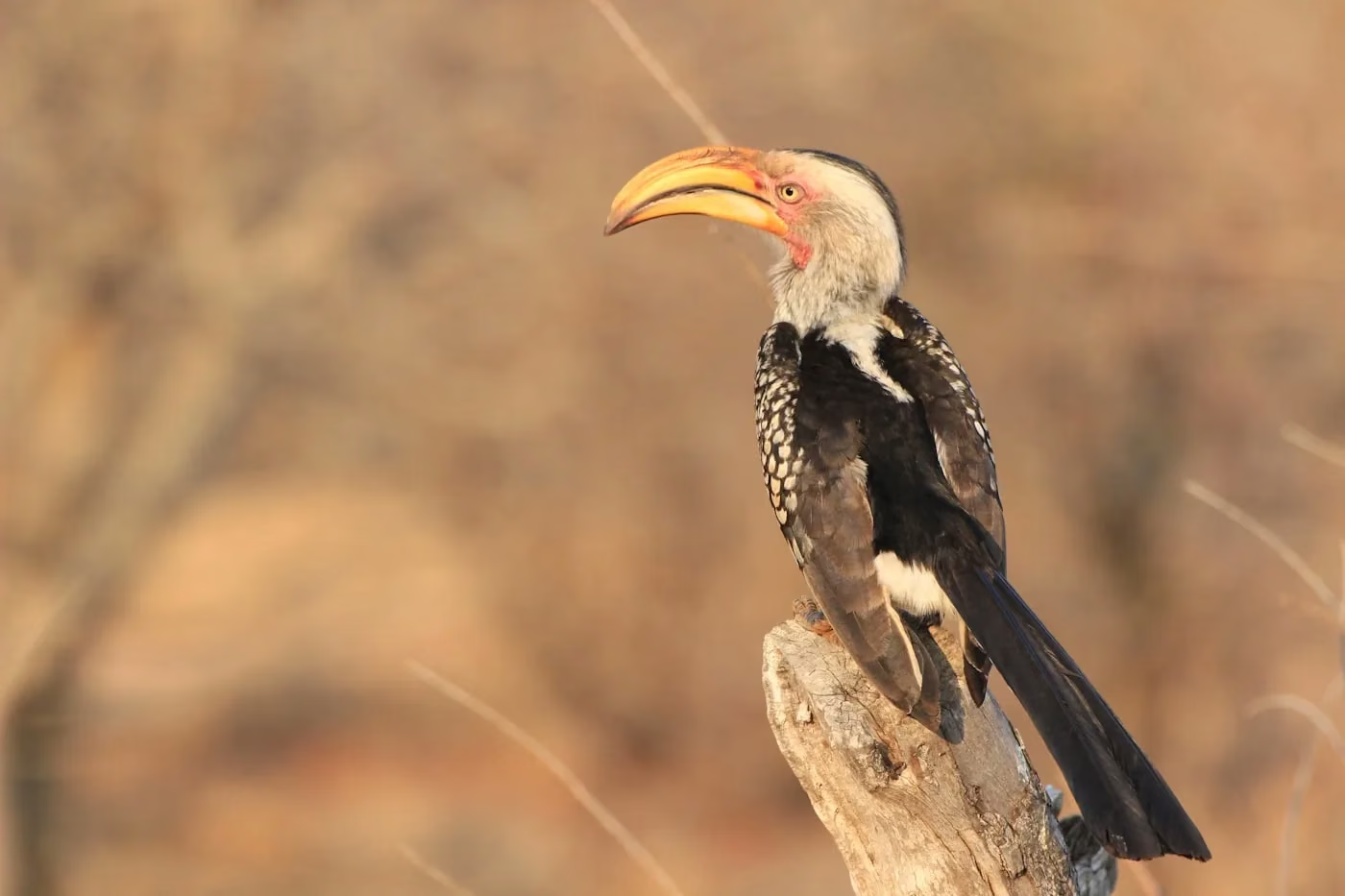
A wildlife field note does not need to be a scientific survey. It is a short record of what you saw, where you saw it and what it was doing. Keeping one changes the shape of a Rajaji safari: instead of waiting only for a large animal, you start noticing habitat, calls, tracks, light, movement and the small signs that make the forest legible.
A notebook also protects you from overconfident memories. After a busy drive, several sightings can merge together. A few honest words written at the next quiet moment are more useful than a precise species name you guessed from a blurred photograph. Ask your guide, mark uncertainty and check references after the safari.
The basic field-note template
Leave space for seven simple details: date, zone or route, approximate time, weather, habitat, animal or sign and behaviour. Add the number of individuals when you can. If the guide confirms an identification, write “confirmed by guide”; if not, record the description instead of forcing a name.
- Time: early light, mid-morning, afternoon or exact time if known.
- Habitat: sal forest, open grass, dry riverbed, water edge, scrub or woodland.
- Direction: left or right of the vehicle, ahead, behind, uphill or across the river.
- Behaviour: feeding, resting, calling, crossing, grooming, flying or watching the vehicle.
- Confidence: confirmed, probable or unidentified.
This structure works for a tiger, a hornbill, an alarm call or a line of tracks. The tracks and signs guide gives more ideas for recording evidence when an animal is not visible.
Writing about animals without disturbing them
Write after the vehicle has stopped and only if doing so does not make you miss the sighting. Keep the notebook on your lap, use a short pencil or phone note and avoid sudden movements. If an animal is close, put the notebook away. Watching quietly is more important than completing a line.
Never use a call from a phone, whistle or speaker to improve your notes. Do not ask the driver to circle an animal repeatedly so you can finish a description. A field log should document a natural encounter, not create one. Follow the guide’s decision about distance, vehicle position and when to move on.
Recording birds when the view is brief
Birds often give you only a silhouette, a call or a few seconds in flight. Start with what is certain. Note whether it was perched or flying, its approximate size compared with a crow or myna, the shape of the bill, the tail, any strong colour patch and the habitat. Add the call in plain language—whistle, repeated note, harsh chatter or deep hoot—rather than inventing a name.
Look for repeated clues. A single flash of colour is weak evidence; colour plus a particular flight pattern, bill and call is stronger. Use binoculars if you have them, but do not spend the whole drive searching through glass. The Rajaji birdwatching guide is best used later to compare notes with likely species.
Using technology carefully
Identification apps and digital notebooks can be useful before and after the drive. Download reference material in advance because signal may be poor. During a sighting, write a quick description first. Apps can suggest a species from a photograph or sound, but suggestions are not proof and a noisy forest recording can mislead you.
Do not play recorded calls, use a phone flash or hold a phone outside the vehicle to obtain a better angle. Avoid publishing real-time locations, nest sites or dens. A delayed, general account is safer than a precise live update that may attract unnecessary visitors. For photography and device conduct, read the photography rules guide.
Turning notes into a better second safari
When you return to your accommodation, expand the short notes while the memory is fresh. Add a sketch of the route, a question for the guide or a species you want to learn. Compare habitats rather than counting only “big” sightings. You may notice that birds were more active near water, alarm calls came from a particular edge or deer changed behaviour as the light strengthened.
On a later visit, review the old log before entering the park. It can help you remember seasonal conditions without turning the trip into a promise that the same animal will appear again. Wildlife sightings are never guaranteed. A field log makes the experience valuable even when the forest offers no headline sighting.
A child-friendly version
Children can keep three columns: “I saw”, “where” and “what it did”. They can draw a track, match a sound to a habitat or record the colours of a bird. Keep the task optional and stop writing whenever the guide asks for silence. A quiet child who notices a langur’s alarm call has learned more than one who is trying to fill a worksheet at speed.
Do not turn the notebook into a competition between vehicles or families. The aim is attention, not a score. Pair the activity with the family safari guide so that breaks, comfort and wildlife etiquette remain part of the plan.
Field-note checklist
- Carry a small notebook, pencil and a protected phone if you prefer digital notes.
- Write the date, route, time, habitat and weather first.
- Describe uncertain animals instead of guessing.
- Record behaviour and calls, not only names.
- Stop writing when the animal is close or the guide requests silence.
- Review and identify notes after the safari, not by disturbing wildlife during it.
- Share general, delayed observations rather than precise live locations.
A good Rajaji field log is modest, specific and respectful. It helps you remember the forest as a living system rather than as a checklist of animals.