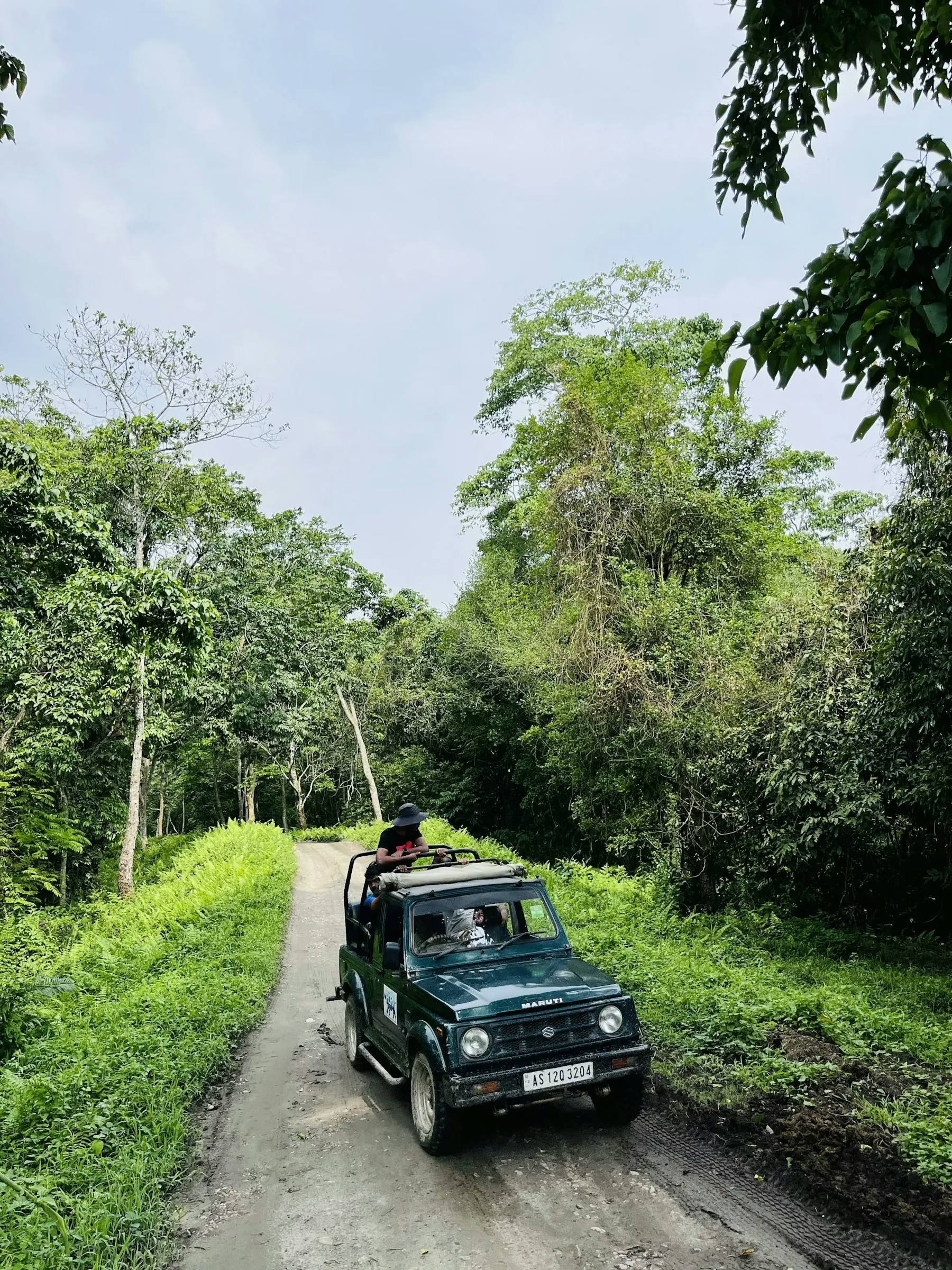
Photography on Safari: What You Need to Know Before You Pack
A Rajaji safari offers extraordinary photographic opportunities — elephants against the Shivalik backdrop, deer in golden light, birds perched in Sal canopy, river scenes along the Ganga. The temptation to bring every piece of gear you own is understandable. But photography in a national park and tiger reserve comes with rules, restrictions and practical constraints that differ sharply from other shooting environments. Understanding these before you pack saves you from the disappointment of having gear confiscated at the gate, the embarrassment of breaking a rule you did not know existed, or the frustration of equipment that does not work in a moving jeep.
This guide covers what to confirm before carrying photography gear, why drone use is restricted, how flash affects wildlife, the practicality of tripods in a jeep, commercial photography questions and a gear-permission checklist. The overarching principle: always confirm current rules with the Forest Department and your operator, because regulations can change and vary by zone.
Drone Use: Why It Is Generally Prohibited
This is the single most important photography rule for Rajaji visitors: do not assume you can fly a drone inside the park. Drone use is generally restricted or prohibited in Indian national parks, tiger reserves and wildlife sanctuaries. The reasons are rooted in conservation law and wildlife protection.
Why drones are restricted
- Wildlife disturbance: The sound and movement of a drone can distress wildlife, particularly birds, nesting species and animals with young. Elephants may react unpredictably to an unfamiliar aerial object. Tigers and leopards, which are already wary, may be driven deeper into cover. The disturbance extends beyond the immediate flight — repeated drone flights in an area can alter animal behaviour patterns over time.
- Legal framework: Indian wildlife protection laws and Forest Department regulations restrict or ban unmanned aerial vehicles in protected areas. The Wildlife Protection Act and specific state-level notifications govern what is permitted inside national parks and tiger reserves. Violations can result in confiscation of the drone, fines and legal action.
- Safety: Drones flying over safari vehicles with passengers, near trees, in river corridors and around wildlife create safety risks. A drone malfunction over the forest or near a group of elephants is not just a nuisance — it is dangerous.
- Conservation sensitivity: Tiger reserves and national parks are managed for minimal human disturbance. Drones represent a form of intrusion that conflicts with this management objective, regardless of the operator's intentions.
What about photography permits?
Some protected areas issue special photography permits for specific purposes — documentary filmmaking, scientific research, media coverage. These permits are issued by the Forest Department on a case-by-case basis and typically involve strict conditions: designated areas, time restrictions, escort requirements and equipment limitations. Personal drone use by individual tourists is not the same as a permitted documentary shoot.
Never fly a drone inside Rajaji without explicit, written permission from the Forest Department. Do not rely on verbal assurances, online forum posts or the assumption that "others are doing it." Rules are enforced unevenly, but that does not make them optional. If you see someone else flying a drone, that person may have permission you do not, or they may be breaking the rule — either way, it does not authorise you to do the same.
Drone use outside the park
If you want aerial photography of the Shivalik landscape, consider flying outside the park boundaries, in areas where drone regulations permit it. Even then, respect local rules, avoid flying over villages or private property without permission, and be aware that Uttarakhand may have state-specific drone regulations. Check current rules with local authorities before flying anywhere near the park.
Flash Photography: Why It Discouraged Around Wildlife
Flash photography on safari is generally discouraged and often explicitly prohibited during wildlife encounters. The reasons are practical, not arbitrary:
- Animal distress: A sudden flash of light can startle animals, particularly at close range or in low-light conditions (dawn, dusk, dense forest). A startled animal may bolt into danger, react aggressively or abandon a feeding or resting spot. Repeated flash use in the same area can condition animals to avoid that location.
- Behaviour disruption: Night-active or crepuscular animals — including some predator species — can be particularly affected by flash. Even diurnal species like deer and elephants show stress responses to sudden bright light.
- Guide instructions: Your safari guide will instruct you on when and where flash is acceptable (if at all). Follow their instructions without question. They are managing the encounter for the safety of both visitors and wildlife.
- Natural light is better: From a purely photographic perspective, natural light produces more pleasing, authentic images. The golden hour light of the Shivalik forest — warm, directional and filtered through the canopy — is far more beautiful than the harsh, flat light of a flash. Learn to work with available light rather than fighting it.
If you are shooting from inside the jeep, there are limited situations where a subtle fill flash might be considered — but only if the guide approves and the animal is at a sufficient distance. In practice, it is simpler and safer to keep your flash off during all wildlife encounters.
Tripods and Monopods: Practical Inside a Moving Jeep
The safari jeep is a moving platform on uneven terrain. This creates specific challenges for camera support equipment:
Full-size tripods
A full-size tripod is impractical inside a safari jeep for several reasons:
- Space: Jeeps have limited seating and floor space. A tripod competes with passengers, bags and the guide's equipment.
- Setup time: Wildlife sightings happen suddenly. By the time you unfold a tripod, mount the camera and compose, the animal may have moved. Speed matters more than stability on safari.
- Vehicle movement: Even when the jeep is stationary, the engine vibration and the uneven ground make a tripod less effective than you might expect. On a moving vehicle, a tripod is useless.
Monopods
A monopod is more practical than a tripod — it takes less space, deploys faster and provides meaningful stability for long telephoto lenses. However, it still requires a moment to set up, and in a fast-moving sighting, that moment may not be available. Many experienced safari photographers use a monopod as a secondary support, keeping their primary shooting hand-held for speed.
Beanbags and improvised supports
The most common and practical camera support on a safari jeep is a beanbag — a small bag filled with rice, beans or similar material that drapes over the jeep's side rail or window frame. Your lens rests on the beanbag, which absorbs vibration and provides stable support without setup time. Many photographers bring an empty beanbag and fill it at their hotel or with rice purchased locally. Some operators provide beanbags — ask when booking.
Practical recommendation
Bring a monopod or beanbag, not a full tripod. If you insist on tripod stability, consider a compact travel tripod — but accept that it will be used more for landscape shots at stops than for wildlife encounters in the jeep. The packing guide covers photography gear alongside general safari essentials.
Respecting the Guide's Instructions and Wildlife Distance
Your guide manages the safari for safety, wildlife welfare and the quality of the group's experience. When it comes to photography, the guide's authority is absolute:
- When to shoot: The guide will indicate when it is safe and appropriate to photograph. If the guide says to stop shooting, put the camera down immediately.
- Distance management: The guide positions the jeep at a safe distance from wildlife. Do not ask the driver to move closer for a better shot. A closer shot is not worth stressing the animal or creating a safety risk.
- Movement restrictions: Stay seated while shooting. Do not stand up, lean out of the vehicle or climb onto the seat for a higher angle. The safety guide covers vehicle conduct in detail.
- Noise discipline: Shutter clicks are fine; excited shouting is not. Keep your reactions quiet, especially during close encounters.
- No flash reminders: If the guide reminds you about flash, comply without argument. They are protecting the wildlife and the experience for everyone in the vehicle.
The wildlife etiquette guide covers the full set of conduct rules and explains why each exists. The photography guide provides specific tips for shooting in Rajaji's conditions.
Commercial vs Personal Photography
The rules differ depending on your purpose:
Personal photography
If you are photographing during a standard jeep safari for personal use — social media, personal albums, hobby photography — you are generally covered by your safari permit. The basic restrictions apply: no flash on wildlife, follow guide instructions, stay in the vehicle. You do not need a separate photography permit for personal snapshots.
Commercial photography
If your photography is commercial — meaning the images will be sold, published in media, used for advertising, broadcast in a documentary or used for any revenue-generating purpose — you typically need a separate permit from the Forest Department. This applies to:
- Professional photographers shooting for publication or sale.
- Film and documentary crews.
- Advertising shoots using the park as a backdrop.
- Media organisations covering stories in the park.
The permit process, requirements and fees vary and can change. Contact the Forest Department well in advance — often weeks or months ahead — to understand current requirements. Do not assume that a standard safari permit covers commercial use. If you are a professional photographer, clarify your intent when booking and ask the operator whether additional permissions are needed.
Social media and content creators
The line between personal and commercial use is increasingly blurred. If you are a travel blogger, influencer or content creator who plans to use Rajaji images for monetised content, the classification may depend on your specific use case. When in doubt, err on the side of caution and contact the Forest Department for guidance.
Photographing Responsibly: Phone and DSLR Tips
Regardless of your gear, responsible photography in Rajaji follows these principles:
Phone photography
- Zoom limitations: Phone cameras have limited optical zoom. Digital zoom degrades image quality significantly. Accept that phone photos will capture the experience and the landscape rather than close-up wildlife portraits.
- Screen brightness: Turn your screen brightness down during dawn and dusk safaris. A bright phone screen in a dark jeep is distracting to other passengers and may affect your own night vision.
- Silence your phone: Put it on silent mode before entering the park. A notification sound during a wildlife encounter is disruptive.
- Shoot through the open side: Hold the phone steady against the jeep frame for stability. Avoid pressing against the windshield, which creates reflections.
DSLR and mirrorless cameras
- Lens choice: A telephoto lens (200-400mm range) is essential for wildlife. A wide-angle captures landscapes and environmental shots. A mid-range zoom (70-200mm) covers versatility. Bring what you can carry comfortably — the jeep has limited space.
- Settings preparation: Set your camera to a high shutter speed (1/500s or faster) for wildlife, continuous autofocus and burst mode. The moment of a sighting is brief — do not waste it adjusting settings.
- Shoot in RAW: RAW files retain more data for post-processing. Storage is cheap; missed opportunities are not.
- Backup during the safari: If you have two memory cards, set the camera to write to both simultaneously. Card failures in the field are rare but devastating.
Both platforms
- Be ready: Camera on, lens cap off, settings dialled in before the vehicle moves. Wildlife does not wait for you to prepare.
- Shoot the habitat, not just the animal: The best safari images often show the animal in its environment — a deer in the mist, an elephant against the Sal canopy, a bird on a river rock. Wide shots tell a story that tight portraits do not.
- Shoot the signs: Pugmarks, broken branches, dung, scratch marks on trees — these are the visual language of the forest. They make compelling images and add narrative depth to your collection.
- Respect others: Do not block other passengers' views with your gear. Share the window space. If someone else is photographing, wait your turn.
Storage and Battery Planning
Running out of storage or battery during a safari is a preventable problem:
- Memory cards: Bring more than you think you need. A morning safari can easily produce 500-1,000+ images if you are shooting in burst mode. Bring at least two cards and swap them during rest stops rather than shooting until one is full.
- Batteries: Cold mornings drain batteries faster than expected. Bring at least two fully charged batteries for your camera. Keep spare batteries in an inside pocket close to your body — warmth preserves charge. If you are shooting video, bring even more.
- Power bank: A portable power bank keeps your phone charged for both photography and emergency communication. Download offline maps and save operator contact details before entering the park — mobile signal is unreliable. The packing guide covers power bank recommendations.
- Dust protection: The Shivalik forest is dusty, especially in the dry season. Keep lenses capped when not shooting. Carry a blower brush and microfibre cloth for quick cleaning. Store gear in sealed bags during the drive to the gate.
- Moisture protection: During the monsoon and early morning dew, moisture is a risk. Rain covers for cameras and sealed bags for lenses protect gear. Even in the dry season, river crossings can splash water into the vehicle.
Gear-Permission Checklist
Use this checklist when preparing photography gear for a Rajaji safari:
- Drone: Confirm current rules with the Forest Department. Do not bring a drone unless you have explicit written permission.
- Flash: Pack it if you want, but plan to keep it off during all wildlife encounters. Confirm with the operator whether any limited flash use is permitted.
- Camera body: Charged, with current firmware. Settings pre-configured for safari conditions.
- Lenses: Telephoto for wildlife, wide-angle for landscapes. Clean and protected from dust.
- Support: Beanbag or monopod. No full-size tripod unless you have specific plans for landscape stops.
- Memory cards: At least two, both formatted and empty. Bring more than you need.
- Batteries: At least two fully charged camera batteries. One power bank for phone.
- Cleaning kit: Blower brush, microfibre cloth, lens pen. Dust is constant.
- Protection: Sealed bags for gear during the drive. Rain cover for wet conditions.
- Operator confirmation: Ask at booking whether any photography restrictions apply to your specific zone or safari. The photography guide covers zone-specific considerations.
- Personal conduct reminder: No flash on wildlife, stay seated, follow guide instructions, respect other passengers' space. The wildlife etiquette guide covers the full code of conduct.
Photography enhances a safari — it extends the experience beyond the moment and creates lasting records of encounters in one of India's important wild landscapes. But the camera is a tool, not the purpose. The purpose is to be present in the forest, to observe and to engage with a living ecosystem. When the guide spots an elephant and whispers for silence, the best response is not to immediately raise the camera — it is to look, listen and absorb. Then, when the moment is right, raise the camera and capture what you have already experienced with your eyes. The birdwatching guide covers the park's avian diversity, and the rivers and waterholes guide identifies locations where photographic opportunities are most likely — plan your shoot around the landscape, and the images will follow.