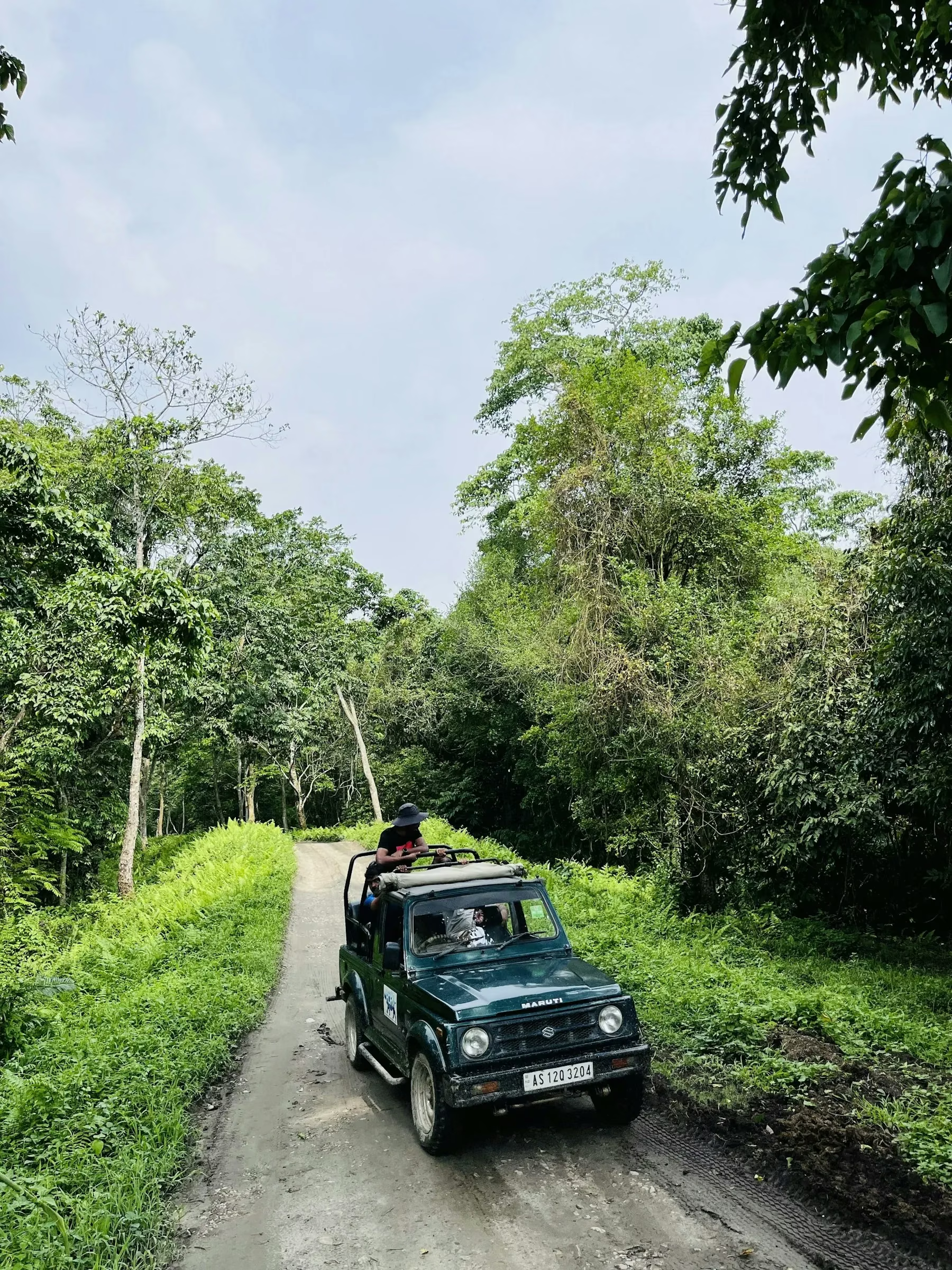
Why Safety Planning Matters for a Rajaji Jeep Safari
A jeep safari in Rajaji National Park takes you into a wild, unfenced forest where elephants roam freely, tigers and leopards move through dense cover, and river crossings and unpaved tracks add real physical challenges. The experience is safe when approached with preparation and respect for the forest's rules — but it requires you to take certain precautions seriously.
This guide covers the practical safety measures every visitor should understand before the safari: how to behave inside the vehicle, what wildlife distance means in practice, how weather and terrain affect the drive, what children and senior visitors should prepare for, and a pre-departure checklist that ensures nothing important is forgotten. The goal is not to create fear but to build the kind of preparedness that lets you relax and enjoy the forest fully.
Safe Conduct Inside the Vehicle
The safari jeep is your primary safety structure inside the park. Everything about your conduct should reinforce its role:
- Stay seated at all times: The forest track is uneven, with speed bumps, river crossings and sudden stops. Standing up or leaning out of the vehicle creates a fall risk, even at low speeds. Keep your seatbelt fastened if the vehicle has them, and hold on during rough patches.
- Keep arms and camera equipment inside the vehicle frame: When photographing wildlife, extend your lens but not your body. Branches overhang the track in many areas, and an extended arm near an elephant or through thick brush is dangerous.
- No loud voices or sudden noises: Loud conversation, phone ringtones and shouting startle wildlife and can provoke unpredictable responses — especially from elephants with calves or animals that feel cornered. Speak in low tones and silence your phone before entering the park.
- No feeding wildlife: Feeding animals changes their natural behaviour, creates dangerous dependency, and is prohibited by the Forest Department. This applies to all animals, from monkeys near the gate to elephants along the river.
- Follow the guide's instructions immediately: When the guide says to be quiet, look in a specific direction, sit down or stay still, comply without hesitation. The guide reads the forest in real time and positions the vehicle based on animal behaviour that you may not yet see or hear.
The wildlife etiquette guide provides a comprehensive overview of conduct rules inside the park. Read it before your safari — the brief time invested pays off in a smoother, safer experience.
Wildlife Distance: What It Means in Practice
There is no single fixed distance (like "stay 25 metres away") that applies uniformly across every wildlife encounter on a Rajaji safari. The appropriate distance depends on the species, its behaviour, its proximity to young, the terrain and the vehicle's position relative to escape routes. The Forest Department sets guidelines, and your guide interprets them in real time.
Here is what "safe distance" looks like in common scenarios:
Elephants
Elephants are Rajaji's most frequently encountered large mammals, and they require particular respect. A general principle is to maintain enough distance that the elephant shows no signs of stress — no ear-flapping, no head-shaking, no change in feeding or walking behaviour. If an elephant changes what it is doing because of your vehicle's presence, you are too close.
- With calves: Elephant herds with young calves are the most unpredictable. The mother and other herd members are protective. The guide will position the vehicle at a significantly greater distance and may choose to wait or retreat rather than approach.
- Solitary bulls: Adult male elephants can be unpredictable, especially during musth (a hormonal cycle marked by temporal gland secretions and heightened aggression). Your guide will recognise the signs and keep a wide berth.
- If an elephant approaches the vehicle: Stay seated and quiet. Do not shout, wave or make yourself large. The driver will move the vehicle to a safe position. Elephants generally move away when given space — problems arise when vehicles block their path or crowd them.
Tigers and leopards
Sightings of large cats are less common than elephant encounters, but when they occur, the vehicle positioning is critical. The guide will stop at a distance that allows observation without provocation. Tigers and leopards are generally not aggressive toward vehicles unless they feel cornered or trapped. The key is maintaining an open escape route for the animal — never position the vehicle between a predator and cover.
Deer, sambar, barking deer and other herbivores
Herbivores are generally less dangerous but can bolt unpredictably when startled. A barking deer's alarm call can signal a predator's presence nearby. When the vehicle stops and the guide is listening, the animal's behaviour is telling you something about the wider forest — pay attention rather than focusing on the visible animal alone.
Bears
Sloth bears are present in Rajaji and can be aggressive if surprised at close range. The guide will maintain extra caution in bear sign areas (scratched trees, disturbed termite mounds). If a bear is spotted, the vehicle will keep a generous distance and avoid blocking the animal's retreat path.
Following the Guide and Driver
Your guide and driver are the two most important safety resources during the safari. Their value goes beyond navigation:
- The guide reads the forest: Fresh pugmarks, alarm calls from langurs and deer, scratch marks, broken vegetation and scent signals all tell a story. The guide interprets these continuously and adjusts the route, speed and stopping points accordingly.
- The driver manages vehicle positioning: On narrow forest tracks, the driver positions the jeep to maintain visibility, avoid terrain hazards and keep escape routes open. This is skilled work that requires experience with the specific track conditions.
- Together they manage encounters: When a large animal is nearby, the guide and driver coordinate silently. The guide signals the distance; the driver adjusts. Your role is to stay quiet, stay seated and let them work.
If you have questions about what you are seeing, ask during quiet moments — not during an active wildlife encounter. The guide is usually happy to explain tracks, sounds and forest features between sightings.
Child Safety Considerations
Children can have a wonderful safari experience with proper preparation:
- Age considerations: Very young children (under 4-5) may find the bumpy ride uncomfortable and the early start difficult. Discuss with the operator whether the specific track conditions suit your child's age. The family safari guide provides age-specific advice.
- Seating: Small children should sit on a parent's lap or in a designated spot where they are secure during bumpy sections. Ensure the child cannot lean out of the vehicle.
- Noise management: Children may not understand the need for silence during wildlife encounters. Prepare them before the safari: explain that the forest has rules, that whispering is important and that the guide will tell them when to be extra quiet.
- Comfort kit: Carry water, a light snack (ask the operator about food policy inside the park), a small cushion for the bumpy ride and a warm layer for early mornings.
- Brief the guide: Tell the guide about your child's age, temperament and any concerns. An experienced guide can adjust the pace and commentary to keep a child engaged without compromising safety.
Senior Citizen and Mobility Considerations
Older visitors and those with mobility limitations should plan specifically:
- Track roughness varies: Some gates and zones have smoother tracks than others. Ask the operator which gate offers the most comfortable ride for your needs. The senior citizens guide covers this in detail.
- Vehicle entry and exit: Getting in and out of a safari jeep requires climbing a step and ducking under the frame. If this is difficult, inform the operator — some vehicles have modifications or alternative configurations.
- Duration: A typical safari lasts 3-4 hours. If sitting for this long is uncomfortable, discuss whether a shorter route or a rest break is possible within the park rules.
- Medication: Carry all essential medication in your daypack. The park has no medical facilities, and returning to the city for forgotten medication is not practical once the safari has begun.
- Heat and cold: Senior visitors are more vulnerable to temperature extremes. In summer, carry more water than you think necessary. In winter, layer up for the open-top vehicle. The packing guide covers clothing and gear by season.
Heat, Cold and Rain: Weather Preparation
Rajaji's weather varies dramatically across seasons, and each brings specific safety considerations:
Summer (March–June)
- Temperatures: The Shivalik foothills regularly exceed 40°C in May and June. Inside an open-top jeep, the sun exposure is intense.
- Essentials: Sunscreen (SPF 50+), a wide-brimmed hat or cap, sunglasses, at least 2-3 litres of water per person, and lightweight breathable clothing covering arms and legs (for sun and insect protection).
- Heat exhaustion: Symptoms include dizziness, nausea and excessive sweating followed by cessation of sweating. If you feel unwell, tell the guide immediately. Shade, water and returning to the gate are the priorities.
Winter (November–February)
- Temperatures: Early mornings can be near freezing in the foothills. The open jeep provides no shelter from wind chill during the drive.
- Essentials: Layered clothing — thermal base layer, fleece mid-layer, windproof outer jacket. Warm hat, gloves and a scarf. Hand warmers are useful for early-morning safaris.
- Morning mist: Dense fog can reduce visibility significantly, especially in December and January. This affects both driving safety and wildlife viewing. The guide and driver will adjust speed and route accordingly.
Monsoon and shoulder months
- Rain: A lightweight rain jacket or poncho is essential. Umbrellas are impractical inside a jeep. Waterproof bags protect cameras and electronics.
- Mud and slipperiness: Forest tracks become slippery when wet. The driver will reduce speed and may avoid certain sections. Trust the driver's judgment on passability.
- Leeches: During and just after the monsoon, leeches are common on forest trails. Leech socks or salt in a small container help. Tuck trousers into socks and wear closed shoes.
- Park closure: During heavy monsoon, the park may be closed or partially restricted. Confirm with the operator before booking. The monsoon closure guide covers what to verify.
Health and Medication Planning
Prepare for health needs before entering the park:
- Essential medication: Carry any prescription medication you take regularly, plus basic first-aid supplies (band-aids, antiseptic, pain relief, anti-diarrhoeal, rehydration salts). There are no pharmacies inside the park.
- Allergies and conditions: Inform the guide of any allergies, asthma, heart conditions, or mobility limitations before the safari begins. This allows the guide to plan the route and pace appropriately.
- Insect bites: Apply insect repellent before the safari. Mosquitoes and other biting insects are present, especially near water and in the evening. The packing guide lists recommended repellents.
- Water: Carry sealed, purchased water bottles. Do not drink untreated water from any source inside or near the park.
Mobile Connectivity and Document Backups
Mobile phone coverage inside Rajaji is unreliable. Plan accordingly:
- Signal gaps: Many areas inside the park have no mobile signal. Do not rely on your phone for navigation, communication or emergency contact once inside. The guide carries communication equipment for contacting base.
- Offline essentials: Download offline maps to your phone before entering the park. Save the operator's phone number, your hotel's number and your booking confirmation as screenshots or photos.
- Document backup: Carry a photocopy of your ID (Aadhaar, passport or driving licence) separate from the original. Store digital copies of your safari booking, hotel reservation and important documents in a cloud service accessible offline. If your phone is lost or damaged, having backups elsewhere saves significant hassle.
- Camera and electronics: Carry a charged power bank. Cold weather drains batteries faster. Protect electronics from dust and moisture in a sealed bag.
What to Do If You Are Delayed or Separated Before Reporting
Delays on the way to the reporting gate happen. Here is how to handle them:
- Contact the operator immediately: If you are running late, call or message the operator as soon as possible. Many operators can hold the reporting slot for a short grace period, but this varies. The earlier you communicate, the more flexibility they have.
- Know the gate's cutoff time: Reporting gates have strict departure times for forest drives. If you miss the cutoff, you may lose your safari slot. Check the reporting time when you book and set multiple alarms for the morning departure.
- If you arrive after the jeep has departed: The operator may be able to arrange a late join if the vehicle has not gone far, or reschedule your safari to the next available slot. The cancellation and rescheduling guide covers what to expect in these situations.
- If separated from your group at the reporting gate: Stay at the designated reporting area. Do not wander into the park on foot. Ask Forest Department staff or the operator's representative for help locating your group.
Inside the Park: What to Watch For
During the drive, stay alert to the forest around you:
- Alarm calls: When birds or monkeys suddenly go quiet, or when deer and langurs start calling loudly, a predator may be nearby. This is the forest's early-warning system. When the guide reacts to these sounds, follow their lead.
- Track conditions: Fresh pugmarks, scratch marks and disturbed vegetation indicate recent animal activity. The guide will point these out — they add depth to the experience.
- River crossings: Some tracks cross shallow streams or river edges. The driver will assess depth and current before crossing. If the driver decides not to cross, do not pressure them — the decision is based on safety.
- Fallen trees and road blocks: Storm damage can block tracks. The guide and driver will find an alternate route or turn back. This is normal and not a cause for concern.
Pre-Departure Safety Checklist
Use this checklist on the morning of your safari (or the evening before) to ensure nothing is forgotten:
- ID document: Valid government photo ID (Aadhaar, passport, driving licence). Required at the reporting gate.
- Booking confirmation: Printed or saved digitally with screenshots for offline access.
- Water: At least 2 litres per person in sealed bottles.
- Sun protection: Sunscreen, hat and sunglasses (summer). Warm layers, gloves and hat (winter).
- Rain gear: Lightweight rain jacket or poncho (monsoon and shoulder seasons).
- Insect repellent: Applied before departure. Reapply if the safari is long.
- Medication: Personal prescription medication plus basic first-aid supplies.
- Camera and power bank: Fully charged. Protected from dust and moisture.
- Offline maps and saved contact numbers: Operator, hotel and gate contact details accessible without signal.
- Comfortable, closed footwear: Suitable for climbing in and out of the jeep and walking at the reporting area.
- Light bag: A small daypack to carry everything. Large backpacks are impractical inside the jeep.
- Cash: Small amounts for tips, minor purchases or parking. Do not carry valuables you would worry about losing.
Emergency Awareness Without Emergency Numbers
Specific emergency contact numbers and protocols can change. Rather than listing numbers that may be outdated, confirm the following with your operator before the safari:
- Operator's emergency contact: The person to call if you are delayed, separated or have a question about the schedule.
- Nearest medical facility: Ask the operator which hospital or clinic is closest to your reporting gate and what the drive time is.
- Forest Department helpline: Ask whether a current helpline number exists for visitors inside the park.
- Hotel emergency contact: If you leave belongings at the hotel or need them to relay a message.
Write these numbers down or save them to a note on your phone. Mobile signal inside the park is unreliable, but having the numbers ready for when you return to coverage is valuable.
After the Safari: Post-Trip Safety
Safety considerations do not end when you exit the park:
- Drive fatigue: If you are self-driving back to Haridwar, Rishikesh or Dehradun, the combination of an early start, sun exposure and three hours of attentive wildlife watching can be tiring. Take a break before the return drive, hydrate and eat.
- Sun exposure recovery: Even with sunscreen, a three-hour open-air drive can cause mild sunburn. Apply after-sun care at the hotel.
- Leech bites: If you walked at the reporting area during the monsoon season, check for leech bites. They are harmless but may bleed for some time. Clean with antiseptic.
- Reporting issues: If you experienced any safety concern during the safari — vehicle condition, guide behaviour, animal harassment — report it to the operator and, if appropriate, to the Forest Department. Visitor feedback helps maintain standards.
A safe safari is one where preparation meets respect for the forest. Follow the guide's lead, maintain awareness, carry the essentials and enjoy the experience of being inside one of India's important Shivalik ecosystems. The wildlife etiquette guide and the packing guide provide additional detail to support a well-prepared visit.