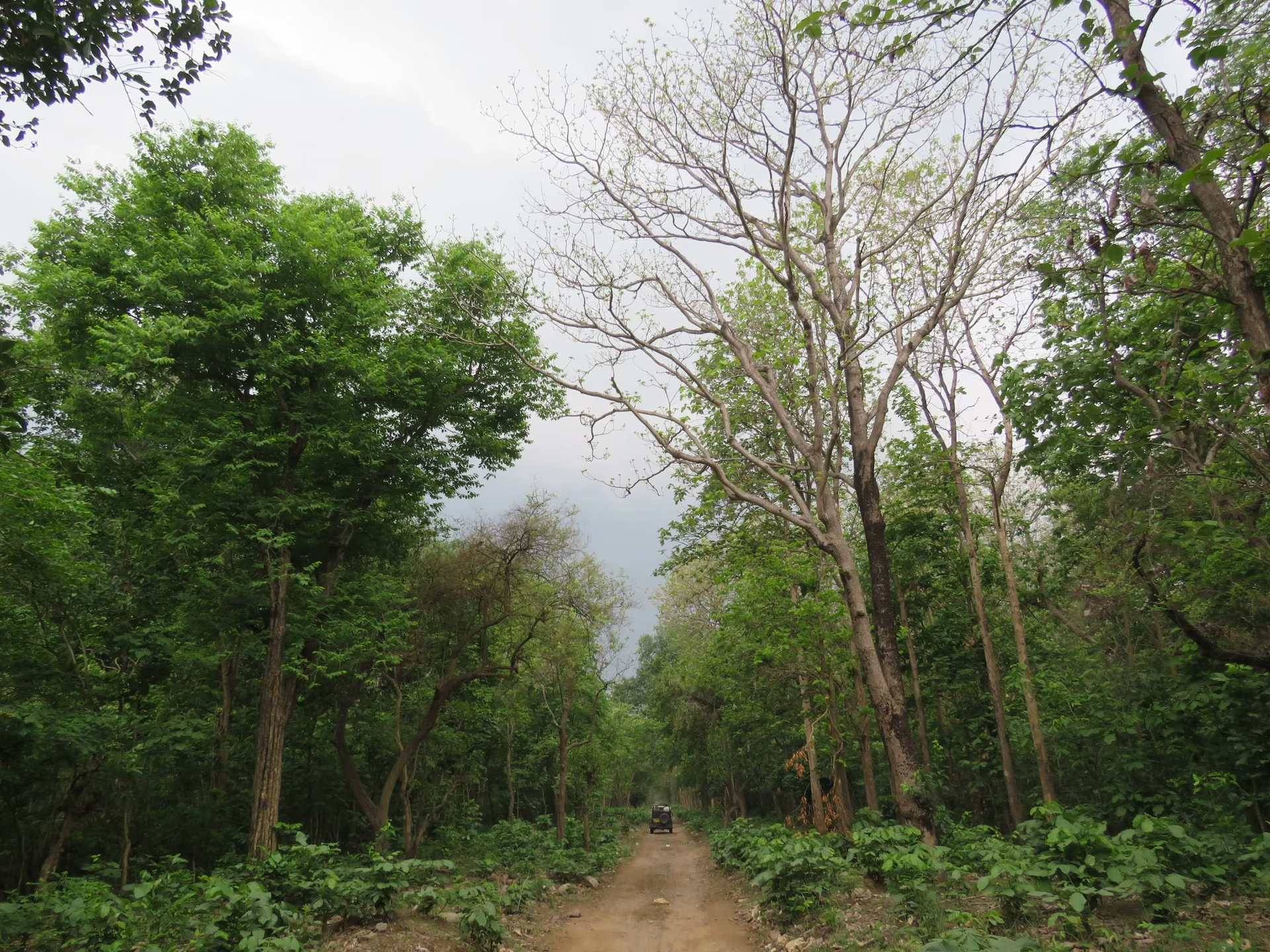
What animal tracks are commonly seen on Rajaji safari routes?
One of the most rewarding aspects of a Rajaji jeep safari is learning to read the forest beyond what is immediately visible. Tracks, calls, scat and feeding signs tell a story about which animals have passed through the area, how recently they were there and where they may be heading. Your guide is trained to read these natural clues, and understanding them yourself transforms the safari from a passive ride into an active exploration.
Rajaji's forest tracks are a living record of animal movement. Every section of the route — the packed earth roads, the soft mud near waterholes, the sandy stretches along the Ganga riverbed — carries impressions left by elephants, deer, boar, primates and predators. Learning even a few basic signs makes you a more engaged and observant safari visitor.
Elephant Tracks — The Largest Footprints in the Forest
Elephant tracks are among the most unmistakable signs you will see on a Rajaji safari. Adult elephant footprints can measure over 30 centimetres in diameter and leave deep impressions in soft earth. On muddy roads near the Ganga riverbed or along forest corridors in the Chilla and Motichur zones, these tracks are often fresh and clearly defined.
Look for the characteristic round shape with a flat or slightly concave centre. Elephant tracks on soft ground often show the toenail impressions — four toes on the front feet and five on the hind feet. The depth of the track indicates the animal's weight and how recently it passed. Fresh tracks may still hold moisture in the depression.
Beyond footprints, elephants leave other visible signs: broken branches at heights of two to five metres where they have been feeding, stripped bark on certain tree species, dung piles (which can contain undigested seeds and fibrous plant material), and scratched or rubbed tree trunks where elephants have removed loose bark or marked territory.
Deer and Wild Boar Tracks
Sambar deer leave cloven hoofprints that are larger than those of spotted deer (chital). Chital tracks are smaller and more delicate, often found in groups because these deer move in herds. Wild boar tracks are broader and more rounded, with four toe impressions and a distinctive pad shape.
On muddy patches or near waterholes, these tracks may be concentrated, indicating a regular crossing point or drinking spot. The direction of the tracks tells you which way the animals are moving — toward water, toward grazing areas or along established forest trails.
Do not confuse deer tracks with those of nilgai (blue bull), which are larger and more elongated. Nilgai are common in Rajaji's grassland and scrubland areas, and their tracks are sometimes seen on open forest roads during early morning or late afternoon.
Can a safari guide identify animals by their calls in Rajaji?
Audio cues are often more reliable than visual signs for detecting animal presence in Rajaji's dense forest. Experienced guides working in the park can identify dozens of bird and mammal species by their calls, and this skill is particularly valuable in the thick sal forest of Motichur and Ranipur where visibility can be limited.
The most important calls to listen for are alarm calls. When a spotted deer or sambar senses a predator — leopard, tiger or wild dog — it produces a sharp, repeated alarm bark. Langurs produce a different but equally urgent alarm call, often accompanied by agitated movement in the tree canopy. If your guide asks the driver to stop and listen, you are likely hearing one of these alarm signals.
Elephants produce a range of vocalizations including deep rumbles (often below the threshold of human hearing but felt as vibrations), trumpeting calls during excitement or alarm, and softer communication rumbles between herd members. The rumble of a nearby elephant herd is one of the most memorable sounds of a Rajaji safari.
Bird calls add another layer of information. The resonant, far-carrying call of the great hornbill, the repetitive whistle of a woodpecker, and the melodious song of forest babblers all indicate the presence of healthy forest canopy. Guides use these calls to direct the vehicle toward productive areas.
How do I know if a leopard has been nearby in Rajaji?
Leopards are present across several Rajaji zones, particularly Motichur, Ranipur and parts of Chilla, but they are elusive by nature. You are far more likely to see evidence of their presence than the animal itself. Learning to recognize these signs adds an element of anticipation to the safari.
Scratch marks: Leopards scratch tree trunks to sharpen their claws and mark territory. Look for parallel claw marks at a height of one to two metres on tree trunks along the route. Fresh scratch marks reveal lighter wood beneath the bark.
Pug marks: Leopard tracks are rounder and smaller than those of a tiger, with four toe impressions and no claw marks (cats retract their claws). Pug marks on soft earth near water or along forest trails indicate recent passage. A guide can often estimate the size and approximate age of the animal.
Scat: Leopard scat typically contains bone fragments, fur and sometimes feather remnants. It is usually deposited on trails or at territorial boundaries. The presence of scat on a trail is a strong indicator that a leopard regularly uses that route.
Alarm calls from other animals: When langurs or deer produce urgent, repetitive alarm calls directed toward a specific area, a predator may be nearby. Your guide will often pause the vehicle and listen to determine the direction and nature of the alarm.
No sighting or sign guarantees a leopard encounter. These are natural indicators that a predator inhabits the area, and reading them deepens your understanding of the ecosystem rather than promising a specific wildlife moment.
What feeding signs can indicate wildlife activity in Rajaji?
Animals leave distinctive feeding evidence that tells you what species have been active in the area, what they eat and how recently they were present. Learning to read these signs turns a quiet stretch of forest road into a detective story.
Elephant feeding signs: Elephants are the most visible feeders in Rajaji. They strip bark from certain trees, break branches at height to access leaves, pull up grasses by the root, and knock over smaller trees to reach fruit. Elephant feeding areas are often messy and dramatic — broken branches, scattered bark strips and disturbed ground cover. These signs can be days or weeks old, but fresh feeding sites with green, recently broken wood indicate very recent elephant presence.
Deer and boar browsing: Spotted deer and sambar leave neatly cropped vegetation — leaves and small branches trimmed at an angle by their teeth. Wild boar root through leaf litter, turning it over in search of insects and roots. Disturbed leaf litter on the forest floor is often the most reliable sign of recent boar activity.
Bear foraging: Sloth bears and Himalayan black bears in Rajaji tear into rotting logs and termite mounds to extract insects. Look for broken logs, scattered wood fragments and excavated soil near fallen trees. Bears also feed on fruiting trees, and a fig tree with signs of fruit disturbance may indicate recent bear activity.
Bird feeding signs: Hornbills drop large seeds and fruit skins beneath their favourite feeding trees. Woodpeckers leave patterns of small holes in bark. Raptors leave remains of prey — feathers, bone fragments — beneath prominent perching trees. These signs help guides locate productive birding areas.
Reading Scat — What It Tells You
Animal scat is one of the most informative signs in the forest. Different species produce distinctly shaped and composed droppings, and the content of the scat reveals what the animal has been eating.
Elephant dung is large, fibrous and often contains visible plant material. It may also contain seeds, which play an important role in forest regeneration. Sambar deer produce cylindrical pellets. Spotted deer produce smaller, rounder pellets. Wild boar scat is darker and more amorphous. Leopard scat often contains bone and fur.
Fresh scat (moist, warm, with a strong smell) indicates the animal was recently present. Dried, faded scat may be days or weeks old. Guides use scat along with tracks and other signs to build a picture of recent animal movement through the area.
How to Make the Most of Natural Signs on Safari
You do not need to be a naturalist to enjoy reading forest signs. Here are a few practical tips for safari visitors:
- Ask your guide: The guide is your primary resource. Point out anything you notice — a broken branch, a track in the mud, an unusual sound — and ask what it might indicate.
- Scan the ground: When the vehicle pauses, look at the road surface ahead. Tracks, scat and disturbed vegetation are often right in front of you.
- Listen actively: Silence in the forest is not empty — it is full of information. Alarm calls, bird songs, the rustle of leaves and the snap of twigs all carry meaning.
- Look at tree trunks: Scratch marks, stripped bark and broken branches at various heights tell stories about elephant feeding, leopard marking and bear foraging.
- Note the freshness: A track that still holds moisture or a branch that still shows green wood is recent. Faded, dry signs may be older but still indicate the species that uses the area.
Reading tracks and signs does not guarantee a wildlife sighting, but it significantly deepens the experience. A Rajaji safari becomes more engaging when you understand that every mark on the forest floor and every sound in the canopy connects you to the animals that live there. For a broader overview of what wildlife you might encounter, read our wildlife guide. For seasonal advice on when these signs are most visible, see the best time to visit guide. To plan your safari dates, reach out through the booking page.