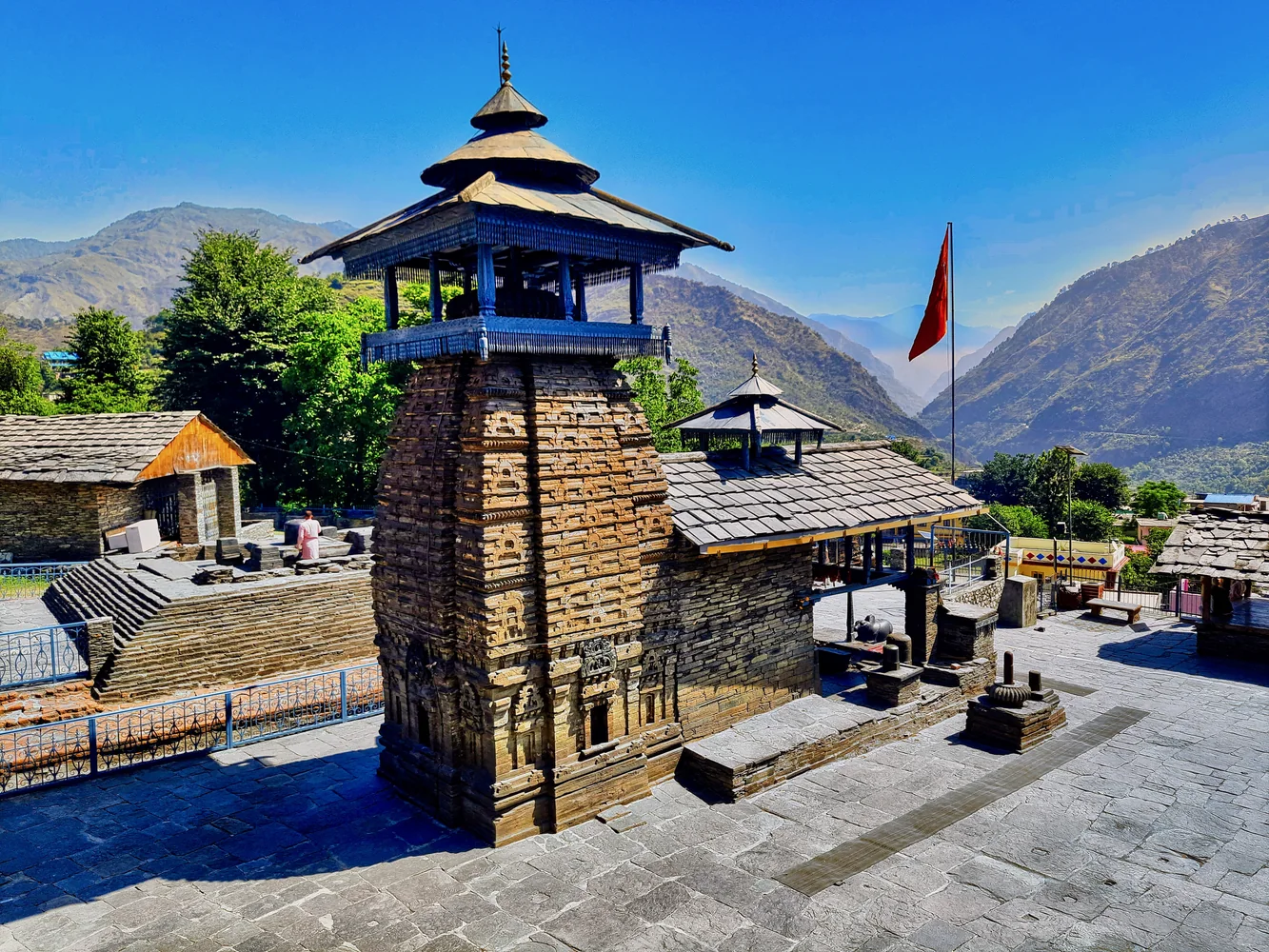
A Wildlife Reserve with Older Layers Beneath It
Visitors come to Rajaji for elephants, tigers, leopards and birds, but the landscape holds a second story that is easy to miss from a moving jeep: ruined stonework, old walls on ridges, watch posts and rest houses that date from a time before the area became a tiger reserve. Rajaji sits in a corridor of Indian history as well as a corridor of wildlife movement, and the physical remains of that history are scattered through and around the Chilla area in particular.
This guide is narrower than our history and geography guide, which explains how the reserve came to be and how the terrain shaped it. Here we look only at physical heritage — what structures are associated with the park landscape, what a visitor can realistically see, and the rules that govern your behaviour around them.
A note before we begin: heritage details are exactly the kind of thing that gets repeated inaccurately, and good guides are cautious about them. Treat the descriptions here as general orientation rather than as historical claims, and confirm specifics locally before repeating them.
The Chilla Area and Its Fort
Chilla is one of the best known access areas on the Rajaji landscape, and it is also where the strongest association with old fortifications survives. The Chilla area is associated with ruined structures and old defensive works that sit within the wider landscape around the reserve rather than as a tidy, signposted monument.
That distinction matters for expectations. This is not a maintained heritage site with an entry gate, interpretation boards and a ticket. What survives are fragments — stretches of old stonework, ruined walls, and remnants on higher ground — which may or may not be visible from the safari route you happen to take. Whether your drive passes any given structure depends on the zone, the track and the rules in force at the time.
What you can realistically see
- Old stonework and ruined wall fragments, where these fall within view of a permitted route.
- Elevated ground and ridgelines around the Chilla area, which is where defensive structures tend to have been placed historically.
- Forest rest houses and similar buildings, some of which remain in use and are not open to visitors.
- Landscape features such as old tracks and boundary markers whose purpose is not always obvious.
What you should not expect
- Guaranteed ruins on your route. Most safari drives are wildlife-first, and heritage is incidental.
- Signage, guides or interpretation at the structures themselves.
- Any permission to approach, enter or climb on a structure. Leaving the marked route is not allowed, full stop.
Ashokan-Era Heritage in the Wider Haridwar Region
The wider Haridwar region is associated with Ashokan-era heritage, and that historical layer is part of what makes the broader landscape around the park culturally significant. For visitors, the honest guidance is this: these are heritage matters that sit well outside what a safari operator or driver can reliably explain, and they should not be treated as a scheduled stop on your safari.
If Ashokan-era history is the reason you are interested in the area, research it through official or accredited heritage sources, and ask locally about what is currently accessible. Do not expect a safari jeep to deliver you to a monument, and do not ask your guide to improvise access.
Colonial-Era Reserve History: Lodges and Watch Posts
Before it became a tiger reserve, this landscape was managed for a very different purpose. Under the colonial-era reserve arrangements of the period, hunting reserves were set up across Indian forests, and the Rajaji area was part of that world. The physical legacy includes watch posts, rest houses, forest bungalows and similar structures, some of which survive today.
These buildings tell you how the land was valued and used at different points in time — first as a managed reserve, then as protected forest, and eventually as a tiger reserve. Their condition varies enormously: some remain in active official use, some are maintained, and some are simply decaying into the landscape. Access is generally not available to casual visitors, and you should not attempt to enter or explore any of them.
Forest Rest Houses and Their History
Forest rest houses are a distinctive feature of Indian forest administration, built to accommodate officers moving through remote areas. Rajaji has its own examples, and some have been in place for a very long time. Historically these buildings allowed officials to stay overnight in forest country that was otherwise hard to traverse.
Today they are not tourist accommodation in the ordinary sense. Availability, if any, is typically arranged through official forest channels and is not something a safari operator can promise. If a rest house is your reason for interest, ask the Forest Department directly about current arrangements rather than assuming you can book one.
Seeing Ruins Today: Managing Expectations
Heritage inside a tiger reserve is not curated for visitors. That is both its appeal and its limitation. There are no plaques explaining what you are looking at, no tour, and no guarantee that a structure is even on your route. What you get instead is the experience of passing through a landscape where human history and wild habitat are layered together — and where the wildlife takes obvious precedence.
If heritage matters to you, the practical approach is to ask your operator before booking whether any route in a given zone is likely to pass heritage structures, and to treat that as a bonus rather than the point of the drive. The zone guide and the map and ranges guide explain how the landscape is laid out, which helps you understand why certain structures sit where they do.
Conduct and Photography Around Heritage Structures
Old stonework in a forest is fragile and irreplaceable, and it falls under the same protection as the rest of the reserve.
- Never leave the marked route to approach a structure, however close it looks.
- Never climb, sit, stand or walk on ruins. Walls weaken and injuries happen.
- Take nothing. Do not pick up stones, tiles or fragments as souvenirs.
- Mark nothing. No carving, scratching or writing on stonework.
- Photograph from the route, and ask your guide before raising a camera at any structure or at people nearby.
- Keep noise down and follow your guide at all times. The etiquette guide explains the conduct rules that apply inside the park.
Planning Heritage and Wildlife Together
You do not need a separate trip for heritage, but you do need realistic expectations.
- Choose your gate with the landscape in mind. The gate guide explains how reporting points determine where you actually drive.
- Do not build a trip around a specific ruin. Plan the safari around wildlife and season, and treat heritage sightings as incidental.
- Ask before you book. Tell your operator you are interested in historical structures so they can factor it into route and zone advice.
- Keep the drive wildlife-first. Guides manage their time around animal movement and light, not around monuments.
What to Confirm Before You Travel
- Whether any route in your chosen zone is known to pass heritage structures.
- Current access rules and any restrictions on approaching structures.
- Park opening status for your dates — the monsoon closure guide explains how this is decided.
- Whether a specific historical claim you have read about is accurate. Confirm locally rather than repeating it.
Heritage Day Checklist
- Route discussed: asked your operator about heritage structures in advance.
- Expectations set: treating heritage as incidental, not guaranteed.
- Rules understood: stay on route, no climbing, no collecting, no marking.
- Camera prepared: telephoto if useful, but ready to ask permission first. See the photography guide.
- Facts left unclaimed: not repeating dates, builders or dynasty claims you have not verified.
- Wildlife priority: the drive remains a safari, and the drive sets the pace. Book through the timings and price guide when your dates are fixed.
The ruins around Chilla are not why most people come to Rajaji, and that is precisely why they are worth noticing. Passing a fragment of old wall on a forest track, without a crowd or a ticket counter, is one of the quieter rewards of this landscape — provided you look respectfully, ask good questions and leave the stone exactly where it has stood for centuries.