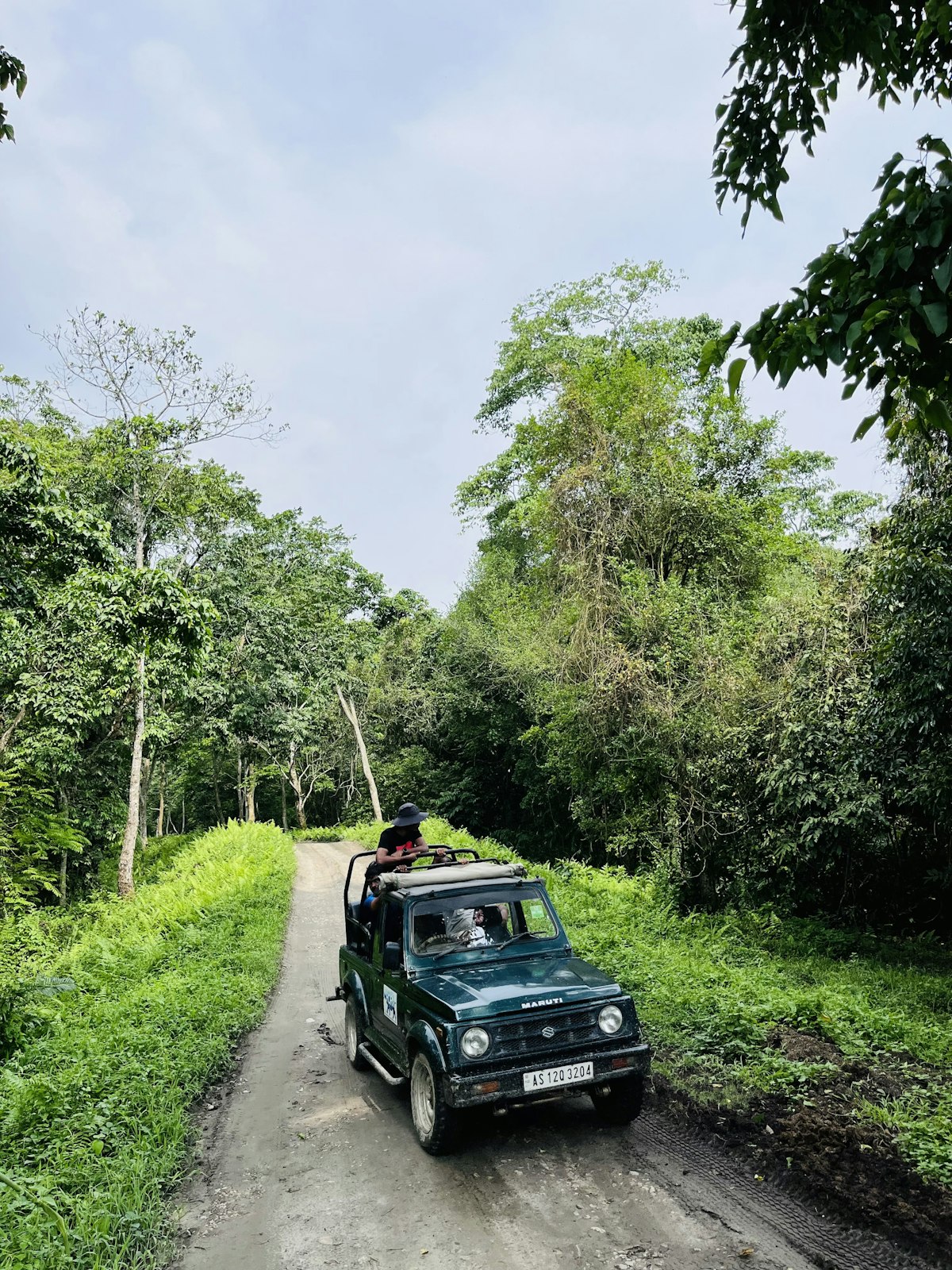
What is the difference between a jeep and a gypsy for a Rajaji safari?
If you are researching a Rajaji jeep safari, you will quickly run into two terms: "jeep" and "gypsy." In everyday safari language, these words are used almost interchangeably, and in many Rajaji booking conversations they describe the same thing — the open-top or soft-top utility vehicle that takes you into the forest. The confusion is understandable, and the best approach is to ask the operator directly what vehicle type is being offered for your booking.
Where the Terms Come From
The Maruti Suzuki Gypsy has been the standard safari vehicle across many Indian national parks for decades. It is lightweight, maneuverable on narrow forest tracks and easy to maintain. In casual conversation, people often call it a "jeep" because that is the familiar English word for a rugged, off-road vehicle. Some operators may also use MGV (Maruti Gypsy Vehicle) or simply "safari vehicle" in their communications.
What You Will Typically See in Rajaji
Rajaji safari vehicles are generally based on the Maruti Gypsy platform or similar utility vehicles modified for forest use. Modifications typically include:
- Roll bars or a reinforced frame for safety on uneven terrain
- Bench seating in the rear for passengers
- A raised seating position so passengers can see over grass and low vegetation
- Optional canopy or soft-top cover for shade and rain protection
- A front seat area for the driver and sometimes the forest guide
The exact configuration varies between operators. Some vehicles have fixed canvas tops, others are fully open, and some offer a removable canopy. If the vehicle type matters to you — say, you need shade for medical reasons or you want unobstructed photography — mention it when you confirm your booking.
How many people can sit in a Rajaji safari jeep?
A standard Rajaji safari vehicle typically accommodates around six passengers in the rear seating area, plus the driver and a forest guide in the front. However, the actual number of passengers on your safari may be fewer than the maximum, depending on how the operator manages group sizes.
Shared vs Private Vehicles
Some operators offer shared safaris where you join other visitors to fill the vehicle. Others offer private bookings where the entire vehicle is reserved for your group. The seating experience differs:
- Shared vehicle: You may sit next to strangers. The vehicle fills up to capacity or close to it. This option is usually more affordable but means less personal space and less control over stops and pacing.
- Private vehicle: Your group has the entire rear seating area. You can spread out slightly, place bags beside you and the driver can respond to your group's pace within the route rules.
Ask the operator whether the vehicle is shared or private before confirming. This is one of the most common sources of post-booking confusion.
Seating Arrangements
Most safari vehicles have two rows of bench seating in the rear, facing forward. Passengers on the outer edges have the best views; those in the middle may find their view partially blocked by other passengers. For photography, the window seats (or outer edge seats in an open vehicle) are preferred.
If you have a preference — for example, you want to sit near the front row for less bumpy movement, or you prefer the back row for a wider field of view — discuss this with the guide at the start of the safari. On a private booking, the group can usually arrange seats among themselves.
What should I confirm about the vehicle before booking a Rajaji safari?
Before you confirm your booking, ask the operator these vehicle-related questions. The answers will affect your comfort during the three-to-four-hour drive.
Vehicle Type and Condition
- Is the vehicle open-top, soft-top or hard-top?
- Does the vehicle have a canopy or roof cover for shade?
- Is the vehicle air-conditioned? (Most safari vehicles are not, but it is worth confirming.)
- How old is the vehicle, and when was it last serviced? A well-maintained vehicle is safer and less noisy.
Seating and Capacity
- Is the vehicle shared with other visitors, or is it a private booking for my group?
- How many seats are available in the rear?
- Is there space for a camera bag, backpack or personal items?
Pickup and Logistics
- Does the vehicle pick me up from my hotel, or do I need to reach the reporting gate on my own?
- If pickup is included, what is the pickup time and which hotel locations are covered?
- What is the vehicle registration or identification so I can find it at the meeting point?
Accessibility Considerations
- How high is the entry step into the vehicle?
- Can a cushion, grab handle or any support be arranged for passengers with difficulty climbing?
- Are there routes with smoother terrain, or is the road condition similar across all zones?
Is an open-top or closed-top vehicle better for a Rajaji safari?
Neither is universally better. Each has trade-offs depending on the season, your priorities and your tolerance for weather.
Open-Top Vehicles
An open-top vehicle gives you the clearest, widest view of the forest. There is nothing between you and the wildlife, which is ideal for photography and for the immersive feeling of being in the forest. The trade-off is exposure:
- In summer, you are directly in the sun for hours. A hat, sunscreen and water are essential.
- In winter mornings, the cold wind during the drive can be biting, especially before sunrise.
- In rain, you get wet. A light rain jacket helps, but heavy rain can make the ride uncomfortable.
Soft-Top and Canopy Vehicles
A soft-top or canvas canopy provides shade, light rain protection and some warmth in winter. It reduces sunburn risk and keeps the worst chill off during early morning drives. The trade-off is slightly restricted upward visibility — the canopy can block overhead shots of birds in the tree canopy.
Hard-Top Vehicles
Hard-top vehicles are less common for safari use in Rajaji but may be offered by some operators. They provide the most shelter but the most restricted view. They are practical in heavy rain or extreme heat but can feel enclosed compared to the open-air experience most visitors expect.
How to Decide
Ask the operator what vehicle types are available for your chosen zone and date. Some zones may have only one vehicle type in use. If you have a choice, consider:
- Winter visit: A canopy or soft-top adds warmth and comfort during cold mornings.
- Summer visit: A canopy is valuable for sun protection. Open-top is manageable only if you have strong sun protection.
- Photography-focused trip: An open-top vehicle offers the best angles, especially for birds and overhead canopy shots.
- General comfort: A soft-top with roll-up sides gives you flexibility — open for views, closed for shelter.
Practical Tips for Vehicle Comfort
Regardless of vehicle type, these small preparations make the drive more comfortable:
- Bring a small cushion: Bench seating on bumpy forest roads can be tiring. A thin travel cushion or folded jacket under you helps.
- Secure your belongings: Keep your camera, phone and water in a bag that won't slide off your lap during bumpy sections.
- Wear layers: Even in summer, the forest can be cooler than the open road. A light layer that you can add or remove helps.
- Hold on during movement: Forest tracks are uneven. Keep one hand free to hold the vehicle frame when the road gets rough.
- Ask the driver about stops: On a private booking, the driver may be able to pause for photos at scenic points. On a shared safari, stops follow the guide's wildlife-focused decisions.
Questions to Ask the Booking Team About Vehicles
A good booking conversation should cover these points. If the operator provides clear answers, it is a sign of a professional operation:
- What specific vehicle type will be used for my safari?
- Is the vehicle shared or private for my group?
- Does the vehicle have a canopy or roof cover?
- Is hotel pickup included, and from which locations?
- How much space is there for bags and camera equipment?
- Can any accessibility support be arranged for passengers with difficulty climbing?
Getting these details right before the safari day means you arrive prepared and comfortable. For more planning help, see our fees, timings and permits guide and the zone comparison guide. To discuss vehicle options for your dates, reach out through the booking page.