Why Rajaji Is Known for Elephant Encounters
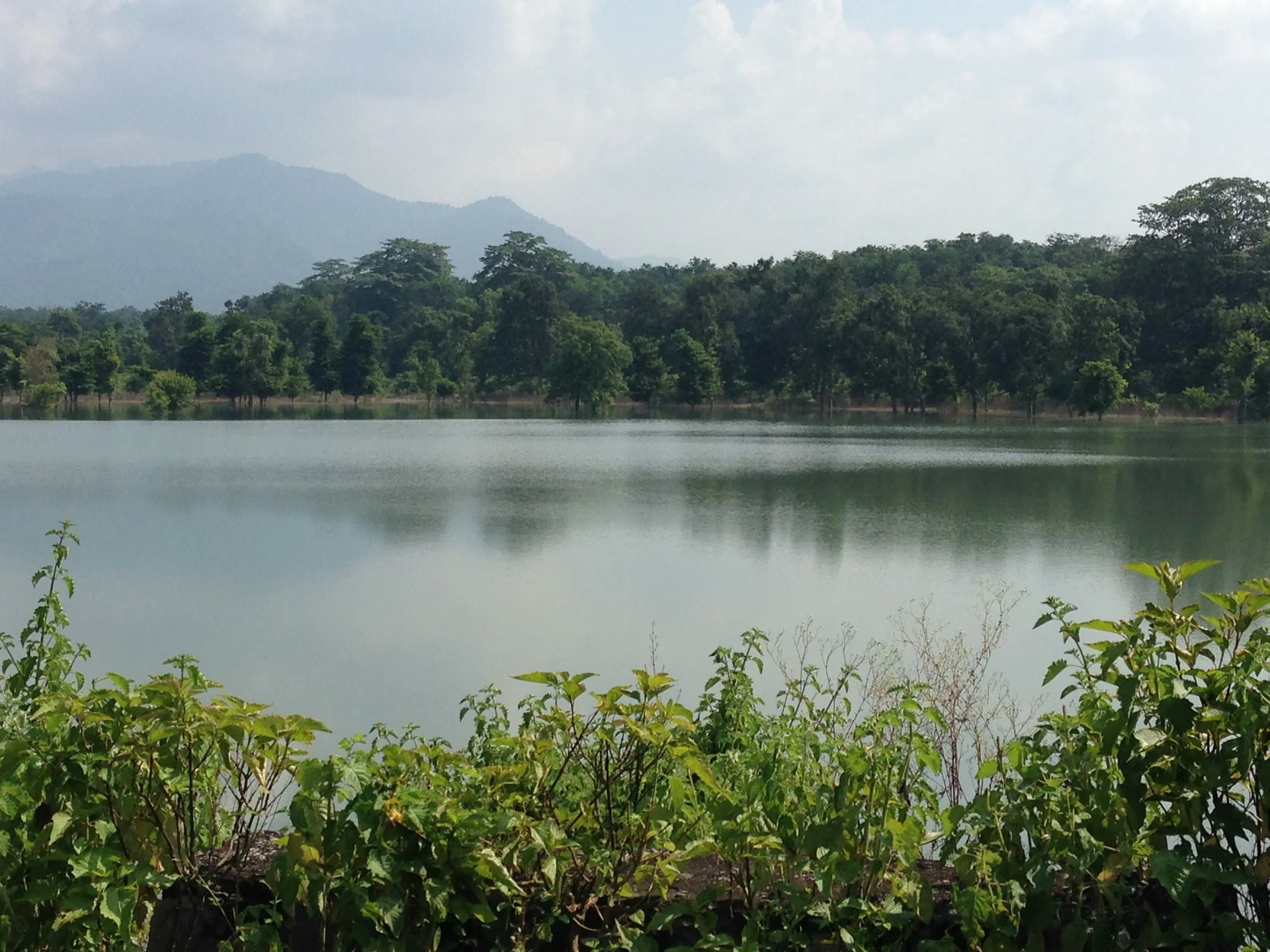
Rajaji National Park sits in the Shivalik foothills where the Ganga and its tributaries cut through dense Sal forest and grassland. This landscape — river corridors, mixed deciduous forest and open grassland patches — is the kind of habitat that supports a healthy Asian elephant population. Elephants move through the park along waterways and forested ridges, using traditional corridors that connect feeding areas, water sources and seasonal ranges. Visitors to Rajaji encounter elephants more frequently than many other large mammals in the park, which is one reason the park has earned a reputation as one of northern India's key elephant habitats.
But reputation is not a guarantee. Elephants are wild animals moving across a large, unfenced landscape. They do not appear on schedule, they do not gather at predetermined spots and they do not perform for visitors. The factors that influence whether you see elephants on a particular safari — season, time of day, weather, recent rainfall, food availability and the elephants' own movement patterns — are complex and changeable. This guide explains what influences elephant sighting conditions in Rajaji, how to maximise the experience safely and what to do when the forest does not deliver the encounter you hoped for.
Rajaji's Elephant Habitat: Rivers, Forest and Movement
Understanding why elephants are present in Rajaji starts with understanding the landscape:
Riverine corridors
The Ganga and the Chilla canal run through the park, creating riverine zones where water, grass and browse are abundant. Elephants depend on daily access to water — an adult Asian elephant drinks tens of litres a day — and river corridors provide reliable water along with the grasses and shrubs that form a significant part of their diet. During drier months, elephants concentrate along these water sources, which increases the chances of encounters for visitors on routes that pass through or near riverine zones.
The Chilla canal area, in particular, is known for elephant activity. But "known for" does not mean "guaranteed at." Elephant movement depends on factors beyond water availability — herd dynamics, food distribution across the wider landscape and disturbance levels all play a role.
Shivalik foothill forest
The park's Sal forest, mixed deciduous woodland and scrubland provide elephants with browse, shade and cover. Elephants feed on a wide variety of plants — grasses, leaves, bark, roots and fruit — and the Shivalik forest's botanical diversity supports this diet. Forested areas also offer cover for herds with young calves, who are more vulnerable in open terrain. When elephants are in the denser forest zones, they may be harder to spot from the vehicle — you might hear them before you see them, or notice broken branches and fresh dung as signs of recent passage.
Grassland and open areas
Open grassland patches within the park offer elephants feeding opportunities, particularly during the cooler months when grasses are green. These open areas also provide some of the best viewing opportunities for visitors — elephants in the open are visible from greater distances, and the vehicle can maintain a safe position with clear sightlines.
Corridors beyond the park boundary
Elephants in the Shivalik landscape move between Rajaji and surrounding areas, including parts of the Haridwar Forest Division and areas toward Corbett. These movement corridors mean elephant distribution within Rajaji shifts as herds move in and out of the park. A zone that had high elephant activity last week may be quiet this week as the herd has moved to a different area. This natural movement is a sign of a healthy, connected landscape — but it also means sighting patterns are unpredictable.
Why Elephant Sightings Are Never Guaranteed
This is the most important point in this guide, and it is worth understanding clearly: no safari, no guide, no operator and no zone can guarantee an elephant sighting. This is true for several reasons:
- Wild animals, large landscape: Rajaji spans hundreds of square kilometres. Elephants may be in any part of the park, including areas not accessible by the safari route assigned to your zone on your day.
- Unpredictable movement: Herds move based on food, water, disturbance and social dynamics. A herd that was near the river yesterday may have moved into deep forest today.
- Noise and avoidance: Jeep engines, human scent and vehicle presence can cause elephants to move away from safari routes. Some days, elephants are tolerant of vehicles; other days, they move deeper into the forest at the sound of an approaching jeep.
- Zone limitations: Different zones access different parts of the park. An elephant-heavy area may fall outside your assigned zone on your safari day. Zone allocation depends on Forest Department decisions, conservation needs and visitor capacity.
- Time of day: Elephants are more active during certain hours — early morning and late afternoon are generally more active periods. But "generally" does not mean "always." An elephant that was active at dawn may have moved into cover by the time your jeep reaches the area.
Understanding this does not diminish the safari. It reframes it. The goal is to experience the forest — its sounds, its tracks, its light, its atmosphere — with the possibility of encountering elephants and other wildlife along the way. When an elephant appears, the encounter is meaningful precisely because it was not manufactured.
How Season and Time of Day Influence Sighting Conditions
While nothing is guaranteed, certain conditions tend to create better opportunities:
Dry season (March–June)
As water sources shrink during the hotter months, elephants concentrate around remaining rivers, streams and waterholes. This concentration can improve encounter opportunities for visitors on routes that pass through or near these water sources. The trade-off is heat — safaris during the hot months are physically demanding, and the open jeep offers no shade. Carry extra water and sun protection. The packing guide covers seasonal essentials.
During the dry season, elephants also tend to feed during the cooler early-morning hours and rest during midday heat. Morning safaris align better with active elephant periods than midday drives.
Post-monsoon and winter (October–February)
After the monsoon, water is more widely distributed across the park. Grasses are green and abundant, and food is available in many areas. Elephants may spread out rather than concentrating near specific water sources. This can mean elephants are present in multiple zones, but encounters depend on which zone your safari uses and where the elephants happen to be on that day.
Winter mornings in the Shivalik foothills can be misty, which affects visibility. Dense fog limits how far you can see from the vehicle and may delay safari starts. As the mist lifts, wildlife activity picks up. The late-morning hours after mist clears can offer good viewing conditions.
Monsoon (mid-June to September)
Rajaji is typically closed or partially restricted during the heavy monsoon. Zone access depends on weather, rainfall and Forest Department decisions. If you visit during the monsoon boundary (late May, early June or September), confirm zone status before booking. Elephant activity during the monsoon is influenced by lush vegetation and abundant water — conditions that keep animals distributed across the landscape.
Time of day
- Early morning (dawn to mid-morning): Generally the most active period for elephants. They feed, drink and move during the cooler hours. Morning safaris in Rajaji start early to align with this activity window. The morning vs evening timing guide compares the two safari slots in detail.
- Late afternoon (3:30 PM to dusk): A second activity peak as temperatures drop. Elephants that rested during midday may emerge to feed and drink before nightfall. Evening safaris target this window, with the bonus of warmer, more dramatic light for photography.
- Midday: Generally the quietest period. Heat drives elephants into shade and cover. Midday is less productive for elephant sightings, though other wildlife may still be active.
What Guides Look For: Reading Elephant Signs
Experienced Rajaji guides do not drive aimlessly hoping to stumble upon elephants. They read the forest continuously, looking for signs that indicate recent elephant presence:
- Fresh dung: Elephant dung on or near the track is a primary indicator. The guide assesses how fresh it is — warm and moist means the elephant passed through recently; dry and crumbly means hours or days ago. Dung also reveals diet: grass-heavy dung indicates feeding in grassland areas; bark and twig fragments indicate forest browsing.
- Broken vegetation: Elephants are large and do not move delicately through forest. Broken branches, pushed-over small trees and disturbed undergrowth indicate recent elephant passage. Fresh breaks (green wood, exposed cambium) are more recent than dry, brown breaks.
- Tracks and footprints: Elephant footprints in soft earth, mud or sand near water sources are tracked by guides. The size, depth and freshness of the print indicate the elephant's size, weight and how recently it passed. A deep print in still-moist mud means minutes to hours; a dried print in cracked earth means longer ago.
- Scratch marks: Elephants rub against trees, particularly large Sal trees, leaving distinctive scratch marks at trunk height. Fresh scratch marks (light-coloured wood exposed, sap visible) indicate recent use.
- Alarm calls: When langurs and deer start calling loudly and erratically, a predator or large animal may be nearby. While alarm calls are not exclusively elephant-related, a combination of alarm calls, broken vegetation and dung in the same area raises the probability of a nearby elephant.
- Sound: Elephants communicate through rumbles, trumpet calls and the sound of moving through vegetation. In quiet forest, you may hear the crash of an elephant pushing through dense undergrowth before you see it. Guides listen for these sounds continuously.
When the guide reads multiple signs pointing in one direction, the route adjusts. This is not a guaranteed strategy — elephants move, and signs can be hours old — but it is the most informed approach to increasing encounter opportunities.
Safe Distance and Vehicle Conduct During Elephant Encounters
When elephants are spotted, the experience depends on maintaining proper conduct:
- Follow the guide's positioning: The guide will direct the driver to stop at a distance appropriate for the encounter. This distance is not fixed — it depends on the elephant's behaviour, the presence of calves, the terrain and available escape routes. Trust the guide's judgment.
- Stay seated and quiet: Standing up, leaning out or making sudden movements can startle elephants and is dangerous. Speak in whispers. Silence your phone. The vehicle is your safety structure — stay inside it.
- No honking or engine revving: Loud engine noise or horn honking provokes elephants. The driver will manage the vehicle's engine and positioning. Do not ask the driver to move closer by revving the engine or making noise.
- Photography from the seat: Use a zoom lens rather than trying to get physically closer. Keep arms and camera equipment within the vehicle frame. A selfie with an elephant is not worth the risk — keep the lens between you and the animal.
Elephant family groups with calves
Herds with young calves require particular caution. The mother and other herd members (aunts, older sisters) are highly protective. When the guide identifies a herd with calves:
- The vehicle will stop at a greater distance than for a solitary elephant.
- The guide may choose to wait at a distance rather than approach, allowing the herd to pass or settle.
- If the herd shows any signs of stress (ear-flapping, head-shaking, mock charges, change in direction toward the vehicle), the guide will retreat. This is the correct response — maintaining distance is always preferable to a close encounter.
- Never position the vehicle between a mother and her calf. This is one of the most dangerous situations in wildlife viewing.
Road-crossing elephants
Elephants frequently cross the forest tracks used by safari vehicles. When this happens:
- Stop the vehicle and wait. Do not try to drive around the elephant or pass while it is on the road.
- Give the elephant the right of way. Wait until it has fully crossed and moved into cover before proceeding.
- If a herd is crossing, the process may take several minutes. Some herds take their time, with calves following adults at their own pace. Patience is essential.
- Do not approach a crossing elephant for a closer photo. It is on the move and may react unpredictably to a vehicle approaching from the side.
Photography Limits and Etiquette
Photographing elephants on safari is rewarding but comes with rules:
- No flash: Flash photography is prohibited inside the park. It disturbs wildlife and can provoke defensive reactions from elephants.
- No prolonged staring or lens-pointing: Continuous lens-pointing at an elephant can be perceived as a threat. Take your shots and then lower the camera. Observe the animal with your eyes, not just through the viewfinder.
- No editing or posting that misrepresents the encounter: Do not crop images to make an elephant appear closer than it was, or post content that encourages others to approach elephants more aggressively. Responsible photography supports conservation messaging.
- Respect the guide's photography guidance: If the guide asks you to stop photographing or lower your camera, comply immediately. The guide may have observed a change in the elephant's behaviour that you have not noticed.
The wildlife etiquette guide covers photography rules, general conduct and the principles behind them. Read it before your safari — understanding why rules exist makes them easier to follow in the moment.
What to Do When No Elephant Is Seen
Despite the best planning and the most experienced guide, you may complete a safari without encountering an elephant. This is a normal outcome of wildlife viewing, not a failure. Here is how to make the most of the experience:
- Appreciate the other wildlife: Rajaji is home to sambar deer, barking deer, chital, wild boar, langurs, macaques, peacocks, kingfishers and hundreds of other species. An elephant-free safari can still be rich with encounters and observations.
- Learn to read the forest: The guide's commentary on tracks, calls, trees and ecological relationships adds depth even when large animals are not visible. The Shivalik ecosystem is fascinating in its own right — the forest itself is the experience.
- Consider a different time or season: If elephant activity was low on your safari, a return visit during a different season or time slot may provide different conditions. The dry season concentrates elephants near water; early mornings are generally more active than midday. The rivers and waterholes guide explains how water availability shapes animal distribution.
- Trust the process: Every safari is different. The unpredictability is part of what makes wildlife viewing meaningful. An encounter that was earned through patience and observation is more satisfying than one that was manufactured.
The first-time visitor guide covers managing expectations and getting the most from any safari outcome, while the wildlife guide provides a broader overview of what Rajaji's forest contains beyond elephants.
Practical Tips for Elephant-Focused Safari Planning
- Choose morning safaris: Early-morning drives align with peak elephant activity hours. The morning vs evening timing guide explains why.
- Discuss with the operator: Before booking, ask the operator about current elephant activity in different zones. Activity levels shift seasonally, and the operator's recent experience is more current than any guidebook.
- Be flexible on zones: If the operator suggests that a particular zone has had recent elephant activity, consider it — even if it is not the zone you initially preferred. Sighting probability is influenced by where elephants currently are, and flexibility increases your chances.
- Carry binoculars: Binoculars extend your viewing range and let you observe elephants at a distance without the vehicle needing to approach. This is useful in open grassland areas where elephants may be visible hundreds of metres away.
- Prepare for any outcome: Pack as if the safari will be about the forest itself — water, sun protection, comfortable clothing, a camera. If elephants appear, the preparation enhances the experience. If they do not, the preparation still ensures a comfortable, enjoyable drive. The packing guide covers seasonal essentials.
- Multiple safaris improve odds: If elephant viewing is a priority, booking more than one safari — a morning on one day and an evening on another — gives you two different time windows and potentially two different zones. Each safari is an independent event with its own conditions.
Understanding Elephant Behaviour: What the Signs Mean
Developing a basic understanding of elephant behaviour helps you interpret what you see on safari:
- Ear-flapping: Elephants flap their ears to cool down (the large surface area dissipates heat) and as a mild display of alertness. Ear-flapping alone is not necessarily a sign of aggression — it can simply mean the elephant is hot. But combined with other signals (head-shaking, trumpeting, forward movement), it indicates the elephant is agitated.
- Trunk raised: An elephant raising its trunk is sniffing the air. It is trying to identify your vehicle's scent. This is an alert posture — the elephant is aware of your presence and is assessing whether you pose a threat.
- Mock charge: An elephant may charge a short distance and then stop. This is a warning — the elephant is telling you to back off. If your vehicle is already at a safe distance and the guide is managing the encounter, a mock charge is the elephant communicating its discomfort, not attacking. If the guide retreats, follow their lead.
- Tail raised and stiff: A raised, stiff tail can indicate alarm or excitement. Combined with ear-flapping and head movements, it suggests the elephant is stressed.
- Calm feeding: An elephant continuing to feed with relaxed body posture, normal ear movement and no change in behaviour is comfortable with the vehicle's presence. This is the ideal encounter — observe quietly and enjoy the moment.
Your guide interprets these signals in real time. When the guide adjusts the vehicle's position or asks for silence, they are responding to elephant body language that may be too subtle for an untrained observer to catch. Follow the guide's lead.
Elephants and Conservation: Why Rajaji Matters
Rajaji's elephant population is part of a larger conservation landscape. The Shivalik hills and the Terai-Duar grasslands form one of Asia's important elephant habitats, and Rajaji sits at a critical point in this landscape — connecting elephant populations in the western Shivalik with those toward Corbett and beyond. The park's river corridors serve as movement routes for elephants travelling between these areas.
Visitor behaviour inside the park affects this conservation function. Staying on designated tracks, maintaining distance from elephants, not honking or chasing wildlife, and following the Forest Department's rules all reduce disturbance to elephant movement and behaviour. Every visitor who follows these practices contributes to the park's ability to support its elephant population.
The wildlife etiquette guide covers the full set of conduct rules and explains why they matter. The safety guide covers vehicle conduct and wildlife distance in detail. Both are worth reading before your safari — not as restrictions, but as the framework that makes meaningful wildlife encounters possible.