Why Rishikesh Is a Natural Pairing for Rajaji
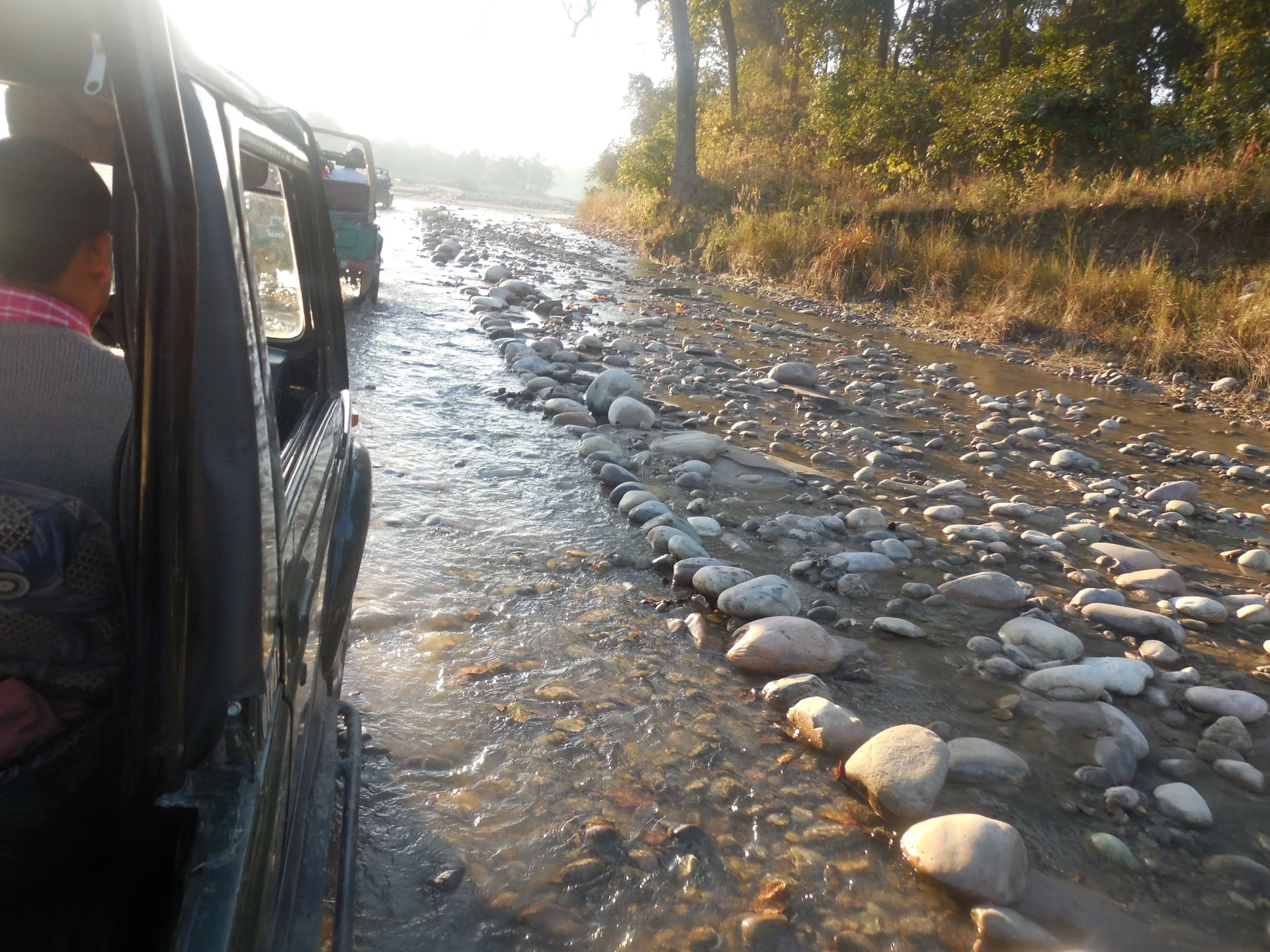
Rishikesh sits on the banks of the Ganga, just a short distance from Rajaji National Park. The two destinations share the same river, the same Shivalik foothill landscape and the same stretch of Uttarakhand. For visitors, this proximity creates an obvious opportunity: combine a wildlife safari with the adventure, spirituality and culture that Rishikesh offers. A single trip can include an elephant sighting in the forest and a sunset Ganga Aarti by the river — two very different experiences connected by the same landscape.
But combining them requires planning. A safari involves early wake-ups, strict reporting times and limited flexibility. Rishikesh activities — rafting, bungee jumping, yoga, temple visits — have their own schedules, physical demands and seasonal constraints. This guide explains how to sequence both without exhausting yourself, missing a reporting time or overloading a single day. The goal is a trip that feels balanced, not rushed.
Understanding the Logistics
The practical foundation of any combo trip is understanding two things: where the safari gate is relative to Rishikesh, and how the safari timing fits with Rishikesh activity timing.
Gate location and Rishikesh proximity
Rajaji has multiple gates, each serving different zones. Some gates are closer to Rishikesh, others closer to Haridwar or Dehradun. The gate you use depends on the zone you book — you do not always choose your gate. If your gate is on the Rishikesh side, the logistics of combining both destinations simplify considerably. If your gate is on the Haridwar side, you need to account for travel time between the two cities.
Before booking accommodation in Rishikesh, confirm which gate your safari uses. The gates and reporting points guide covers gate locations and what to expect at each. The /rajaji-safari-from-haridwar-rishikesh-dehradun">transport guide from nearby cities maps the driving routes between Rishikesh, Haridwar and the various gates.
Timing the safari around Rishikesh activities
Safari reporting times are fixed and non-negotiable. You report at the gate at a specific time, and the vehicle departs on schedule. Rishikesh activities have their own timing — rafting sessions start at set times, yoga classes run on schedules, Ganga Aarti happens at dusk. The key is understanding how these windows overlap and where conflicts arise.
Sequencing a Safari Slot Around Rishikesh Plans
There are two main approaches to combining a safari with Rishikesh activities: the same-day squeeze and the two-day split. Each has trade-offs.
Same-day combination (morning safari + afternoon Rishikesh)
This approach fits a safari and Rishikesh activities into a single day. It works like this:
- Early morning: Wake before dawn, drive to the reporting gate and complete your safari. Most morning safaris end by late morning.
- Late morning: Exit the park, drive to Rishikesh (timing depends on your gate and traffic), check into accommodation or freshen up.
- Afternoon: Participate in a Rishikesh activity — rafting, yoga, temple visit or simply exploring the town.
- Evening: Attend Ganga Aarti at Har Ki Pauri or a riverside restaurant.
This works when the logistics align — your gate is close to Rishikesh, the drive is manageable and you have the energy after an early start. It does not work well when the gate is far from Rishikesh, when the drive takes longer than expected or when you underestimate the fatigue of a pre-dawn wake-up followed by a three-hour jungle drive.
Two-day split (safari day + Rishikesh day)
The more relaxed approach splits the two experiences across separate days:
- Day 1: Safari day. Focus entirely on the safari — early wake-up, drive to the gate, morning safari, return to hotel, rest and recover.
- Day 2: Rishikesh day. Full day for rafting, yoga, temples, bungee, river rafting or whatever interests you.
This approach eliminates the stress of same-day logistics, gives you time to recover from the safari and lets you enjoy Rishikesh without watching the clock. The two-day itinerary shows how to allocate time between safari and surrounding activities. The 3-day itinerary offers even more flexibility.
Morning vs Evening Safari: Which Fits the Combo Better?
The safari timing you choose affects how well it pairs with Rishikesh activities:
Morning safari
- Advantages: Wildlife is generally more active in the early morning. You finish the safari by late morning, leaving the afternoon free for Rishikesh. This is the most common choice for combo trips.
- Trade-offs: Requires a very early wake-up (often well before dawn). You may be too tired for an afternoon activity if the drive to the gate is long. Factor in fatigue when planning afternoon plans.
- Best for: Visitors who want to maximise wildlife viewing and have Rishikesh activities scheduled for the afternoon or evening.
Evening safari
- Advantages: You spend the day in Rishikesh first — rafting, yoga, sightseeing — then head to the safari in the late afternoon. No pre-dawn wake-up.
- Trade-offs: Evening safaris have a shorter viewing window before dusk. Wildlife activity can be good in the late afternoon, but the light fades and the safari ends at or before sunset. You need to leave Rishikesh activities early enough to reach the reporting gate on time.
- Best for: Visitors who prioritise Rishikesh activities during the day and want a safari as a late-afternoon experience.
The morning vs evening timing guide provides a detailed comparison to help you decide.
Rishikesh Activities: Seasonal and Timing Constraints
Rishikesh activities have their own seasonal availability and scheduling realities:
River rafting
Rafting on the Ganga near Rishikesh is seasonal. The activity depends on river levels, which are highest during and just after the monsoon and lowest in winter. During the monsoon (roughly June to September), rafting may be suspended due to dangerous water levels. In winter, reduced water flow can limit rafting routes. The safest approach is to confirm rafting availability with your provider for your specific travel dates — do not assume it runs year-round.
If rafting is a priority for your trip, plan your visit during the window when it operates and confirm availability before booking your safari. Scheduling a rafting session on the same day as a morning safari is possible but requires careful timing — you need enough recovery time between the two activities.
Yoga and wellness
Rishikesh is one of India's yoga capitals, with ashrams and studios offering classes year-round. Yoga sessions are generally available throughout the year, with peak demand during the cooler months (October to March) and around international yoga events. Morning yoga classes may conflict with an early safari departure — consider afternoon or evening sessions instead.
Ganga Aarti
The evening Ganga Aarti at Har Ki Pauri in Haridwar (and similar ceremonies at Rishikesh temples) happens at dusk, which varies by season. In winter, Aarti occurs earlier in the evening; in summer, it is later. This is generally compatible with a morning safari, as you return from the park well before dusk. If you are doing an evening safari, check whether you can attend Aarti on a different day.
Adventure activities
Bungee jumping, cliff jumping, rappelling and flying fox activities near Rishikesh operate on specific schedules and have their own seasonal availability. Some are closed during the monsoon. Confirm availability and timing with the activity provider before your trip. These activities are physically demanding — avoid scheduling them immediately before or after a safari when you will be tired.
Transport and Reporting-Time Buffers
The biggest risk in a combo trip is underestimating travel time between the safari gate and Rishikesh. Factor these considerations into your planning:
- Drive time variability: The drive from Rishikesh to various Rajaji gates varies depending on which gate you use. Road conditions, traffic (especially near Haridwar during peak hours and festivals), and the specific route all affect travel time. Do not rely solely on map-app estimates — ask your operator or hotel for realistic drive-time estimates for early-morning conditions.
- Reporting buffer: Arrive at the reporting gate with time to spare. The reporting process involves ID verification, permit checks, meeting your guide and settling into the vehicle. Rushing to the gate after a long drive from Rishikesh increases stress and the risk of being late.
- Return buffer: After the safari, factor in the return drive to Rishikesh, especially if you have an afternoon activity booked. Do not schedule a rafting session at 2:00 PM if your safari ends at 11:00 AM and the drive back takes two hours.
- Accommodation near the gate vs in Rishikesh: If your gate is far from Rishikesh, consider staying closer to the gate the night before the safari and then moving to Rishikesh afterward. The accommodation guide covers options near each gate.
Safety and Fatigue Considerations
Combining a physically demanding safari with adventure activities requires honesty about your energy levels:
- Early wake-up fatigue: A safari morning starts well before dawn. By afternoon, you may be more tired than expected — especially if the drive to the gate was long and the safari itself was bumpy. Avoid scheduling high-adrenaline activities (bungee, cliff jumping) for immediately after a safari.
- Rafting after a safari: Rafting is physically demanding — you paddle, navigate rapids and spend hours on the water. Doing this after a morning safari is possible but exhausting. If you choose this combination, ensure you have at least a few hours of rest between the two.
- Sun and hydration: Both safaris and river activities expose you to sun and heat for extended periods. Carry water and sun protection for both. The packing guide covers essentials that apply to both activities.
- Children and seniors: A combo trip that includes both a safari and rafting may be too demanding for young children or seniors. Consider splitting the activities across more days or choosing gentler Rishikesh alternatives (temples, Aarti, nature walks). The safety guide covers age-specific considerations for the safari portion.
Monsoon Caveats for River Activities
The monsoon season (roughly June through September) affects both the safari and Rishikesh activities, but in different ways:
- Safari zones close: Most Rajaji safari zones are closed during the heavy monsoon. Some zones may open in the shoulder months (late May, early June, September), but confirm with the operator. The monsoon closure guide covers what to expect.
- Rafting may be suspended: High water levels during the monsoon make rafting dangerous. Most operators suspend rafting during peak monsoon. Confirm with your provider.
- Other river activities: Cliff jumping, swimming and other water activities near the Ganga may also be restricted during the monsoon due to strong currents.
- What remains available: Yoga, temple visits and Ganga Aarti generally continue through the monsoon, though heavy rain can affect outdoor activities. Rishikesh town itself remains accessible.
If your travel dates fall near the monsoon boundary, confirm everything — safari zone status, rafting availability and activity schedules — before finalising your plans.
Booking Order for the Combo
Sequence your bookings to avoid conflicts and maximise flexibility:
- Safari first: Book the safari before anything else. The safari date, time and gate determine your entire trip's logistics. The transport guide helps you plan around the gate location.
- Accommodation second: Choose accommodation based on your safari gate and your Rishikesh plans. If the gate is close to Rishikesh, one hotel may work for both. If the gate is on the Haridwar side, you may need to split your stay. The accommodation guide covers options by gate.
- Rishikesh activities third: Once your safari date and gate are confirmed, book Rishikesh activities around them. Confirm availability for your specific dates, especially for rafting.
- Transport last: Arrange transport between your accommodation, the safari gate and Rishikesh. If using operator pickup for the safari, confirm the pickup point and timing.
Practical Combo Checklist
Use this checklist when planning a Rajaji safari + Rishikesh adventure combo:
- Safari booked: Zone, gate, date, reporting time confirmed in writing.
- Gate location mapped: You know which gate your safari uses and its distance from Rishikesh.
- Accommodation chosen: Positioned for both the safari gate and Rishikesh activities.
- Rishikesh activities confirmed: Rafting, yoga, Aarti, adventure activities — all booked with dates and times confirmed.
- Transport arranged: Drive between accommodation, gate and Rishikesh planned with realistic time buffers.
- Rest time built in: At least a few hours of downtime between the safari and any physically demanding activity.
- Monsoon checked: If travelling near monsoon season, confirmed that both safari zones and rafting are operating.
- Packing done: Safari essentials and activity-specific gear (waterproof bag for rafting, comfortable clothes for yoga).
- Emergency contacts saved: Safari operator, Rishikesh activity provider, hotel — all numbers accessible without mobile data.
- Flexible plan: Backup activities in case weather or logistics disrupt the primary plan.
A Rajaji safari paired with Rishikesh adventure is one of the most rewarding combinations in Uttarakhand travel. The wildlife, the river, the mountains and the spiritual atmosphere complement each other perfectly. With careful sequencing, realistic timing and honest self-assessment about energy levels, you can experience both without compromise. The 3-day itinerary and the 2-day itinerary provide ready-made templates for structuring your trip.