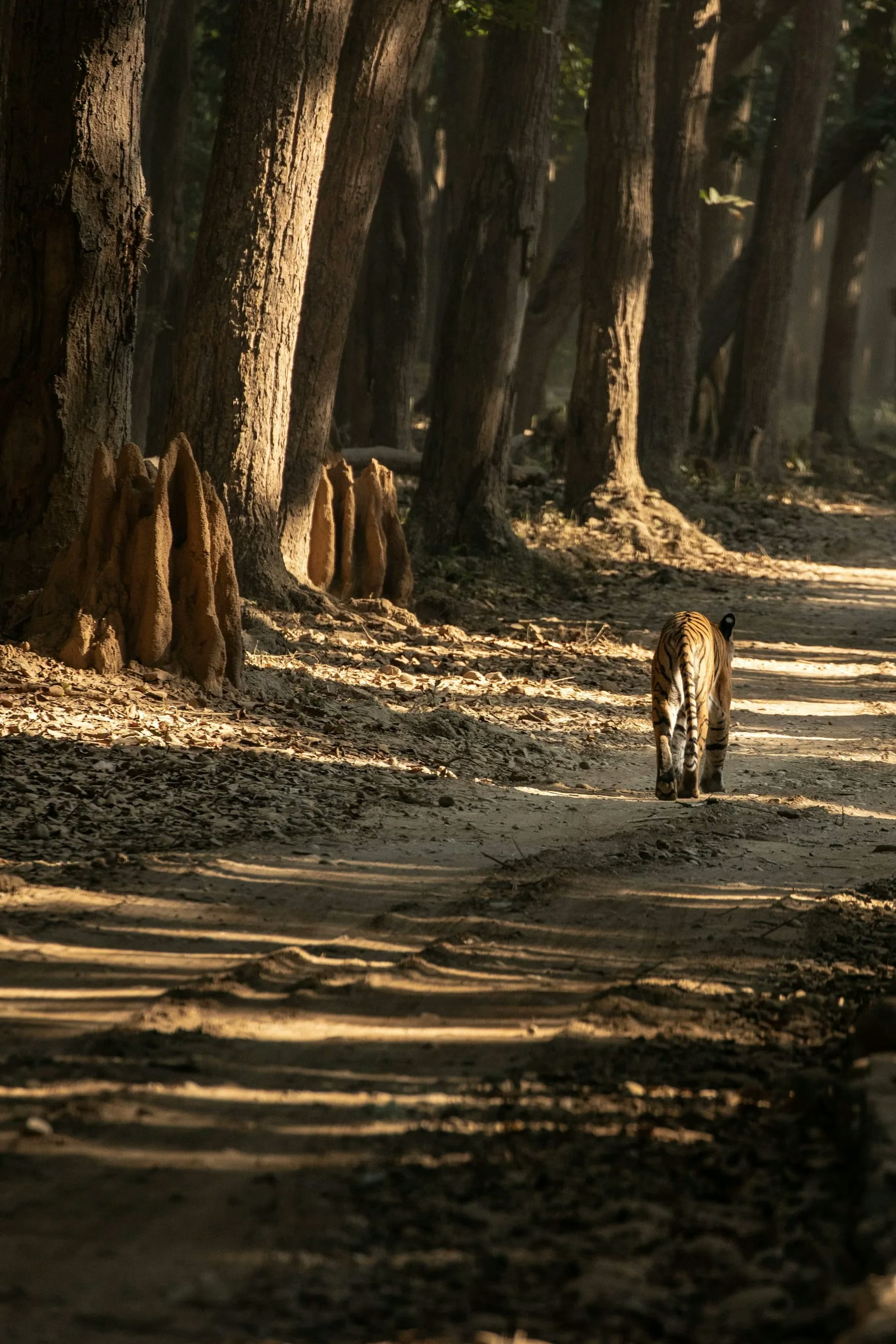
Why Tiger Sightings in Rajaji Are Unpredictable
Tigers are the most requested sighting on any Rajaji safari, and for good reason — the park sits within the broader Shivalik tiger landscape that connects to Corbett Tiger Reserve. Rajaji has a resident tiger population, and tigers do move through the park's forested corridors. However, a tiger sighting on any given safari is never guaranteed, and understanding why helps you plan with realistic expectations.
Tigers are solitary, territorial and largely nocturnal or crepuscular animals. They range across large home territories — male tigers in the Shivalik landscape may patrol areas spanning 60-150 square kilometres or more. A jeep safari covers perhaps 20-30 km of track within a fraction of this range. The probability of crossing paths with a tiger depends on where the animal was recently, what it was doing, wind direction, prey movement and sheer chance.
Rajaji's terrain further complicates visibility. Much of the park is dense Sal forest with thick undergrowth, providing tigers with excellent cover. Open areas exist — riverbeds, grasslands and forest clearings — but these are not where tigers spend most of their time. A tiger can be 50 metres from the track and invisible in the vegetation.
Understanding Rajaji's Tiger Habitat
Rajaji National Park encompasses roughly 820 square kilometres of Shivalik foothill forest, grassland and river habitat. Tigers here occupy a landscape that includes dense Sal and mixed deciduous forest, riverine corridors along the Ganga and its tributaries, and grassland patches at the forest edge. Each of these habitat types serves a different purpose for a tiger — cover for resting, corridors for movement, and open areas for hunting.
The park's tiger density is lower than in some of India's more famous tiger reserves. Rajaji's value lies not in guaranteed tiger encounters but in the richness of the broader ecosystem. Elephants are the park's signature large mammal — herds of 20-50 are common along the river. Leopards, sloth bears, gharials, otters and over 300 bird species complete the picture. A safari in Rajaji is an encounter with a thriving Shivalik ecosystem, and tigers are one part of that story.
The Forest Department and conservation organisations work to maintain tiger habitat connectivity between Rajaji and Corbett. This landscape-level conservation ensures tigers have room to roam, but it also means tigers in Rajaji are genuinely wild animals moving through a large, connected ecosystem — not animals concentrated in a small viewing area.
Which Zone Is Best for Tiger Sightings?
No zone of Rajaji can be honestly promoted as best for tiger sightings. Tiger movement is unpredictable and changes with season, prey availability, individual territory boundaries and breeding patterns. A zone where tigers were seen frequently last month may be quiet this month. A zone with fewer reported sightings one year may become active the next as a new tiger establishes territory.
What you can do is understand what each zone offers in terms of habitat and the broader wildlife experience:
- Dense forest zones (such as Motichur and parts of Ranipur) provide excellent tiger habitat with thick cover, but visibility is limited. If a tiger is present, it may be heard or tracked but not seen from the vehicle.
- Riverine zones (parts of Chilla along the Ganga) offer open terrain near water, where tigers occasionally cross or drink. Elephants are more reliably seen in these areas.
- Grassland-edge zones can be productive when prey is active, but are not consistently better for tigers than forest zones.
Instead of choosing a zone solely for tiger probability, consider the full picture: forest type, other wildlife (elephants, bears, deer, birds), scenery, road conditions and accessibility. The wildlife guide covers the broader species you are likely to encounter, and a zone chosen for its overall character will deliver a richer experience than one chosen for a single animal.
How Season and Weather Affect Tiger Sightings
The dry months — roughly March through June — can improve tiger sighting probability in Rajaji. As water sources shrink, animals concentrate around remaining rivers, streams and waterholes. Tigers, like all predators, follow their prey, and the convergence of animals at water creates more opportunities for encounters. Open riverbeds and forest clearings near water become key viewing points.
However, summer also brings extreme heat — temperatures in the Shivalik foothills regularly exceed 40°C in May and June. Tigers become less active during the hottest parts of the day, retreating into dense shade. The early-morning and late-evening safari slots offer the best chance during summer, as tigers move to and from water during the cooler hours.
Winter (November to February) offers comfortable weather and active wildlife, but denser vegetation and shorter daylight hours reduce visibility. Tigers are active in winter, but the thick undergrowth provides more cover, making sightings less likely from the vehicle. The best time to visit guide breaks down month-by-month conditions across the park.
Monsoon (mid-June to September) typically brings park closures or restricted access due to road conditions and forest regeneration. The monsoon closure guide explains what to confirm before booking during or near this period.
Morning vs Evening Safari for Tiger Sightings
Tigers are crepuscular — most active at dawn and dusk. Both the morning and evening safari slots target these activity windows, but each has different characteristics:
Morning safari: Starts at first light. Tigers that hunted overnight may still be active or returning to cover. The forest is cooler, mist may lift from the river, and bird activity is high. Morning is generally considered the stronger slot for large-mammal sightings across Indian national parks.
Evening safari: Begins in the late afternoon and runs toward dusk. Tigers may emerge from cover to drink or move toward hunting grounds. The light is warm and dramatic for photography. Evening can be productive, though visibility drops as the sun sets.
Neither slot is universally better. If you can only book one safari, morning is often the default recommendation for first-time visitors — but an experienced operator may know that evening conditions on a particular day are favourable. Discuss both options with the operator and, if your schedule allows, consider booking both a morning and an evening safari to cover both windows. The morning vs evening timing guide provides a detailed comparison.
What the Guide Sees That You Might Miss
A significant part of tiger tracking on safari is interpreting signs that most visitors overlook. An experienced guide reads the forest continuously — fresh pugmarks on the track, alarm calls from langurs or deer, claw marks on a tree, the smell of a recent kill, broken grass along a trail. These signs tell a story about recent tiger activity even when the animal itself is not visible.
Your guide will slow down, pause, listen and adjust the route based on these signals. When the vehicle stops unexpectedly and the guide is scanning the undergrowth, it is usually because something has caught their attention. Following their gaze and listening to their interpretation deepens the experience, even when it does not result in a sighting.
The wildlife etiquette guide covers how to behave when the guide signals that a predator may be nearby — staying quiet, keeping movements minimal and trusting the guide's positioning decisions.
How to Improve Your Chances Without relying on Guarantees
While no action guarantees a tiger sighting, several practical steps improve the overall quality of your safari experience and increase the time you spend in productive habitat:
- Book multiple safaris: Two or more safaris across different times of day and ideally different zones give you more time in the forest and expose you to different conditions. The booking guide covers how to arrange multiple slots.
- Choose the right season: Dry months (March-June) concentrate animals near water, improving encounter probability. See the best time to visit guide for seasonal details.
- Book an experienced operator: Operators with strong local knowledge and well-trained guides position vehicles more effectively and read the forest better. This matters more than any single zone choice.
- Listen to the guide: When the guide asks for silence, asks you to look in a particular direction or repositions the vehicle, follow their instructions immediately. The guide's real-time assessment is your best tool.
- Be patient: Tigers reveal themselves on their schedule, not yours. Sitting quietly at a waterhole or along a known trail for 15-20 minutes is often more productive than constantly driving in search of the animal.
What to Do If No Tiger Is Seen
A safari without a tiger sighting is not a failed safari — it is a realistic one. Rajaji's wildlife extends far beyond tigers, and the park's elephants, leopards, bears, deer, gharials and birds make every safari worthwhile. Here is how to reframe the experience:
- Elephants: Rajaji is one of the best parks in India for elephant sightings. Herds along the Ganga are a highlight that many visitors rank above any predator sighting.
- Leopards: More elusive than tigers but present throughout the park. A leopard sighting is a rare and memorable event.
- Birds: Over 315 species have been recorded. The park's birdwatching rivals many dedicated birding destinations — see the birdwatching guide for details.
- Forest interpretation: Trees, tracks, sounds, insects and plant life tell the story of a healthy ecosystem. An engaged safari is one where you notice and ask about everything, not just the apex predator.
Many visitors who return for a second safari report that their best experience was the one where they stopped looking for a single animal and started observing the forest as a whole. The wildlife guide provides an overview of the species and habitats you can explore.
A Realistic Planning Checklist
- Set expectations honestly: Tiger sightings are possible but never guaranteed. Plan the safari for the broader wildlife and forest experience.
- Choose a season deliberately: Dry months offer higher encounter probability; winter offers comfort and birding. Both have trade-offs. The best time to visit guide helps you decide.
- Book enough safaris: If a tiger sighting is a priority, book at least two safaris (morning and evening, or on consecutive days). One safari limits your exposure.
- Discuss zones with the operator: Share what interests you — elephants, birds, landscape, photography — and let the operator suggest a zone. Avoid asking which zone guarantees a tiger.
- Invest in a good guide: The guide's skill in reading the forest, interpreting signs and positioning the vehicle is the single biggest factor in your experience quality.
- Prepare for the overall experience: Pack for comfort (see the packing guide), follow safari etiquette, and approach the forest with curiosity rather than a checklist.
- Ask about reporting times and gate logistics: The gates and reporting points guide covers what to expect at check-in.
A Rajaji safari is an encounter with one of India's most important Shivalik ecosystems. Tigers are part of that ecosystem — present, protected and genuinely wild. The best planning approach is one that prepares you to appreciate everything the park offers, with a tiger sighting as a welcome bonus rather than the sole measure of success. For help planning your visit, the route guide from nearby cities and the tiger reserve safari overview provide additional detail.