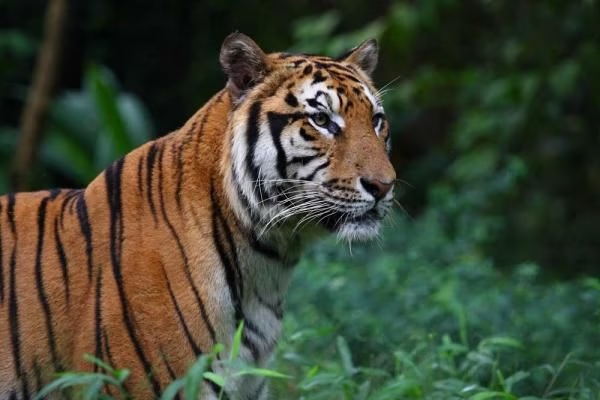
Why Comparing Tiger Reserves Before You Book Matters
India has more than fifty tiger reserves spread across diverse landscapes — from the mangrove creeks of the Sundarbans to the dry teak forests of Maharashtra, from the Vindhyan hills of Madhya Pradesh to the Himalayan foothills of Uttarakhand. Each reserve offers a different wildlife experience shaped by its terrain, vegetation, water systems, accessibility and the behaviour of the animals within it. Choosing the right reserve for your trip is not about finding the "best" one — it is about matching the reserve to your priorities: travel time, trip length, wildlife interests, photography goals and the kind of landscape you want to experience.
This guide compares four well-known Indian tiger reserves — Rajaji, Corbett, Ranthambore and Tadoba — across the dimensions that matter most to a first-time or repeat visitor. The comparison is practical, not competitive. Every reserve has strengths that suit particular travel styles, and every reserve has limitations that affect planning. The goal is to help you choose the reserve that fits your trip, rather than chasing a single metric like tiger sighting probability.
An important caveat: all specific details about fees, season dates, sighting statistics and availability should be confirmed with the respective Forest Department or park authority before booking. This guide provides planning frameworks, not fixed numbers.
Landscape and Terrain: What You Will Actually Drive Through
The landscape of a tiger reserve defines the character of your safari — the light, the vegetation, the terrain under the vehicle and the kind of wildlife encounter you are most likely to have. Here is how the four reserves compare.
Rajaji: Shivalik foothills and riverine grassland
Rajaji sits where the Himalayan Shivalik foothills meet the Gangetic plain. The terrain is a mix of dense Sal forest, mixed deciduous woodland, riverine grasslands and low hills. The Ganga and its tributaries run through the park, creating riparian corridors that attract elephants, deer and birds. Driving through Rajaji, you move between shaded forest tracks, open grassland edges and river-side routes. The landscape feels lush and green during the open season, particularly in the first half. The habitats and flora guide covers the vegetation types in detail.
Corbett: Himalayan foothills with broader elevation range
Jim Corbett National Park, also in Uttarakhand, shares the Himalayan foothill setting but occupies a larger area with a broader elevation range. The park includes riverine forest along the Ramganga river, dense Sal woodland, grassland called chaur, and hill terrain that rises higher than Rajaji's. The landscape diversity is one of Corbett's defining features — you can drive through flat grassland in one zone and steep, forested hills in another. Corbett's larger size means different zones feel distinctly different from one another.
Ranthambore: Dry deciduous forest and rocky terrain
Ranthambore National Park in Rajasthan occupies a dramatically different landscape — dry deciduous forest dominated by Dhok trees, rocky outcrops, ancient fort ruins and a system of lakes and water bodies. The terrain is drier and more open than the Shivalik reserves, which affects both the vegetation and the visibility of wildlife. The presence of lakes within the park creates unique viewing opportunities — tigers and other animals near water against a backdrop of ruins and rocks. Ranthambore's landscape is photogenic in a way that is distinct from the green, forested Shivalik reserves.
Tadoba: Dry teak forest of Central India
Tadoba-Andhari Tiger Reserve in Maharashtra is one of India's oldest and largest tiger reserves, occupying dry deciduous forest dominated by Teak and other hardwood species. The terrain includes flat forest, hilly areas, a lake (Tadoba Lake) and riverine patches. Tadoba's landscape is drier and more open than Rajaji or Corbett, with good visibility in many zones during the dry season. The reserve's teak-dominated forest has a different character from the Sal-dominated Shivalik forests — the canopy structure, the undergrowth and the light quality all feel distinct.
Accessibility and Proximity to Major Cities
How you get to a reserve — and how long it takes — is one of the most practical factors in choosing where to go. Accessibility determines whether a reserve works for a weekend trip, a week-long holiday or a longer immersion.
Rajaji
Rajaji is among the most accessible tiger reserves in India. It is reachable by road from Delhi in roughly six to seven hours via Haridwar, and Dehradun airport provides a shorter connection. The park sits close to the Haridwar-Rishikesh-Dehradun corridor, making it practical for a short trip. The Delhi access guide covers transport options in detail.
Corbett
Corbett is also in Uttarakhand but requires a longer drive from Delhi — typically seven to nine hours depending on the zone and route. The Pantnagar airport provides air access, though connections are limited. Corbett's multiple gates are spread across a large area, so the travel time from your accommodation to the gate varies significantly by zone. The Rajaji vs Corbett comparison covers the proximity question in detail.
Ranthambore
Ranthambore is well connected by train — Sawai Madhopur station is on the Delhi-Mumbai main line and serves as the gateway to the park. Jaipur airport, roughly three to four hours away, provides air access. From Delhi, Ranthambore is reachable by train overnight or by road in approximately six to eight hours. The train connection is one of Ranthambore's accessibility strengths.
Tadoba
Tadoba is the most distant of the four reserves from North India. It is accessed via Nagpur, which has a major airport with connections from Delhi, Mumbai and other cities. From Nagpur, Tadoba is a drive of roughly two to three hours depending on the zone. For visitors based in Mumbai or Pune, Tadoba is the most practical tiger reserve option. For Delhi-based travellers, the flight to Nagpur adds a travel day that the other reserves do not require.
Trip Length: How Many Days Work Well
Each reserve benefits from a different minimum visit length, driven by travel time, zone variety and the pace at which the safari experience unfolds.
Rajaji
Rajaji works well for a two to three-day trip. One to two safari slots — morning and/or evening — combined with Rishikesh or Haridwar sightseeing gives a satisfying experience. The park's accessibility from nearby cities means you do not lose whole days to travel. The two-day itinerary shows what fits into a short visit.
Corbett
Corbett benefits from three to five days. The park's size means different zones offer different experiences, and multiple safari slots across different areas deepen the visit. The longer travel time from Delhi justifies a longer stay to make the journey worthwhile. The North India itinerary guide covers combining Corbett with nearby destinations.
Ranthambore
Ranthambore works well for a three to four-day trip. Two to three safari slots across different zones, combined with a visit to Ranthambore Fort, provides a complete experience. The train connection makes it practical to arrive the evening before and depart the morning after, maximising safari time.
Tadoba
Tadoba typically benefits from a three to four-day visit. Two to three safari slots across its multiple zones, combined with the drive from Nagpur, makes a focused wildlife trip. The reserve's size and zone variety reward a multi-day stay.
Gate and Zone Variety
Zone diversity within a reserve gives you different terrain, habitat types and wildlife experiences during a single visit. The number and character of zones vary significantly across these reserves.
Rajaji
Rajaji has multiple zones accessed through different gates, each with its own terrain character — some oriented toward riverine habitat, others toward forest or grassland. The zone guide explains what each area offers, and the gates guide maps each zone to its entry point.
Corbett
Corbett has the most zone variety of the four reserves, with multiple distinct areas offering different landscapes — Bijrani's grassland, Jhirna's mixed forest, Dhikala's riverine habitat and Durga Devi's hill terrain. This variety is one of Corbett's major strengths for repeat visitors.
Ranthambore
Ranthambore has numbered zones, each with its own character. Some zones are centred on lakes, others on rocky hills or forested areas. The zone lottery system — where your zone is assigned rather than chosen — adds an element of unpredictability to the experience.
Tadoba
Tadoba has multiple zones including buffer zones that provide additional safari options. The zone variety allows visitors to experience different parts of the reserve across multiple slots.
Wildlife and Birding Mix
While all four reserves are tiger habitats, the broader wildlife community differs with the landscape.
Mammals
- Rajaji: Known for its elephant population, which is among the most regularly seen large mammals in the park. Spotted deer, sambar, barking deer, wild boar and langur are common. Leopards are present but elusive. The elephant sightings guide covers what influences elephant visibility.
- Corbett: A broad mammal community including elephants, deer species, wild boar, sloth bears, leopards and of course tigers. The larger area and habitat diversity supports a wider range of species.
- Ranthambore: Tigers, leopards, sambar, chital, nilgai, sloth bear and striped hyena. The dry landscape supports species adapted to deciduous forest and rocky terrain.
- Tadoba: Tigers, leopards, sloth bears, gaurs (Indian bison), wild dogs (dholes) and various deer species. Tadoba's Central Indian location brings species not commonly found in the Shivalik reserves.
Birds
- Rajaji and Corbett: Both Shivalik foothill reserves support rich bird communities, including winter migrants, waterbirds along rivers, raptors, woodpeckers and forest specialists. The Rajaji birdwatching guide covers avian diversity in the park.
- Ranthambore: Good birding in a dry-zone context — raptors, owls, woodpeckers and species adapted to deciduous forest. The lakes add waterbird diversity.
- Tadoba: Decent birding with dry-zone specialties, raptors and species associated with teak forest. The lake and riverine areas attract waterbirds.
Seasonal Access and Weather
Each reserve has its own seasonal pattern, driven by monsoon timing, temperature and local weather conditions.
Rajaji
Rajaji is typically open from mid-November to mid-June, with exact dates set annually by the Forest Department. The monsoon (roughly July to September) closes most zones. Winter mornings can be foggy, while summer brings heat concentrated near river corridors. The monsoon closure guide and the best time to visit guide cover seasonal details.
Corbett
Corbett's zones open and close on different schedules — some zones open during the monsoon when others are closed. This staggered schedule is a Corbett-specific advantage for visitors during the monsoon period. Confirm current zone availability before planning a monsoon visit.
Ranthambore
Ranthambore is generally open from October to June, with the monsoon period closing the park. Summer temperatures in Rajasthan can be intense, which concentrates wildlife near water bodies — a pattern that improves sighting conditions in the drier, more open terrain.
Tadoba
Tadoba typically opens after the monsoon and remains accessible through the dry season. Summer temperatures in Maharashtra are hot, but the dry conditions improve visibility in the open deciduous forest. Confirm current opening dates with the Maharashtra Forest Department.
Who Each Reserve Suits Best
Matching a reserve to your travel style is more useful than ranking them. Here is a general framework:
Rajaji: the accessible weekend option
- Suits: Short trips from Delhi or North India, visitors who want a wildlife experience combined with Rishikesh or Haridwar, elephant-focused interest, first-time safari visitors who want accessibility and comfort.
- Consider if: You have limited time, prefer a shorter drive from a major city, want to combine a safari with spiritual or adventure activities nearby.
Corbett: the immersive wildlife immersion
- Suits: Wildlife enthusiasts willing to invest more days, repeat visitors who want zone variety, birders looking for Himalayan foothill diversity, photographers seeking varied terrain.
- Consider if: You have four or more days, want multiple safari slots across different zones, and are willing to invest more travel time for a deeper experience.
Ranthambore: the photogenic classic
- Suits: Photography-focused visitors, those who want a visually dramatic landscape with ruins and lakes, North Indian travellers who prefer the train connection, visitors combining a safari with Jaipur or other Rajasthan destinations.
- Consider if: Landscape photography matters to you, you want to combine a wildlife trip with Rajasthan sightseeing, or the train connection from Delhi is appealing.
Tadoba: the Central Indian option
- Suits: Visitors based in Mumbai or Pune who want the nearest serious tiger reserve, those seeking Central Indian wildlife species like gaur and dhole, experienced safari-goers looking for a different landscape from the Shivalik reserves.
- Consider if: You are based in western or central India, want to explore a reserve outside the Shivalik-Rajasthan circuit, or have already visited the northern reserves and want a different landscape.
Comparison Checklist for Choosing Your Reserve
Use this checklist to match a reserve to your trip:
- Available trip length: Two to three days suit Rajaji; three to five days suit Corbett, Ranthambore or Tadoba. Be honest about how many days you actually have.
- Departure city: Your starting point determines travel time. Delhi-based travellers have the shortest access to Rajaji; Mumbai-based travellers are closest to Tadoba. The Delhi guide covers Rajaji-specific access.
- Landscape preference: Green, riverine, lush foothills (Rajaji, Corbett) versus dry, rocky, photogenic ruins (Ranthambore) versus dry teak forest (Tadoba).
- Wildlife priority: Elephants and river habitat (Rajaji), broad species diversity (Corbett), dramatic tiger-landscape combinations (Ranthambore), Central Indian species (Tadoba).
- Birding priority: Rajaji and Corbett lead for bird diversity due to their Shivalik foothill and riverine habitats. The birdwatching guide covers Rajaji-specific birding.
- Photography priority: Ranthambore's open, photogenic landscape suits photographers. Rajaji and Corbett offer forest and river photography. Tadoba provides dry-zone and teak-forest aesthetics. The Rajaji photography guide covers Shivalik-specific photography conditions.
- Combination trip: Rajaji pairs with Rishikesh, Haridwar, Mussoorie or Nainital. Corbett pairs with Nainital. Ranthambore pairs with Jaipur and Rajasthan. Tadoba pairs with Nagpur and central India. The North India itinerary guide covers Rajaji combinations.
- Budget: Costs vary by reserve, zone, season and operator. Confirm current fees and rates for your chosen reserve directly with the Forest Department or your operator. The Rajaji budget planner provides a cost framework for the park.
There is no single "best" tiger reserve in India — only the reserve that best fits your time, your interests and your travel context. Each of these four parks offers a genuine wildlife experience in a distinct landscape. Choose based on what matters most to you, confirm current details before booking, and approach the visit with open expectations. The wildlife will present itself on its own terms, regardless of which reserve you choose.