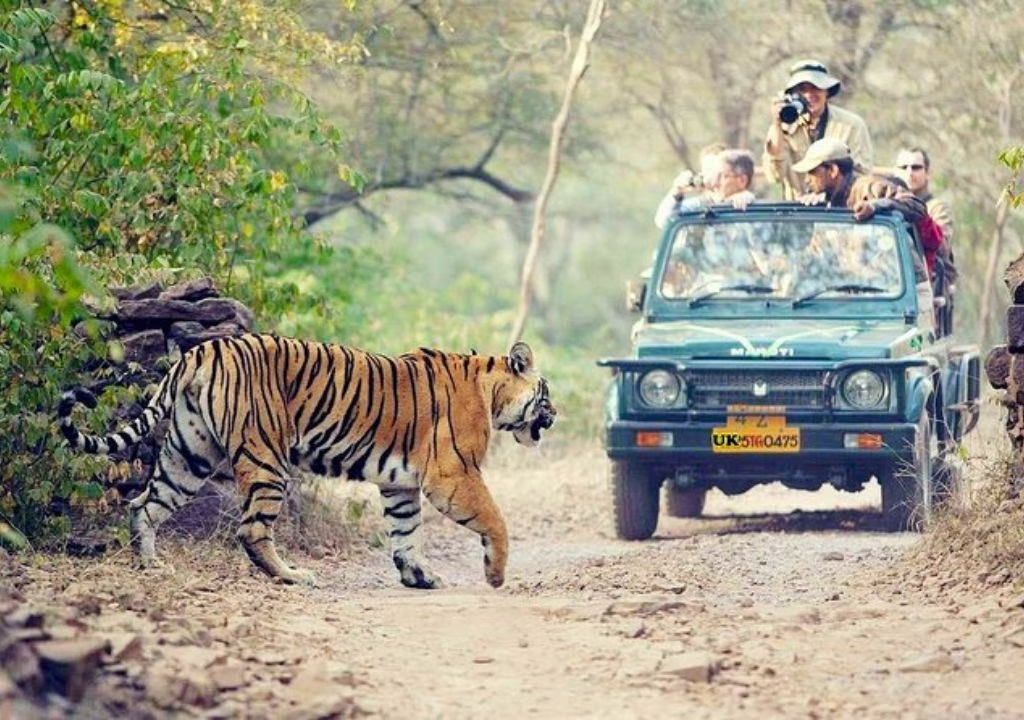
Why Combine Rajaji with North India Hill Stations?
Rajaji National Park occupies a unique position in North India's travel geography. It sits at the transition between the Gangetic plain and the Himalayan foothills, within reach of Rishikesh, Haridwar and Dehradun — cities that serve as gateways to both the park and the broader hill-station landscape of Uttarakhand and Himachal Pradesh. This proximity makes Rajaji a natural addition to an itinerary that includes Mussoorie, Nainital, Dharamshala or other North India destinations.
The appeal is practical: you can experience a wildlife safari in the Shivalik foothills and then move on to hill stations that offer mountain views, cooler temperatures, colonial heritage and a different pace of travel. The challenge is routing — North India's hill destinations are spread across different states, connected by roads that wind through mountain terrain, and each adds travel time that must be accounted for honestly. This guide helps you sequence Rajaji with nearby destinations without over-routing, understand which combinations work within realistic timeframes and plan the practical details that make a combined trip smooth.
Destination Combinations That Work
The right combination depends on how many days you have, how much travel you are comfortable with and which destinations matter most to you. Here are practical combinations organised by trip length.
Three-day combinations
In three days, you have time for one safari slot plus one nearby destination. The most natural pairings are:
- Rajaji + Rishikesh: A morning or evening safari on Day 1, with the remaining time in Rishikesh for riverside exploration, temple visits and the town's broader appeal. This is the simplest and most popular combination, requiring minimal additional travel. The 3-day itinerary guide covers this pairing in detail.
- Rajaji + Haridwar: Similar to the Rishikesh pairing but oriented toward Haridwar's temples, ghats and spiritual atmosphere. Works well for visitors who want a cultural anchor alongside the safari experience.
- Rajaji + Mussoorie: A safari on Day 1, travel to Mussoorie on Day 2, and a day in Mussoorie before departing on Day 3. Mussoorie is the closest hill station to the Rishikesh-Haridwar corridor, making this combination feasible within a short timeframe. The Rishikesh adventure combo guide covers nearby activities.
Four-day combinations
Four days allow a more relaxed pace and the possibility of a second safari slot or a second destination:
- Rajaji + Rishikesh + Mussoorie: Two safari slots on separate days, with Rishikesh and Mussoorie filling the remaining days. This works well if you want to experience both the safari and two distinct hill-side destinations. The 2-day itinerary shows how to structure the safari portion.
- Rajaji + Haridwar + Rishikesh: Safari plus both spiritual cities, with enough time to explore each without rushing. This combination stays within a compact geographic area, minimising travel time between stops.
Five-day combinations
Five days open up more ambitious itineraries:
- Rajaji + Mussoorie + Nainital: A safari, then Mussoorie, then Nainital. This requires more travel between hill stations but covers two of Uttarakhand's most popular hill destinations. Build in a rest day or a light sightseeing day between the longer drives. The Delhi access guide provides context on overland travel in the region.
- Rajaji + Rishikesh + Dharamshala: A safari, Rishikesh exploration, then travel to Dharamshala for the remaining days. The Rajaji-to-Dharamshala segment requires a full travel day or an overnight break en route, so plan this leg carefully. The safari access guide covers departure logistics.
Seven-day combinations
A week gives you the freedom to explore widely without daily rushing:
- Rajaji + Mussoorie + Nainital + Dharamshala: The full North India circuit combining a safari with three distinct hill and pilgrimage destinations. This requires disciplined routing to avoid spending the entire trip in a vehicle. Sequence the destinations geographically to minimise backtracking.
- Rajaji + Rishikesh + Mussoorie + Nainital: A Uttarakhand-focused itinerary combining a safari with two hill stations and Rishikesh, all within a manageable geographic area. This keeps travel distances shorter than the Dharamshala-inclusive option.
How to Place a Safari Inside a Sightseeing Day
A jeep safari occupies a defined time window — you report at the gate, complete check-in, enter the park for the allocated slot and return by the scheduled time. Placing this block inside a day of hill-station sightseeing requires some planning.
Morning safari, afternoon sightseeing
A morning safari slot typically has an early reporting time and returns before midday or early afternoon. This leaves the rest of the day free for sightseeing, travel or rest. This is the most common arrangement for visitors combining a safari with a nearby destination — complete the safari first, then move on. Confirm your morning slot timing for your specific dates, as reporting times shift seasonally. The morning versus evening guide covers slot characteristics.
Evening safari, morning sightseeing
An evening slot allows you to spend the morning exploring your current destination before driving to the safari gate for the afternoon reporting time. This works well in Rishikesh or Haridwar, where there is enough to fill a morning before heading to the gate. The slot duration guide covers how evening slots are structured.
Safari on a separate day
If your itinerary allows, dedicating a full day to the safari — with travel to the gate, the slot itself and return — gives the most relaxed experience. This avoids the pressure of fitting a safari into a half-day alongside other activities. The 2-day itinerary shows how a dedicated safari day works within a broader trip.
Altitude and Travel Fatigue Considerations
North India's hill stations sit at varying elevations, and altitude affects how you feel after travel. Mussoorie sits at roughly 2,000 metres; Nainital at roughly 2,000 metres; Dharamshala's lower areas at roughly 1,400 metres with upper Dharamshala and McLeodganj at roughly 2,000 metres. Moving between these elevations and the lower-altitude Rishikesh-Haridwar corridor (roughly 300-500 metres) involves noticeable changes in temperature, air pressure and how your body responds.
After a hill station visit at higher altitude, descend to the Rishikesh-Haridwar area before your safari day rather than trying to fit the safari in immediately after arriving from altitude. Similarly, if your safari is at the start of the trip, the transition from the lowland park to a hill station may feel like a significant temperature and altitude shift. Build rest into these transition days rather than scheduling demanding activities.
Travel fatigue is cumulative. Multiple consecutive days of driving through mountain roads — even scenic ones — takes a toll on energy levels and alertness. If you are self-driving, be especially honest about fatigue. A rested driver is a safer driver on winding mountain roads. The safety guide covers general travel safety considerations.
Monsoon and Winter Access Caveats
Seasonal conditions affect both Rajaji and the hill stations, and they do not always align. Planning a combined trip requires understanding these windows.
Monsoon disruption (roughly July to September)
The monsoon brings heavy rainfall that affects hill-station access — roads may be affected by landslides, visibility is reduced and outdoor activities are limited. Rajaji's open season typically pauses during the monsoon as well. The monsoon closure guide covers park access during this period. If your trip falls during monsoon months, plan for the possibility that both the safari and hill-station access may be constrained.
Winter conditions at altitude (December to February)
Winter brings cold temperatures to the hill stations, with possible snowfall at higher elevations. Roads to Nainital and Dharamshala may be affected by ice or snow, particularly at higher passes. Rajaji remains open during winter months, and the cooler temperatures improve wildlife activity in the park. The best time to visit guide covers seasonal conditions. If your trip includes both a winter safari and a hill station, pack for significantly different temperatures — the lowland park may be cool while the hill station is cold.
Best overlap window
The period from October to early December and from late February to April generally offers the most reliable conditions for both the park and the hill stations. Confirm current conditions before finalising dates, as weather patterns vary year to year.
Booking Order and Sequence Planning
The order in which you book your trip components matters. Safari slots have limited daily capacity and fixed time windows. Hill-station accommodation is generally more flexible but still books up during peak periods. Transport — especially flights to Delhi or Dehradun — should be secured early for holiday travel.
Recommended booking sequence:
- First: Confirm your safari dates and book the slot. This is the most constrained element of the trip. The booking timing guide covers when to start.
- Second: Book accommodation near your safari gate for the nights that bracket your safari day. The accommodation guide covers options near each gate.
- Third: Book hill-station accommodation for the remaining nights of your trip.
- Fourth: Book transport — flights, trains or self-drive arrangements — connecting your arrival point to the safari area and then to your hill-station destinations.
- Fifth: Fill in activities, restaurant reservations and secondary sightseeing after the main framework is locked in.
This sequence ensures that the most time-sensitive and capacity-limited element — the safari slot — is secured before you build the rest of the trip around it.
Sample Itinerary Checklist
Use this checklist to structure a combined Rajaji and North India itinerary:
- Define your trip length honestly: Count available days, subtract travel days and allocate what remains to safaris and sightseeing. Do not over-pack the schedule.
- Choose your destinations geographically: Sequence stops to minimise backtracking. Move in one direction through the landscape rather than doubling back.
- Book the safari first: Lock in your safari date, zone and slot before building the rest of the itinerary. The access guide covers departure logistics.
- Build buffer days: Leave at least one day in the itinerary with no fixed plan. Mountain travel is unpredictable and a buffer day absorbs delays without ruining the trip.
- Account for altitude transitions: Do not schedule a safari immediately after arriving from a high-altitude hill station. Allow a rest day at the lower elevation first.
- Check seasonal access: Confirm that both the park and your hill-station destinations are accessible during your dates. The monsoon guide and the best time to visit guide cover seasonal windows.
- Pack for temperature variation: A combined trip may take you from the warm lowland park to a cold hill station. Pack layers rather than a single climate assumption. The packing guide covers safari essentials.
- Confirm road conditions: Mountain roads can change with weather. Check current conditions before each driving segment, especially during monsoon and winter months.
- Plan meals around travel: Mountain drives take longer than expected. Carry water and snacks for transit days and do not assume meal availability at every point along the route.
- Keep the safari experience separate: Do not rush from a hill-station departure straight into a safari slot. The safari deserves your full attention and energy, not the residue of a long drive. The first-time visitor guide covers how to prepare for safari day.
Combining Rajaji with North India's hill stations creates a trip that covers wildlife, mountains, rivers and spiritual heritage within a relatively compact geographic area. The key to making it work is honest planning — realistic drive times, appropriate rest, early booking and a willingness to adjust when mountain conditions demand flexibility.