What You Might See — and What You Probably Will Not
Rajaji National Park sits in the Shivalik foothills at the transition between the Gangetic plain and the Himalayan foothills, and this geography gives it a remarkable range of habitats — Sal forest, mixed deciduous woodland, riverine grasslands, rocky hill terrain and the floodplains of the Ganga. That habitat diversity supports a correspondingly wide range of wildlife: large mammals, small mammals, birds, reptiles and river-dwelling species all find homes within the park's boundaries.
But a species list is not a sighting guarantee. The animals described in this guide are documented residents or regular visitors to Rajaji's landscape. Some — elephants, deer, langur, peafowl — are commonly seen on a typical safari. Others — tiger, leopard, sloth bear, hyena — are present but elusive. A few — fishing cat, pangolin, python — are genuinely rare to encounter even for frequent visitors. Understanding the difference between common and rare helps you set realistic expectations and enjoy the safari for what it offers, rather than measuring it against a checklist.
This guide organises species by group — mammals, birds, reptiles and river species — and provides practical notes on where to look, what is realistically likely on a single safari and how to talk to your guide about the animals you hope to encounter.
Major Mammals: The Big and Well-Known
Rajaji's mammal community includes some of India's most iconic species. The park's status as a tiger reserve confirms the presence of both tiger and leopard, while the elephant population is one of the most visible wildlife features of any visit.
Asian elephant
The Asian elephant (Elephas maximus) is Rajaji's most reliably observed large mammal. Elephants are present year-round and are often seen along river corridors, in grassland clearings and at forest edges. In the drier months, elephant activity concentrates near permanent water sources — the Ganga and its tributaries — which can improve viewing opportunities. Herds of varying size move through the landscape, and individual bulls are also encountered. Elephants are generally tolerant of vehicle presence at a respectful distance, which allows extended viewing. However, elephants are wild animals — maintain the distance your guide recommends and never approach on foot. The elephant sightings guide covers what influences elephant visibility across seasons.
Tiger
The Bengal tiger (Panthera tigris tigris) is the park's apex predator and the species that brings many visitors to Rajaji. Tigers are present and breeding within the reserve, but they are solitary, wide-ranging and secretive. Most visitors will not see a tiger on a single safari. What you may encounter instead are signs — pugmarks on soft earth, scratch marks on trees, the distinctive musk scent marking a territory boundary. Your guide will read these signs and position the vehicle where tiger movement is most likely, but there is no zone, season or time of day that guarantees a tiger sighting. The tiger sighting guide covers realistic expectations and what influences tiger visibility.
Leopard
The leopard (Panthera pardus) inhabits Rajaji's forest and hill terrain. Leopards are more elusive than tigers and even less likely to be seen. Their spotted coat provides excellent camouflage in the dappled light of Sal forest, and they tend to retreat from vehicle presence rather than hold position. The undulating Shivalik terrain — with rocky outcrops, dense scrub and elevated ridgelines — provides ideal leopard habitat, which means the species is present in good numbers even if rarely observed. Alarm calls from langur and deer often indicate a leopard is moving through the area, even when the cat itself remains invisible. The leopard and sloth bear guide covers this species in detail.
Sloth bear
The sloth bear (Melursus ursinus) is a Shivalik specialist, adapted to the dry and moist forests of the Indian subcontinent. Rajaji supports a resident sloth bear population, though these bears are primarily nocturnal and crepuscular, making daytime sightings uncommon. Signs of sloth bear presence — torn-open termite mounds, bark stripping on trees, claw marks on trunks and distinctive droppings on the track — are more commonly encountered than the animal itself. Your guide can identify these signs as you drive, turning the absence of a direct sighting into an engaging tracking exercise.
Himalayan black bear
The Himalayan black bear (Ursus thibetanus) inhabits the higher, forested reaches of the Shivalik range within and adjacent to Rajaji. These bears are omnivorous, feeding on fruits, insects, honey and vegetation. They are shy and primarily arboreal, resting in trees during the day. Sightings are uncommon during standard jeep safaris, which tend to operate in the lower-elevation grassland and riverine areas. If your safari route passes through hilly, dense forest terrain, the guide may scan for signs — claw marks on bark, overturned rocks or disturbed leaf litter.
Spotted deer (chital)
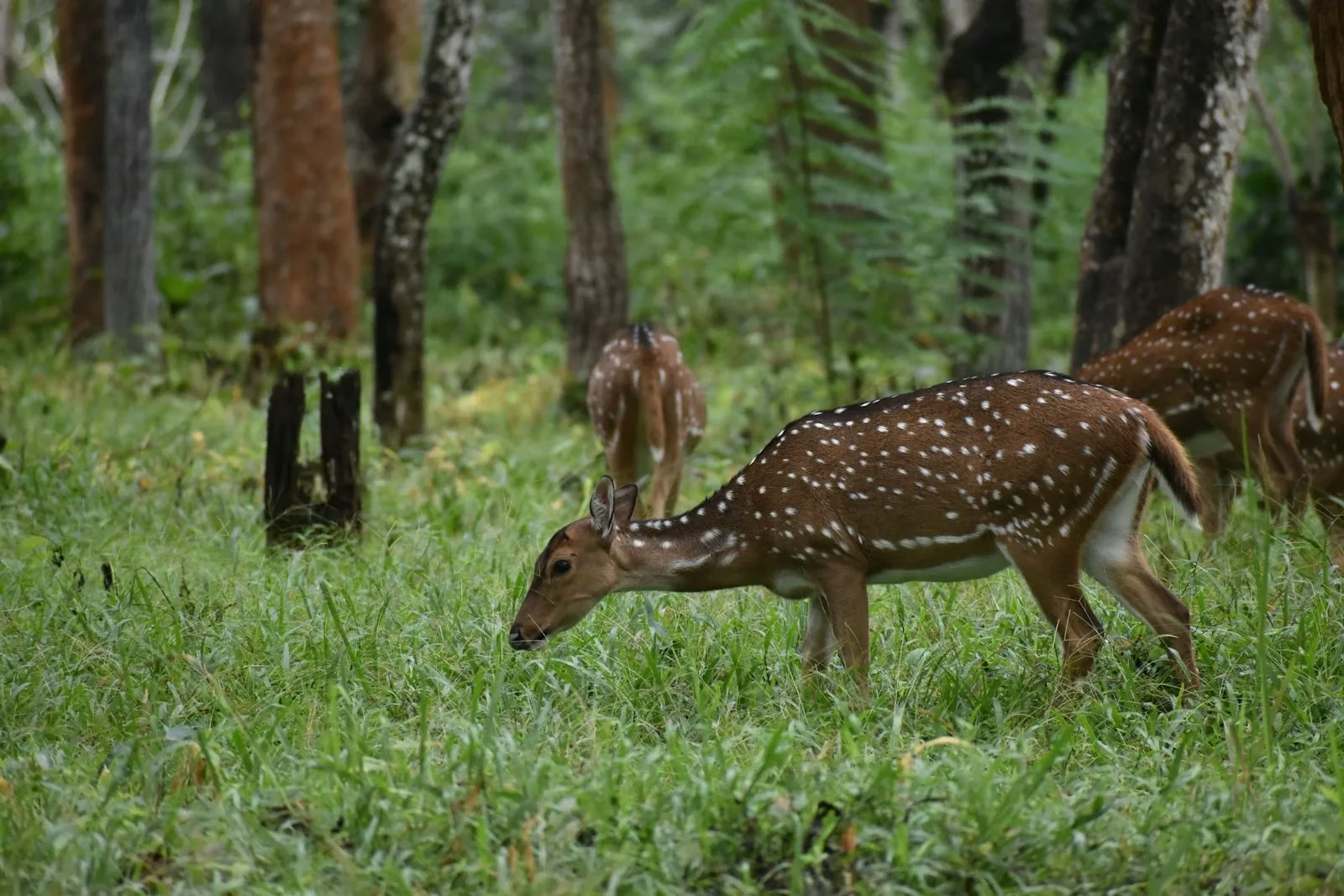
The spotted deer or chital (Axis axis) is Rajaji's most abundant and commonly seen deer species. Herds of spotted deer feed in forest clearings, along grassland edges and near riverine areas throughout the park. They are diurnal and relatively tolerant of vehicle presence, making them one of the most reliable safari sightings. Spotted deer are also the primary prey species for both tiger and leopard, which means their behaviour — alertness, alarm calling, herd movement — often signals predator presence in the area.
Sambar deer
The sambar (Rusa unicolor) is a larger, more solitary deer species that inhabits denser forest and hill terrain. Sambar are shy and more elusive than chital — they tend to flee into thick cover when disturbed. Males carry impressive antlers and may be encountered near water sources in the evening or at dawn. A sambar sighting is less common than chital but more notable, particularly when a large stag is visible at a forest edge or drinking at a stream.
Wild boar
Wild boar (Sus scrofa) are found throughout Rajaji's landscape. They are omnivorous, rooting through soil for tubers, insects and fallen fruit. Wild boar are most active at dawn and dusk and are often encountered on or near safari tracks. Groups (sounders) with piglets are common in areas with good ground cover. While not as dramatic as larger species, wild boar are an integral part of the park's prey and scavenger community.
Nilgai
The nilgai (Boselaphus tragocamelus), or blue bull, is the largest Asian antelope. Nilgai are found in Rajaji's grassland, scrub and open forest areas. They are diurnal and relatively visible, particularly in zones with grassland habitat. Males have a distinctive dark blue-grey coat; females and young are tawny brown. Nilgai are generally tolerant of vehicles and may be seen feeding in open areas or moving along forest edges.
Langur
The grey langur (Semnopithecus species) is Rajaji's most commonly observed primate. Troops of langur inhabit the forest canopy, moving through the trees with remarkable agility. Langur are highly visible and vocal — their calls are a constant soundtrack of the forest. They play a critical ecological role as sentinels: their alarm calls alert other species to predator presence. Langur troops are found across all zones and habitats.
Other mammals to note
- Otter: Smooth-coated otters inhabit Rajaji's rivers and are often seen fishing or playing near the water's edge in family groups. Otter sightings are among the more reliable aquatic wildlife encounters.
- Hyena: The striped hyena (Hyaena hyaena) is present in parts of the Shivalik range including areas within or adjacent to Rajaji. Hyenas are nocturnal and primarily scavenging, so daytime sightings are uncommon.
- Jungle cat: A medium-sized wild cat found in scrubland, grassland edges and riverine areas. More often heard than seen — its calls echo through the forest at dusk.
- Civet: Small Indian civet and large Indian civet are nocturnal, arboreal mammals occasionally spotted at dusk or crossing tracks in fading light.
- Barking deer (muntjac): A small, shy deer whose distinctive barking call is often heard in dense Sal forest, though direct sightings are brief.
- Rhesus macaque: Common near park boundaries and areas close to human settlements. Less prevalent deep in the forest than langur.
- Porcupine: Indian crested porcupine is present but rarely seen, being nocturnal and shy. Quills found on the track occasionally indicate their presence.
Notable Birds: From Hornbills to Waterbirds
Rajaji's bird diversity is a significant part of the park's wildlife appeal. The combination of Sal forest canopy, riverine habitat, grassland, wetland and hill terrain supports both resident and seasonal migratory species.
Resident highlights
- Great hornbill: The great Indian hornbill is one of Rajaji's most spectacular birds. These large, colourful hornbills inhabit the mature Sal forest canopy and are sometimes heard before they are seen — their wing beats produce a distinctive whooshing sound, and their loud calls carry through the forest. Hornbills require large, undisturbed trees for nesting, and their presence indicates healthy forest habitat.
- Peafowl (Indian peafowl): The national bird is common in Rajaji's grassland and forest-edge habitats. Males display their elaborate plumage during the breeding season (typically spring). Peafowl calls — a loud, far-carrying ka-aan — are a familiar sound of the forest.
- Kingfishers: Several kingfisher species inhabit Rajaji's river and wetland areas. Stork-billed kingfisher, white-throated kingfisher and common kingfisher are regularly observed along waterways. Their bright plumage and active fishing behaviour make them rewarding subjects for observation.
- Woodpeckers: Multiple woodpecker species — including great spotted woodpecker, brown-fronted woodpecker and flameback — forage on tree trunks in the forest. Their drumming is a characteristic sound of the Sal woodland.
- Raptors: Crested serpent eagle, changeable hawk-eagle and other raptors are resident in the park's forest and hill areas. These birds of prey are typically seen soaring above the canopy or perched on exposed branches. Vultures, including Indian vulture, may be seen circling above the forest, particularly in warmer months.
- Orioles, drongos, barbets and bulbuls: A rich mix of colourful, vocal forest birds inhabit the canopy and undergrowth. An attentive guide can help you distinguish species by call and plumage.
Seasonal migrants and waterbirds
During the winter months (roughly November to March), migratory species from Central Asia and the Himalayas join Rajaji's resident bird population. Waterbirds — including ducks, geese, waders and terns — concentrate near the Ganga and other river and wetland areas. The exact species present in any given year depend on water levels, weather and habitat conditions. Winter is widely considered the strongest period for birdwatching in Rajaji, when the mix of resident and visiting species is at its richest. The birdwatching guide covers habitat-specific birding and seasonal patterns in more detail.
What to ask your guide about birds
- Which bird species have been active this week in this zone?
- Are there any fruiting trees attracting hornbills or barbets nearby?
- Where are the best spots for waterbird observation along the river?
- Can you help me identify birds by their calls during the drive?
Reptiles and River Species
Rajaji's river habitats — particularly the Ganga and its tributaries — support a distinct community of reptiles and aquatic species that complement the park's terrestrial wildlife.
Gharial
The gharial (Gavialis gangeticus) is a slender-snouted, fish-eating crocodilian closely associated with deep, fast-flowing river channels. Rajaji's stretches of the Ganga provide gharial habitat, and these distinctive animals may be seen basking on sandbars during cooler months. Gharials are shy and non-aggressive to humans — their long, narrow snout is adapted for catching fish, not for defence. A gharial sighting is a notable event, as the species is endangered and its presence indicates a healthy river ecosystem.
Mugger crocodile
The mugger crocodile (Crocodylus palustris) is more robust and generalised than the gharial, inhabiting slower-moving water bodies, oxbow lakes and quieter river stretches. Mugger are more commonly encountered than gharial and may be seen basking on riverbanks or at the edge of waterholes. Maintain a respectful distance from any crocodilian — they are powerful animals that can move surprisingly quickly on land over short distances.
Indian rock python
The Indian rock python (Python molurus) is a large, non-venomous constrictor found in Rajaji's forest and riverine habitats. Pythons are occasionally spotted coiled in trees or lying along the track. They are shy and pose no deliberate threat to humans, but should be observed from the vehicle without approach. An alert guide may spot a python that would be invisible to untrained eyes.
Snakes — observed cautiously
Rajaji's forest and grassland habitats support multiple snake species, including some venomous ones such as the Indian cobra, Russell's viper and common krait. These species are rarely seen on a standard daytime safari, as most are nocturnal or secretive. The emphasis for visitors should be awareness rather than alarm — your guide will know which areas and seasons carry higher snake activity, and staying in the vehicle eliminates most risk. If you are walking near accommodation or camps outside the park, use a torch at night and wear closed footwear.
Turtles and aquatic species
Rivers and wetland areas in and around Rajaji support freshwater turtle species, including Indian flapshell turtle and others. These are less frequently the focus of safari drives but contribute to the river ecosystem's biodiversity. Otters, mentioned in the mammal section, are the most reliably visible aquatic species along Rajaji's rivers.
What Is Realistically Likely versus Rare
Setting expectations is one of the most important things you can do before a Rajaji safari. Here is a practical guide to what you are likely to encounter versus what you might be fortunate to see:
Very likely on a standard safari
- Spotted deer (chital) — in herds, across all zones
- Langur — in troops, in the canopy and along tracks
- Asian elephant — along rivers, in grassland, at forest edges
- Wild boar — on or near tracks, especially dawn and dusk
- Peafowl — in grassland and forest-edge areas
- Kingfishers — along rivers and waterbodies
- Rhesus macaque — near park boundaries and settlements
- Nilgai — in grassland and open forest areas
Possible with a skilled guide and some luck
- Sambar deer — near water, in denser forest
- Gharial or mugger crocodile — on river sandbars, in cooler months
- Sloth bear — signs more likely than direct sighting
- Great hornbill — in mature forest canopy
- Raptors (crested serpent eagle, hawk-eagle) — soaring or perched
- Otter — along undisturbed river stretches
- Indian rock python — coiled in trees or on the track
- Jungle cat — in scrubland at dawn or dusk
Rare — a genuine privilege if encountered
- Tiger — present but elusive; sightings are never guaranteed
- Leopard — present but secretive; brief, fleeting encounters possible
- Himalayan black bear — higher-elevation forest; uncommon on standard routes
- Striped hyena — nocturnal; daytime sighting would be exceptional
- Fishing cat — rare, nocturnal, wetland-dependent
- Pangolin — nocturnal, shy, genuinely difficult to encounter
Habitat-Based Field Checklist
Use this checklist organised by habitat type to focus your observation during the safari. Ask your guide about which habitats your specific route will pass through:
Sal forest and dense woodland
- Scan the canopy for langur troops and great hornbill
- Listen for woodpecker drumming and barbet calls
- Watch for sambar deer at forest edges, especially near water
- Look for scratch marks on tree trunks — leopard or bear signs
- Note alarm calls from langur and deer — they indicate predator presence
- Check fallen logs and the forest floor for porcupine quills or civet tracks
Grassland and scrubland
- Look for nilgai and wild boar in open areas
- Scan for peafowl, especially males in breeding display
- Watch for jungle cat in low vegetation at dawn and dusk
- Note barking deer calls from dense cover — the animal itself may remain hidden
- Look for hare and other small mammals at the grassland edge
River and wetland
- Scan sandbars and riverbanks for gharial and mugger crocodile basking
- Watch the water's edge for otter activity — fishing, playing, moving along the bank
- Look for kingfishers perched on overhanging branches
- Scan for waterbirds — ducks, waders, terns — especially in winter months
- Note elephant activity along river corridors, particularly in dry months
- Look for turtle tracks on sandy banks near the waterline
What to ask your guide
- Which habitats does today's route cover?
- What species have been seen in this area recently?
- Are there any fresh tracks or signs on the track today?
- Where are the best spots for river species observation?
- What time of day is best for bird activity in this zone?
Preparing for the Safari: A Practical Checklist
Before you enter the park, make sure you have covered these basics:
- Choose the right season: The open season (generally mid-November to June, with exact dates set annually by the Forest Department) determines which species are most active and visible. The best time to visit guide covers seasonal considerations.
- Select your zone thoughtfully: Different zones offer different terrain and habitat mixes. The zone guide helps you match your interests to the landscape.
- Confirm fees and timings: Entry fees, safari timings and reporting requirements change — confirm current details before your trip. The fees and permits guide covers what to expect.
- Carry binoculars: Binoculars are essential for bird observation, distant wildlife and river species. They transform a distant shape into an identifiable animal.
- Bring a field notebook: Recording what you see — species, numbers, behaviour, habitat — builds a personal reference that enriches future visits. The tracks and signs guide can help you interpret what you record.
- Wear muted colours: Bright clothing is unnecessary for a vehicle-based safari, but muted, natural tones are less likely to disturb wildlife if you do stop near habitat areas.
- Follow the guide's lead: The guide's real-time expertise — reading tracks, interpreting calls, knowing where animals have been active — is your most valuable resource. Engage with them, ask questions and trust their judgment.
- Respect wildlife conduct rules: No off-vehicle excursions, no noise near wildlife, no feeding animals, no littering. The wildlife etiquette guide covers the full framework.
Rajaji National Park offers a wildlife experience that rewards patience, observation and genuine curiosity about the natural world. The animals in this park are not performing for visitors — they are living in a complex, functioning ecosystem. Approach the safari with respect for that reality, and whatever you encounter will be worth the journey.