Why an Educational Safari Differs from a Recreational Visit
A jeep safari through Rajaji National Park is an engaging experience for any visitor. But when the passengers are students — school children, college groups or youth organisations — the visit takes on a different purpose. An educational safari is not simply a recreational trip with a learning label attached. It requires deliberate planning around learning objectives, age-appropriate pacing, supervision logistics and safety frameworks that go beyond what a family or tourist group needs.
The core difference is structure. A recreational group drives through the forest, sees what nature presents and leaves with memories. An educational group drives through the forest with specific observation goals, records what they see, discusses the ecological context and follows up with activities that connect the safari to classroom learning. The safari becomes one element in a larger educational experience — not the entire experience.
This guide covers the practical planning that makes an educational safari work: objectives, permissions, logistics, budget, educational activities, safety, and a checklist for teachers and organisers.
Setting Learning Objectives Before the Trip
An educational safari works best when the visit has clear learning goals that connect to the students' curriculum or developmental stage. These objectives do not need to be complex, but they should be specific enough to guide observation and post-visit activities.
Examples of age-appropriate objectives
- Primary school (ages 8-12): Identify three to five common animal species. Understand the basic concept of a food chain. Recognise that forests provide habitat and that humans play a role in protecting them. Observe how animals behave differently in the forest compared to what they see in books or zoos.
- Secondary school (ages 13-16): Connect the Shivalik ecosystem to geography and climate concepts. Understand predator-prey dynamics through observation of alarm calls and tracks. Recognise the relationship between water availability and wildlife distribution. Discuss how national parks function as conservation tools.
- College level (ages 17+): Analyse habitat types and their ecological roles. Discuss wildlife management challenges in human-dominated landscapes. Evaluate the role of tourism in conservation funding. Explore specific ecological concepts (carrying capacity, species interactions, habitat fragmentation) through field observation.
The objectives shape everything that follows — from the number of safari vehicles needed (more vehicles allow smaller observation groups) to the post-visit activities (primary students draw what they saw; college students write analytical reports).
Permissions and Consent: What Schools Typically Arrange
School and college trips involve administrative requirements that individual tourist visits do not. While the exact requirements depend on your institution's policies and the current Forest Department procedures, the general categories of preparation include:
Institutional approvals
- School administration sign-off: Most schools require formal approval from the principal or designated authority before organising an off-campus trip. This typically includes review of the trip's educational purpose, the itinerary and the safety plan.
- Board or affiliating body notification: Some educational boards or affiliating institutions require notification of educational trips, particularly overnight excursions. Check your institution's specific requirements.
- Staff deployment plan: Schools need a defined ratio of accompanying adults to students. The specific ratio is an institutional policy matter — confirm your school's requirements and ensure sufficient staff are deployed.
Parental consent and medical information
- Consent forms: Parents or guardians typically receive a consent form that covers the trip details, the activity involved (jeep safari), the safety measures in place and the medical information the school needs. The form should include emergency contact details and any medical conditions the school should be aware of.
- Medical disclosure: Students with conditions that may be affected by an early morning schedule, bumpy vehicle ride, prolonged sitting or outdoor exposure (asthma, allergies, mobility issues, anxiety) should be flagged in advance. The mobility considerations guide covers physical access considerations that may also apply to students with physical limitations.
- Emergency protocol: The school should have a clear emergency protocol — who to contact, how to communicate in areas with limited mobile signal and what procedures to follow if a student becomes unwell during the safari.
Forest Department and operator coordination
- Group booking confirmation: Group safaris require advance coordination with the operator and the Forest Department. The number of vehicles, guides and reporting slots depends on group size. The group bookings guide covers the general process.
- Entry permits: Confirm how group entry permits are processed — whether they are handled through the operator or require separate arrangements. The fees and permits guide covers current structures.
- Student concessions, if applicable: Some parks offer concession rates for students on educational visits. The availability and amount of any concession should be confirmed with the Forest Department or your operator at the time of booking — do not assume a fixed rate or that concessions apply to every group type.
Coordinating Multiple Vehicles and Staff
Groups larger than six passengers require multiple safari vehicles. This introduces logistics that single-vehicle visits do not face:
Vehicle allocation
- Group size to vehicle ratio: Standard safari jeeps accommodate a limited number of passengers (typically six, though this varies by vehicle type). Divide the group into vehicle-sized units and assign staff to each vehicle.
- Mixing ability levels: If the group includes students of different ages or abilities, consider distributing them across vehicles so that each vehicle has a manageable, engaged group rather than one vehicle carrying all the youngest or most restless students.
- Staff placement: At least one responsible adult per vehicle. The adult's role is to enforce conduct rules, manage student behaviour and serve as the vehicle's point of contact with the guide.
Pre-safari briefing
Before the vehicles depart, conduct a group briefing that covers:
- Conduct rules: No standing in the vehicle, no loud talking near wildlife, no littering, no feeding animals, stay seated at all times. The safety guide and the wildlife etiquette guide provide the full ruleset — review these with students before the trip.
- Observation goals: Remind students of the learning objectives. Give them specific things to look for — animal species, bird calls, tracks on the ground, types of vegetation. Observation focus transforms passive passengers into engaged learners.
- Communication protocol: Establish how vehicles will communicate during the safari (if mobile signal is available) and what to do if a vehicle has a problem.
- Emergency procedure: Review what to do if a student feels unwell, if a vehicle breaks down or if any safety issue arises.
During the safari
- Vehicle spacing: Vehicles should maintain a respectful distance from each other. Crowding a sighting area with multiple vehicles disrupts wildlife and reduces the quality of observation for everyone.
- Guide coordination: If multiple vehicles enter the same zone, confirm with the operator whether guides coordinate or operate independently. Independent guides may lead vehicles to different areas, which means the group's experience may vary across vehicles — manage expectations accordingly.
- Note-taking: Encourage students to record observations during the drive. The tracks and signs guide can be referenced post-safari to identify what students observed.
Budget Planning per Student
Group safari costs depend on several variable factors. Build your budget with confirmed quotes rather than assumptions:
Cost components
- Safari fees: The per-vehicle or per-person entry fees charged by the Forest Department. These fees are subject to change — confirm current rates with the Forest Department or your operator. Check whether student concessions, educational visit discounts or group rates apply to your specific booking.
- Vehicle hire: If the school does not have its own safari vehicles, the cost of hiring jeeps through an operator. This may be bundled with the safari fee or charged separately.
- Guide fees: The naturalist or guide accompanying the safari. Some operators include guide fees in the package; others charge separately.
- Transport to the gate: The cost of transporting students from the school or accommodation to the safari gate and back. Factor in bus or coach hire if the group is large.
- Meals: Depending on the safari timing and trip duration, students may need packed meals or arranged dining. The budget planner covers meal cost considerations.
- Insurance: Some institutions require travel or activity insurance for off-campus trips. Check your school's requirements.
- Contingency: Always include a buffer for unexpected costs — vehicle changes, extended stays, weather-related adjustments.
The budget planner provides a framework for estimating per-student costs. Confirm every line item with current quotes before finalising the trip budget.
Making the Safari Educational: Observation and Follow-Up
The safari itself is the field experience. The educational value comes from how it is framed before, during and after the drive.
Pre-safari preparation
- Classroom session: Before the trip, introduce students to the ecosystems they will visit. Cover basic concepts: what is a national park, what is a tiger reserve, why is the Shivalik foothill ecosystem important, what species are commonly found in Rajaji. The habitats and flora guide provides background material.
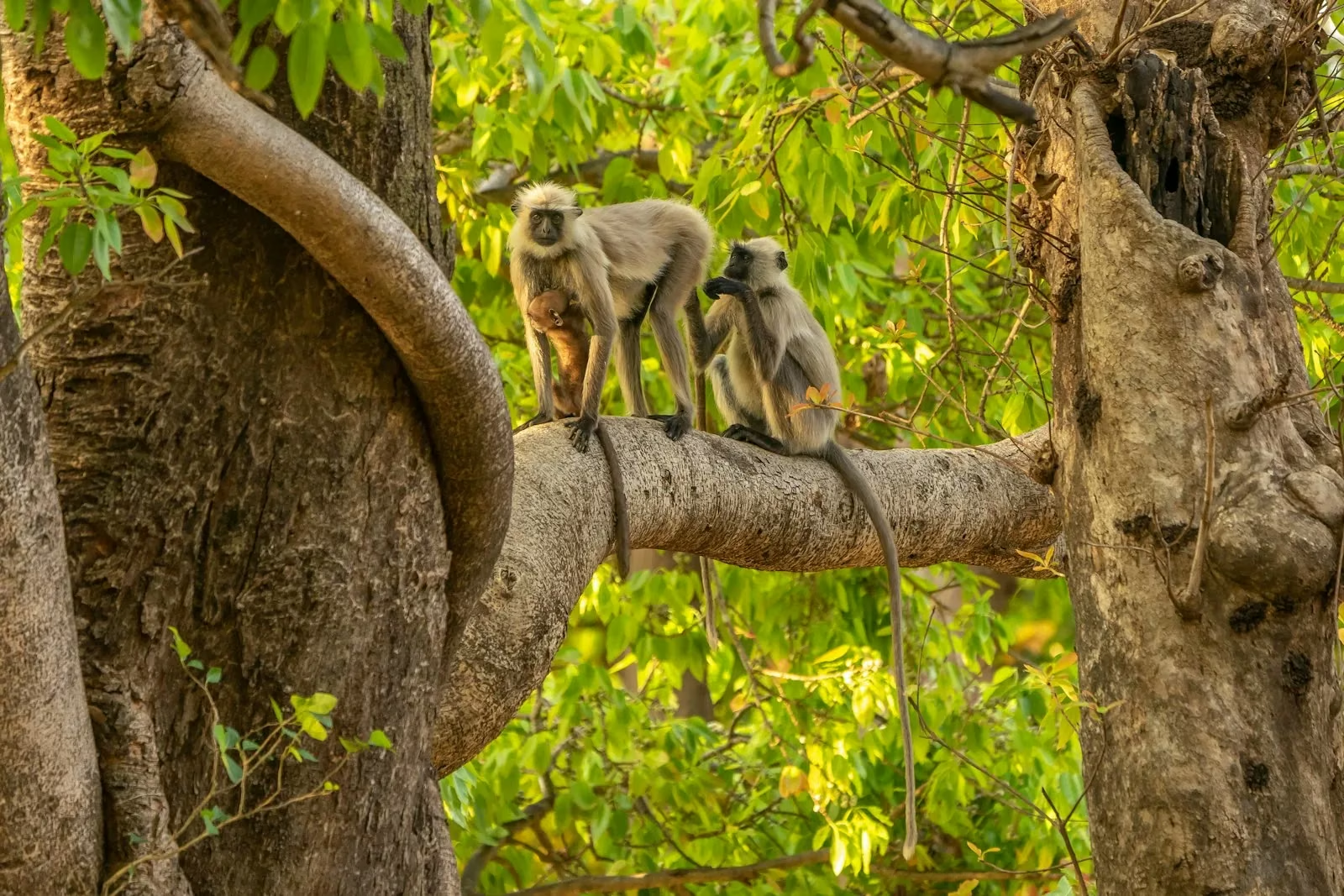
- Species identification: Show students photographs of common Rajaji species — elephants, spotted deer, langur, peacock, kingfisher, mugger crocodile. Familiarity with these species makes identification during the safari faster and more exciting.
- Observation worksheet: Provide a simple worksheet with columns for species seen, habitat type, behaviour observed, tracks or signs noticed and a personal reflection. This gives students a structured task during the drive.
During the safari
- Active observation: Encourage students to use their worksheets, whisper observations to each other and listen to the guide's explanations. Passive observation — sitting quietly and watching — is valuable, but structured observation produces learning.
- Guide interaction: Allow students to ask the guide questions (within the noise-discipline rules). Guides appreciate engaged visitors, and students' questions often lead to richer explanations than the guide's standard narrative.
- Note key moments: If the guide identifies a pugmark, points out an alarm call or explains a habitat feature, note it down. These moments form the basis of post-safari discussion.
Post-safari activities
- Species tally: As a group, compile a list of all species observed during the safari. Compare notes across vehicles — different vehicles may have seen different species, which teaches students that wildlife observation is variable and context-dependent.
- Discussion session: Gather the group for a guided discussion. What did they notice? What surprised them? What questions do they have? Connecting the safari experience to classroom concepts deepens learning.
- Creative response: Primary students might draw their favourite sighting or write a short story about the forest. Secondary students might prepare a presentation on one species or habitat. College students might write an analytical report connecting their observations to ecological concepts.
- Documentation: Compile photographs, worksheets and student reflections into a trip report. This serves as both an educational record and evidence of the trip's learning outcomes for institutional purposes.
Safety and Conduct Expectations for Students
Safety on a safari involving students requires strict enforcement of rules. Unlike adult groups, student groups require active supervision and pre-established consequences for rule-breaking:
Non-negotiable safety rules
- Stay seated: Students must remain seated in the vehicle at all times. Standing, leaning out or climbing onto seats is prohibited. This rule is absolute and applies regardless of what animal is visible.
- Noise discipline: Loud talking, shouting, playing music or making sudden noises near wildlife is prohibited. Students should speak in low voices during the drive and go silent when the guide signals.
- No littering: All waste stays in the vehicle. Nothing is thrown into the forest. Pack in, pack out.
- No feeding wildlife: Feeding animals is dangerous, harmful and illegal in a national park. This applies to all animals, from elephants to monkeys to birds.
- No off-vehicle excursions: Students do not leave the vehicle for any reason during the safari unless there is a genuine emergency. The guide determines when and where stops are made.
- Follow guide instructions: The guide's instructions are final. If the guide says to be quiet, sit down or stop photographing, compliance is immediate.
Supervision framework
- Pre-safari briefing: Conduct the briefing with students present. State the rules clearly and explain the consequences for breaking them (e.g., the student may not be permitted on the next safari slot, or the trip may be affected).
- In-vehicle enforcement: The accompanying adult in each vehicle is responsible for enforcing conduct rules. This is not optional — it is a core part of their role.
- Post-safari debrief: If any conduct issues arose during the safari, address them after the drive, not during it. Debriefing reinforces expectations for future activities.
Meals and Rest Breaks
Student groups have specific needs around food, hydration and rest that differ from adult tourist groups:
- Early morning timing: Safaris often start very early. Students may not be accustomed to pre-dawn wake-ups. Plan for breakfast before departure — a substantial, familiar meal that provides energy for the drive.
- Hydration: Carry sufficient water for every student. The packing guide covers hydration essentials. In warm months, dehydration is a real risk — enforce regular water intake.
- Packed meals: If the safari extends through a meal time, carry packed lunches. Choose foods that are familiar, easy to eat in a vehicle and not prone to spilling or attracting insects.
- Rest periods: After the safari, build in rest time before any subsequent activity. Students — especially younger ones — may be tired after an early start and a bumpy drive. The timing guide explains how safari timing affects energy levels.
- Allergies and dietary requirements: Collect dietary information in advance. Ensure packed meals accommodate allergies, vegetarian preferences and religious dietary requirements.
Trip-Planning Checklist for Teachers and Organisers
Use this comprehensive checklist to plan an educational safari visit to Rajaji:
Administrative
- Learning objectives defined: Clear, age-appropriate goals for the trip, connected to curriculum where possible.
- School administration approval obtained: Formal sign-off from principal or designated authority.
- Staff deployment plan confirmed: Sufficient adults for the student-to-adult ratio your institution requires.
- Parental consent forms distributed and returned: Including emergency contact details and medical information.
- Medical conditions flagged: Any student with conditions affected by early mornings, bumpy rides, outdoor exposure or prolonged sitting has been identified and accommodated.
- Emergency protocol documented: Contact numbers, nearest medical facility, communication plan for limited-signal areas.
Booking and logistics
- Safari operator contacted: Group size, vehicle requirements and reporting times confirmed in writing. The group bookings guide provides context.
- Zone and gate confirmed: Know which gate to report to and how to get there. The gates guide covers access points.
- Entry fees and any concessions confirmed: Current rates verified with the Forest Department or operator. The fees and permits guide provides the framework.
- Transport arranged: Bus or coach to the gate, timed to arrive before the reporting window. The documents checklist covers what every passenger needs to carry.
- Meals planned: Pre-safari breakfast, packed lunches if needed, post-safari refreshments. Dietary requirements accounted for.
- Accommodation booked (if overnight): Confirmation of rooms, check-in timing and proximity to the safari gate.
Educational preparation
- Pre-safari classroom session delivered: Students introduced to Rajaji's ecosystems, species and conservation context.
- Observation worksheets prepared: One per student, with species identification images and observation columns.
- Species reference material available: Printed or digital species list for the region. The wildlife guide covers the park's species range.
- Post-safari activities planned: Discussion session, creative activity or analytical report — scheduled for the same day or the next school day.
Safety and conduct
- Conduct rules briefed to students: All non-negotiable rules stated clearly before the trip. The safety guide and the wildlife etiquette guide provide the reference material.
- Each vehicle has an assigned supervising adult: The adult understands their role in enforcing conduct rules.
- Emergency supplies carried: Basic first aid, water, sun protection, a charged phone and the operator's emergency number. The packing guide covers essentials.
- Weather checked: Forecast reviewed for the safari day. Contingency plan in case of fog, rain or extreme heat. The best time to visit guide provides seasonal context.
- Documents verified: ID proof for every student and staff member, entry permits, booking confirmations. The documents checklist covers requirements.
Post-trip
- Species tally compiled: Combined list from all vehicles, reviewed as a group.
- Discussion session held: Guided conversation about the experience, observations and questions.
- Student work collected: Worksheets, drawings, reflections or reports — whatever the post-safari activity produced.
- Trip report prepared: Summary of the visit for institutional records, including learning outcomes, conduct issues (if any) and recommendations for future trips.
- Thank-you notes sent: To the operator, the guide and any supporting staff. A small gesture that models courtesy for students.
An educational safari to Rajaji is more than a day out of the classroom. It is an opportunity for students to encounter a living ecosystem, to understand conservation in practice and to develop observation skills that serve them across disciplines. With careful planning, clear objectives and disciplined execution, the trip becomes a learning experience that students remember long after the jeep ride ends. The family safari guide provides additional context on managing younger visitors, and the budget planner helps structure the financial planning that underpins every successful group visit.